

When the amplified band steps back
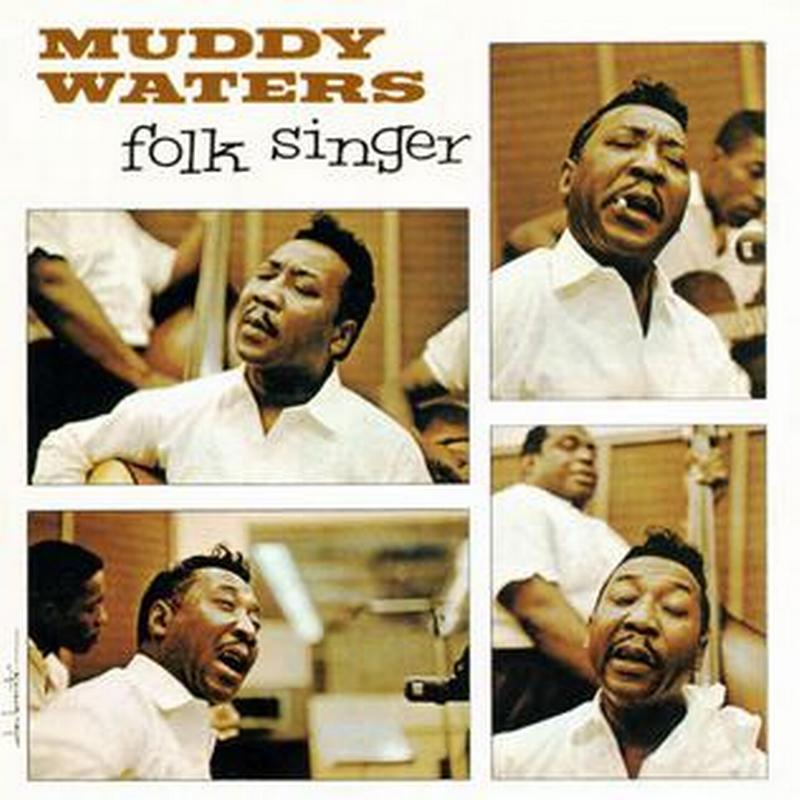
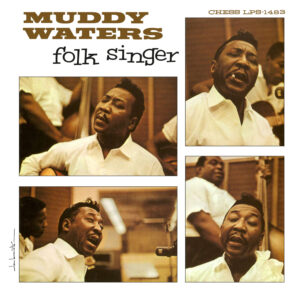
On Folk Singer, Muddy Waters does not have to project over an amplified Chicago band. His voice and the acoustic guitars occupy a different kind of space, where a slight delay carries weight. A note can linger, an answer can be brief, and a breath can prepare the next entrance. That openness gives the record much of its immediacy. Fewer instruments do not make the music smaller; they direct attention towards different choices.
The sessions took place at Chicago’s Ter-Mar Studios in September 1963, and Chess released the album in 1964. Willie Dixon and Ralph Bass produced, with Ron Malo handling the recording. The acoustic concept was partly connected to Chess’s interest in reaching the folk-boom audience. Yet it did not require Muddy to adopt an artificial identity. He brought experience and expressive resources that reached back beyond his central role in electric Chicago blues.

Buddy Guy listens and replies
Buddy Guy joins Muddy on acoustic guitar, Willie Dixon plays double bass, and Clifton James adds drums on portions of the album. Guy’s role here is not primarily that of the later, high-voltage guitar star. Listen instead to a brief figure answering a vocal line, or to a gap deliberately left unfilled. Two guitars need not duplicate one another to establish a shared foundation.
The instruments become more interesting when heard as participants rather than background. Every picked note has an attack, a decay and a position within the phrase. A bass note can confirm a turn without explaining it at length. In this small ensemble, those relationships are unusually easy to follow. Knowing the names of blues forms is not a requirement: the movement becomes clear when the musicians draw together, then leave one another room again.

Nine original tracks, not an expanded session collection
“My Home Is in the Delta” opens the programme, followed by selections including “Long Distance,” “My Captain” and “Good Morning School Girl.” The second side contains “Cold Weather Blues,” “Big Leg Woman,” “Country Boy” and “Feel Like Going Home.” This mono LP retains the nine-track original programme. Bonus recordings added to later CDs are not part of it, even when the musicians from those additions appear in general album-credit lists.
The songwriting credits contain a detail worth preserving. Willie Dixon wrote “My Captain,” while “Good Morning Little Schoolgirl” leads back to Sonny Boy Williamson I, John Lee Curtis Williamson. He is not Sonny Boy Williamson II, whose Chess recordings occupy a neighbouring place in many blues collections. Keeping them distinct reveals an older connection: Muddy and his partners were also working with repertoire that had a history before this particular studio session.
More than a record for the equipment
Folk Singer is often approached through its reputation as an audiophile recording. That reputation need not overshadow the performances. In “My Captain” or “Cold Weather Blues,” delivery matters as much as vocal texture: an extended syllable, a restrained entrance, the short tension before an instrumental reply. The recording offers an opportunity to follow those events closely, but Muddy’s musical personality remains the reason to do so.
This edition presents the mono mix. That identifies a particular version; it does not mean the album exists only in mono. Attention can settle on a shared musical centre, where voice, guitars and rhythm belong to one unfolding exchange. A listener drawn in by the recording’s reputation may find something beyond a demonstration disc: the vitality of a seemingly simple form when every pause and response is treated as part of the performance. The small scale makes the musicians’ decisions easier to notice, not less consequential.
Also in another edition: Folk Singer
More by Muddy Waters: The Real Folk Blues · The Best Of Muddy Waters
Series: Chess Records – all 10 records: singles that became albums
Musicians
Documented selection of participating musicians. Personnel may vary by track; this list does not claim to be complete.
| Name | Instrument / role |
|---|---|
| Muddy Waters | Vocals, Guitar |
| Buddy Guy | Guitar |
| Clifton James | Drums |
| Willie Dixon | Bass |
Personnel for the nine original tracks. Players on later CD bonus tracks are excluded. Buddy Guy and Clifton James do not appear throughout; some track assignments remain disputed.

Reviews
There are no reviews yet.