Four musicians and room to develop
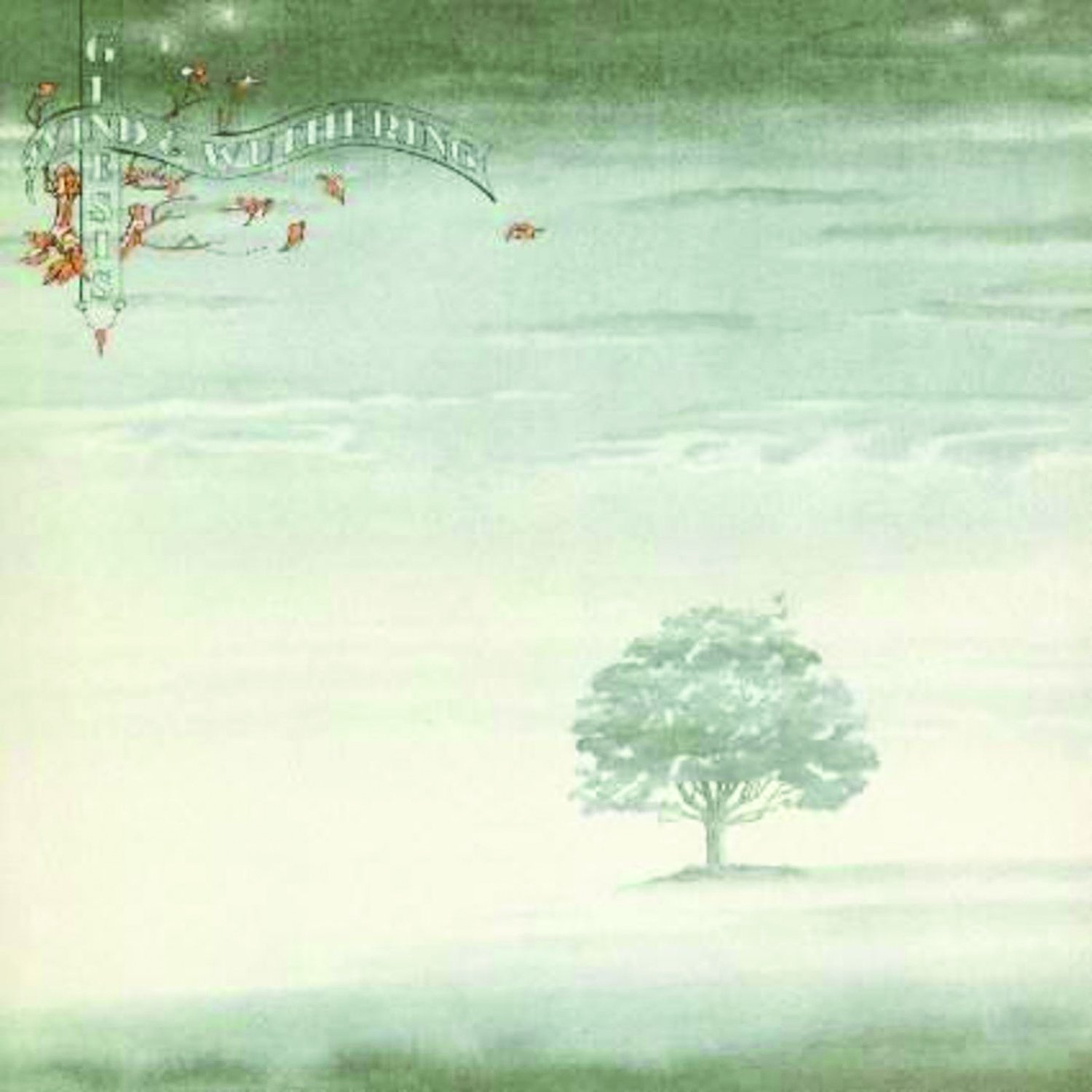
Wind & Wuthering opens with “Eleventh Earl of Mar” and “One for the Vine”, two extended pieces that establish the album’s scale. By late 1976, Genesis were a four-piece: Phil Collins sang and played drums, Tony Banks handled keyboards, Mike Rutherford played bass and guitars, and Steve Hackett contributed the other guitar parts. The band’s eighth studio album was also its last with Hackett.
Recording took place in September and October 1976 at Relight Studios in Hilvarenbeek, the Netherlands. It was the first Genesis album recorded outside Britain. The band produced with David Hentschel, then mixed at Trident in London. That change of location forms the background to a record which accommodates markedly different lengths and instrumental colours.

Acoustic guitar within the picture
Hackett’s credited instruments range from electric guitars to classical and twelve-string guitar, kalimba and autoharp. “Blood on the Rooftops”, co-written with Collins, offers a particularly useful introduction to his contribution. A Genesis arrangement is not explained only by large keyboard textures or extended solo passages; the character of an individual instrument matters too.
Mike Rutherford’s “Your Own Special Way” provides a more compact vocal piece beside the two long opening tracks. “Wot Gorilla?” and the instrumental sections later in the programme shift the focus again. There are several routes into the same ensemble: a song, an instrumental colour or the development of a longer musical form.

A literary thread near the end
Tony Banks wrote “One for the Vine”, “All in a Mouse’s Night” and “Afterglow”. His resources include grand piano, Hammond organ, Mellotron and synthesizer. That variety gives a reason to distinguish between keyboard sounds rather than hearing them as one continuous backdrop. Consider how a passage changes when a different instrument takes the principal role.
The connected titles “Unquiet Slumbers for the Sleepers…” and “…In That Quiet Earth” draw on words from the final sentence of Emily Brontë’s Wuthering Heights. “Afterglow” follows them. The closing sequence therefore has a relationship extending beyond individual track names. That relationship is especially worth considering when comparing the way vinyl editions divide the programme.
This edition
Analogue Productions’ AAPR 004-45 is part of the Acoustic Sounds 40 Series: three 180-gram LPs at 45 RPM, pressed at QRP and supplied in a Stoughton tip-on gatefold. The current publisher’s track list keeps “Unquiet Slumbers for the Sleepers…”, “…In That Quiet Earth” and “Afterglow” together on the final side, with “Blood on the Rooftops” alone on the preceding side. The publisher names the original analogue master tape as the source, but does not identify a mastering engineer or document the complete transfer chain. An explicit confirmation of the original mix is also absent. Nick Davis remix credits from a separate edition are therefore not applied here.
Also on SACD: Wind & Wuthering
More by Genesis: A Trick Of The Tail · Abacab
Artist page: All titles by Genesis and Phil Collins
Customer question: Buying Analogue Productions records in Europe
Series: Acoustic Sounds 40th Anniversary – all 25 albums, recommendations and musicians
Musicians
Documented selection of participating musicians. Personnel may vary by track; this list does not claim to be complete.
| Name | Instrument / role |
|---|---|
| Phil Collins | Percussion, Vocals, Drums |
| Steve Hackett | Electric guitar, Autoharp, Kalimba, Guitar |
| Mike Rutherford | Acoustic guitar, Electric bass, Bass |
| Tony Banks | Electric piano, Synthesizer, Mellotron, Piano, Organ |


Reviews
There are no reviews yet.