


A voice from before the album era
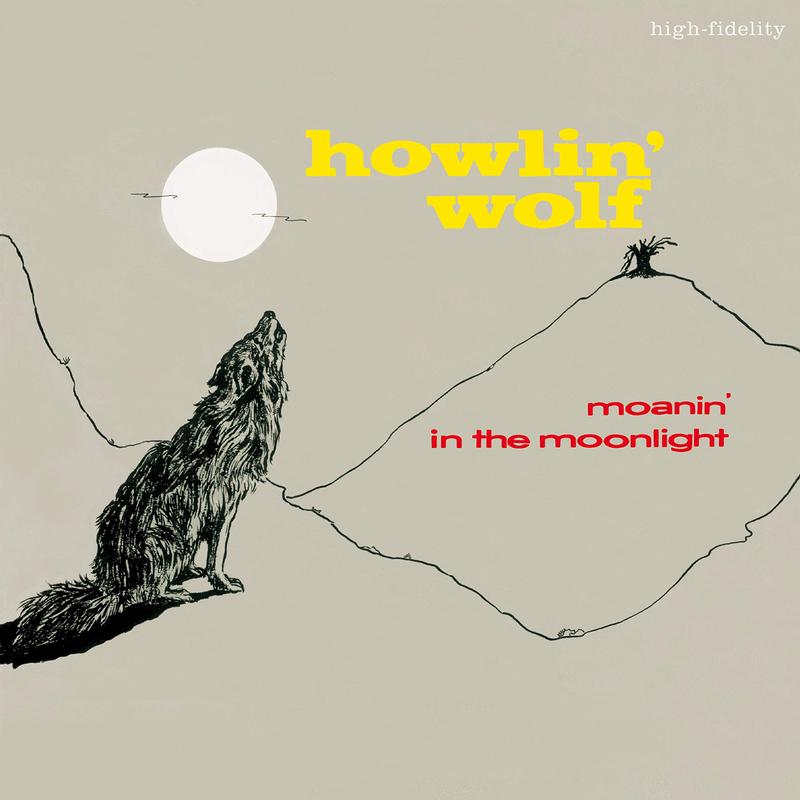
Moanin’ in the Moonlight opens with a voice that hardly seems contained by the word “singing”. Howlin’ Wolf stretches notes, breaks them open and leaves space between them for his band. The first LP by the musician born Chester Arthur Burnett collected singles from the 1950s. It was not recorded as one continuous album session. Yet the voice binds all twelve selections together, making recordings from different moments feel like parts of the same unmistakable musical personality.
The story moves from Memphis to Chicago. “Moanin’ at Midnight” and “How Many More Years” belong to Wolf’s early recordings with Sam Phillips in Memphis, released by Chess. He subsequently continued working in Chicago. The LP places those stages close together. It allows you to hear changes in the accompaniment while recognizing his way of delivering a line immediately. The record preserves a development that originally unfolded across individual record sides and several years, rather than inside a single studio visit.

A riff that refuses to let go
“Smokestack Lightnin’” is among the collection’s best-known performances. Its recurring guitar figure establishes a fixed point around which Wolf develops his calls and phrases. The music draws its force from the relationship between repetition and change. It offers a useful introduction to his method: the band does not have to keep shifting the ground for something to happen in the singing. Small variations acquire weight precisely because the pattern beneath them remains familiar and dependable.
Willie Dixon’s “Evil” brings a different emphasis, while “Forty Four” draws on a blues associated with Roosevelt Sykes. These connections place Wolf’s repertoire within a shared musical tradition. His individuality comes through the performance itself. Songs such as “No Place to Go” and “I Asked for Water” take shape through the relationship between his voice and brief instrumental answers. They need no elaborate framework to establish a particular mood; the way a phrase is delivered can supply the essential detail.

The band talks back
Guitarist Willie Johnson belongs to the early story, Hubert Sumlin to the later Chicago work. Follow the guitars beside Wolf deliberately: they do more than fill space behind the singer. A figure can urge him forward; a single note can remain after a sentence has ended. His harmonica adds to this exchange. Sonny Boy Williamson II helped introduce Wolf to the instrument, and in Wolf’s own playing it becomes part of the same physical expression shaped by breath and accent.
After a familiar selection, try “Baby How Long”, “All Night Boogie” or “Somebody in My Home”. Together they reveal how widely the music can range with a relatively small set of basic tools. The album title gathers recurring imagery from his repertoire: “Moanin’ at Midnight” opens the record, while “Moanin’ for My Baby” appears on side two. The compilation takes you back before the later British collaborations and rock tributes. Wolf’s own interaction with his musicians remains the focus throughout.
This edition
The Chess Acoustic Sounds Series presents Moanin’ in the Moonlight on one 180-gram LP at 33⅓ RPM in mono. Matt Lutthans mastered it at The Mastering Lab, with the original analog tapes identified as the source by the publisher. Quality Record Pressings handles the pressing. Catalog number ACHE 89587 comes in a tip-on gatefold and contains the twelve selections of the original compilation. This is Wolf’s first LP, distinct from the later album with the rocking-chair cover.
More by Howlin’ Wolf: The Real Folk Blues
Series: Chess Records – all 10 records: singles that became albums
Musicians
Documented selection of participating musicians. Personnel may vary by track; this list does not claim to be complete.
| Name | Instrument / role |
|---|---|
| Howlin' Wolf | Harmonica, Vocals |
| Willie Johnson | Guitar |
| Willie Steele | Drums |
| Ike Turner | Piano |
| Hubert Sumlin | Guitar |
| Hosea Lee Kennard | Piano |
| Willie Dixon | Double bass |
| Earl Phillips | Drums |
| Jody Williams | Guitar |
| Otis Spann | Piano |
| Lee Cooper | Guitar |
| Fred Below | Drums |
| S. P. Leary | Drums |
| Alfred Elkins | Bass |
| Adolph "Billy" Dockins | Tenor saxophone |
| Otis "Smokey" Smothers | Guitar |
How Michael hears this edition
Listening impression · paraphrased from the video
Michael describes the recording as raw, direct blues. He recommends it for its authentic musical impact, but explicitly cautions against expecting an audiophile showcase like Kind of Blue or Steely Dan.
🎧 Review video: 6 Rock, Blues, Jazz Records for Beginners and Pros
This video is hosted by YouTube (Google). It only loads once you switch on “Functional” in the cookie settings.

Reviews
There are no reviews yet.