One violin connects the stories
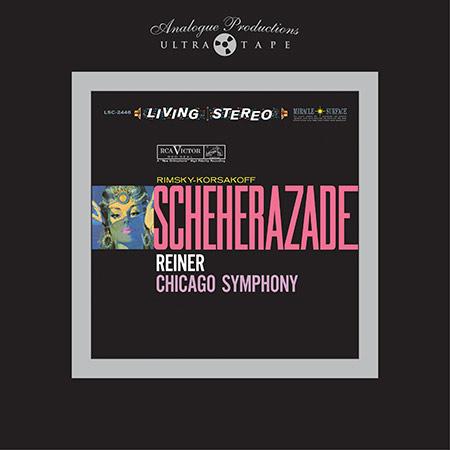
The solo violin in Scheherazade is more than an attractive interlude between large orchestral passages. It establishes a recurring point of reference in a work whose four movements summon quite different images. Nikolai Rimsky-Korsakov composed the suite in 1888, inspired by One Thousand and One Nights. Sea, storytelling, a young couple and a festival coexist, but the music is not a detailed timetable of individual fairy-tale scenes. Returning ideas connect its changing situations. The relationship between one narrative voice and a large ensemble makes the work immediately approachable.
Sidney Harth plays the solo violin on this recording. He was concertmaster of the Chicago Symphony Orchestra, which Fritz Reiner conducted at Orchestra Hall in Chicago on February 8, 1960. Richard Mohr produced the session and Lewis Layton was the recording engineer. The violinist's identity matters to this particular performance and should not be borrowed from another Reiner recording. Harth's playing forms part of the album's specific identity. Naming him turns a general account of the work into a description of this performance and these participants.

Rimsky-Korsakov's art of narration
Before his musical career, the composer had served as a naval officer. This does not make every bar a literal translation of a voyage he experienced, but the maritime world belongs to his biographical background. In Scheherazade, the sea becomes a musical space whose movement and dimensions can change. The act of narration remains present alongside it: a voice begins, the orchestra develops a setting, and familiar ideas return in different circumstances. The connections between movements involve more than the headings attached to them.
The first movement refers to the sea and Sinbad's ship, the second to the Kalender Prince, and the third to the young prince and princess. The finale combines the festival in Baghdad with the return of the sea and the shipwreck. These titles provide orientation without determining the meaning of every musical detail. Begin by listening for returning motifs: what remains recognisable when the instrumentation or motion has changed? This makes it possible to experience the suite as a connected argument rather than four independent musical postcards placed in sequence.

Chicago between individual voice and large gesture
Rimsky-Korsakov's orchestral writing demands more than impressive volume. A woodwind line must be able to emerge from the texture; an answer must retain its connection with what preceded it. Harth's violin is not separate from these events, but links their different scales. Concentrating on transitions can change the way the larger climaxes register. They become the results of preparation, increasing density and returning ideas, rather than isolated spectacular moments. The spaces between them are therefore essential to the work's construction, not simply routes to its next major event.
Alongside Harth, the publisher names further orchestral soloists, including Adolph Herseth, Ray Still and Frank Miller. Those details are identified as publisher credits where equally strong confirmation for the specific session is unavailable. A general list of celebrated Chicago musicians is not a substitute for recording-specific personnel. Reiner, the orchestra and Harth's solo violin are firmly documented. With a performance reissued so frequently, this distinction is useful: information from other sessions can gradually enter a description even when the work and conductor remain unchanged.
Scheherazade on two-track tape
Analogue Productions identifies this Ultra Tape as RRAP 0007. It presents the suite's four movements across two reels of quarter-inch tape running at 15 ips, in two-track stereo, or half-track, with IEC equalisation. Playback requires a suitably configured machine. The original RCA recording was made on three tracks, while the consumer tape offered here has two stereo tracks. Recording format and delivery format are therefore separate specifications; this product should not be described as if it were the unchanged three-track session tape.
The publisher describes real-time duplication on an ATR-modified Ampex machine, using a copy of the original analogue master tape as the source. The exact mixing history and sequence of tape generations are not fully documented, so mastering credits from parallel LP editions are not adopted. Musically, the release returns to the Chicago session of February 1960. Its large orchestral narrative and Harth's connecting violin passages belong together. Listeners who attend to more than the climaxes can follow the many smaller references through which four vividly differentiated movements become one broadly conceived suite.
You order from Michael 45 in Germany. We arrange the US import and dispatch from Hilden. Editions not currently in stock are dispatched after the goods arrive.
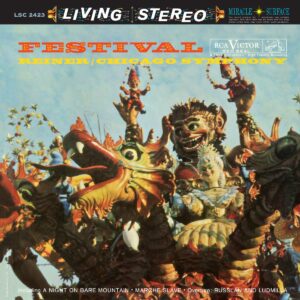
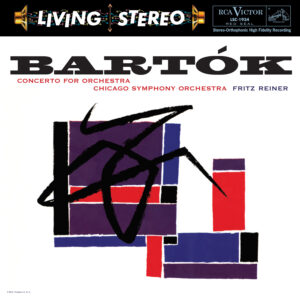
More by Fritz Reiner: Bartok: Concerto For Orchestra · Festival
Artist page: All titles by Fritz Reiner
Customer question: Buying Analogue Productions records in Europe
Musicians
Documented participants in this recording. Publisher-only credits are identified; track references correspond to the tracklist.
| Name | Instrument / role | Participation |
|---|---|---|
| Fritz Reiner | conductor | Album personnel |
| Chicago Symphony Orchestra | orchestra | Album personnel |
| Sidney Harth | solo violin, concertmaster | Album personnel |
| Ray Still | principal oboe | Publisher credit · tracks unspecified |
| Clark Brody | principal clarinet | Publisher credit · tracks unspecified |
| Leonard Sharrow | principal bassoon | Publisher credit · tracks unspecified |
| Donald Peck | principal flute | Publisher credit · tracks unspecified |
| Laurence Thorstenberg | English horn | Publisher credit · tracks unspecified |
| Philip Farkas | principal horn | Publisher credit · tracks unspecified |
| Adolph Herseth | principal trumpet | Publisher credit · tracks unspecified |
| Robert Lambert | principal trombone | Publisher credit · tracks unspecified |
| Frank Miller | principal cello | Publisher credit · tracks unspecified |
| Edward Druzinsky | harp | Publisher credit · tracks unspecified |
Sidney Harth’s solo violin is securely documented. The other listed orchestral soloists are named by the publisher; their track assignments remain open.

Reviews
There are no reviews yet.