
A quartet meeting in Las Vegas
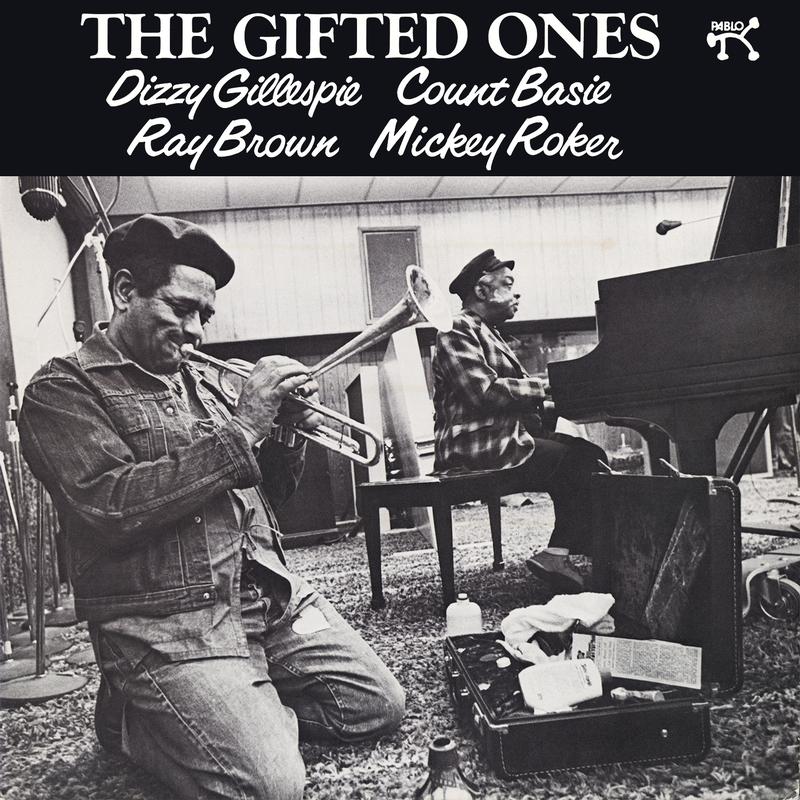
Count Basie and Dizzy Gillespie met in a Las Vegas studio on February 3, 1977, with Ray Brown on double bass and Mickey Roker on drums. The session became The Gifted Ones, released by Pablo in 1979. The names of the two leaders may initially suggest different musical worlds: Basie’s large swing orchestra and Gillespie’s central role in bebop. Here those histories meet within a four-piece group. Trumpet, piano, bass and drums provide the complete instrumental setting for a six-track programme.
Norman Granz produced the recording as part of his continuing work with musicians whose identities had developed across decades. Basie was 72 and Gillespie 59 at the time of the session. Brown and Roker also brought established working relationships with the trumpeter. This was therefore more than an encounter arranged around two celebrated names. The rhythm section had its own history with Gillespie, while the compact ensemble allowed the leaders’ musical approaches to meet directly, without a large orchestral arrangement determining their roles in advance.

Understanding the four-piece line-up
Joe Pass wrote the original liner notes for The Gifted Ones, but he does not play guitar on the recording. That distinction is useful when approaching the music. Gillespie’s trumpet is joined by Basie’s piano and the Brown–Roker rhythm section, with no additional guitar part between them. A musician’s name on an album can indicate several kinds of contribution; in this case Pass participates as a writer. The actual quartet is documented across all six selections, giving the record a consistent instrumental identity.
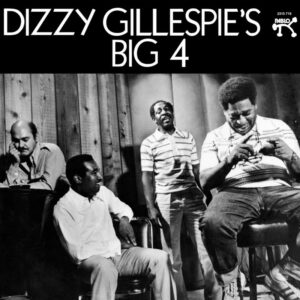
Brown and Roker had already recorded with Gillespie for Pablo. On Dizzy Gillespie’s Big 4, Pass really was the guitarist; this session establishes a different combination. Such distinctions are particularly valuable in the extensive Pablo catalogue, where familiar names recur in changing settings. A small alteration in personnel can create a different musical situation. Basie is the sole chordal instrumentalist here, and the interaction takes place within that specific arrangement of four musicians rather than within a larger group whose members happen to include the two leaders.

Repertoire carrying a shared history
“Ow!” creates a particularly long connection. Gillespie recorded the piece with his orchestra in 1947, with Ray Brown already playing bass. Thirty years later the two musicians return to it in this quartet. The link makes musical history tangible: a composition moves through the careers of its players, changing its setting from orchestra to small group. The 1977 recording can be approached both as an immediate performance and as a meeting with material that had accompanied Gillespie and Brown much earlier in their working lives.
“Constantinople” is another established Gillespie composition. “Back To The Land” and “Follow The Leader” carry joint Basie–Gillespie writing credits, while “St. James Infirmary” brings an older song tradition into the programme. The album therefore combines original material with a familiar historical song, rather than functioning simply as a general collection of standards. Side A contains “Back To The Land”, “Constantinople” and “You Got It”. Side B moves through “St. James Infirmary” and “Follow The Leader” to the closing “Ow!”, retaining the sequence of the original release.
Analogue Productions returns to Pablo
AAPJ 161 is the single 180-gram, 33⅓-RPM LP in the Analogue Productions Pablo reissue series. Matthew Lutthans at The Mastering Lab handled the mastering and lacquer cutting. The publisher identifies the source as the original analogue tape or master tape. This edition, introduced in 2024, is manufactured at Quality Record Pressings. Those details describe the production of the reissue without substituting a manufacturing specification for a personal assessment of its sound or a comparison with another pressing.
The package includes a Stoughton Printing tip-on gatefold jacket and an insert with notes by Tom Fine. All six tracks from the original album are present, with no additional session material. Despite the gatefold packaging, this remains one record with two sides. It presents a clearly defined encounter among four musicians whose shared histories extend across swing and bebop: recorded in 1977, first issued in 1979, and revisited here as part of Analogue Productions’ work with the Pablo catalogue.
You order from Michael 45 in Germany. We arrange the US import and dispatch from Hilden.
Customer question: Buying Analogue Productions records in Europe
Series: Pablo – all 30 records, musicians and the session book
Musicians
Participants and documented credit status. Track references correspond to the tracklist.
| Name | Instrument / role | Participation |
|---|---|---|
| Dizzy Gillespie | trumpet | Album personnel |
| Count Basie | piano | Album personnel |
| Ray Brown | double bass | Album personnel |
| Mickey Roker | drums | Album personnel |
Quartet on all six tracks. Joe Pass wrote the original liner notes; there is no guitar on this recording.

Reviews
There are no reviews yet.