
Before a name became a promise
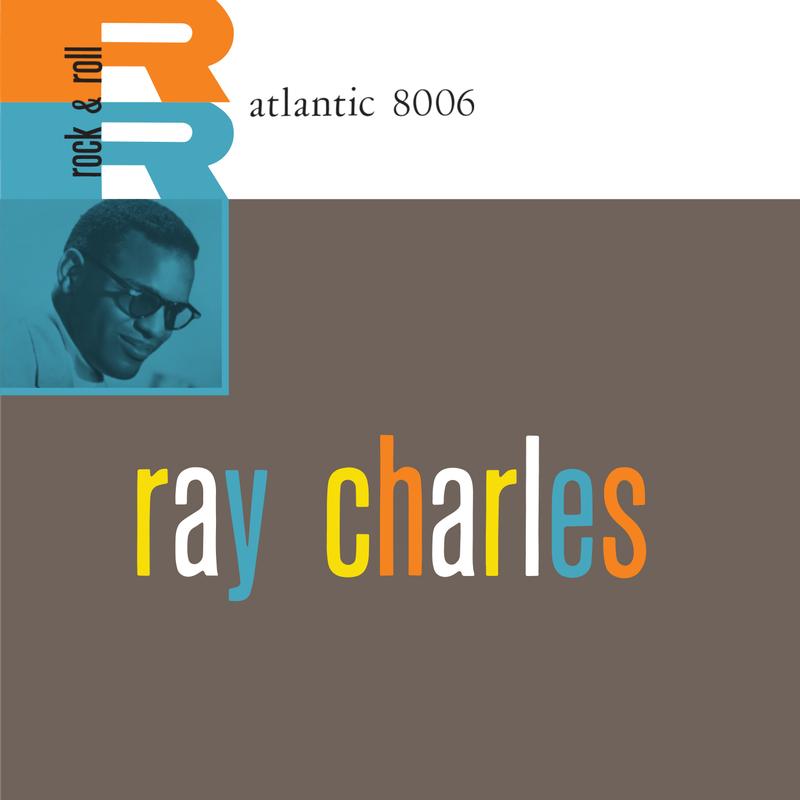
In 1957 Atlantic released an album whose title initially said little more than Ray Charles. Today that name can seem like a musical category in itself. At the time, the LP gathered fourteen recordings through which the formation of an unmistakable language can be followed. Made between 1953 and 1956, many of the performances had already lived as singles. The album therefore does not capture one particular day in the studio. It connects several stages of a journey on which blues, gospel, rhythm and blues, and the flexibility of a small jazz ensemble increasingly interacted.
The idea of a single sudden revelation is too simple, however. In “Mess Around”, the piano and its rolling energy occupy the centre; “Sinner’s Prayer” retains the weight of the blues; and “I Got a Woman” turns the exchange between voice and band into a shared forward impulse. These differences do not disappear beneath a uniform surface. Charles puts them into conversation. He can tell a line like a story, sharpen it rhythmically a moment later and turn a repetition into a new thought. His voice carries the traces of effort instead of concealing them behind immaculate smoothness.
The album was subsequently reissued under the title Hallelujah I Love Her So. The present edition identifies it as Ray Charles (Mono Version). Here those names refer to the same historical album, rather than two different original projects. That distinction is particularly useful to collectors, because the story of this music extends across singles, later LP titles and numerous reissues. Behind the changing sleeves stands a selection that presents the early Atlantic artist with remarkable breadth. Its variety is part of the point, rather than an inconvenience to be explained away.

A voice in conversation with the band
On these recordings Charles is both singer and pianist, and the two roles are difficult to separate. The piano can propel the vocal, comment in a brief opening or add an extra edge to the rhythm. The voice, in turn, adopts movements that could equally belong to an instrumental phrase. This explains part of the immediate impact that is sometimes too readily attributed to temperament alone. Beneath the rough surface lies a precise relationship between entrance, pause and response. The small ensembles provide a flexible framework in which those decisions remain audible.
Don Wilkerson is among the important saxophone voices of these early Atlantic years. His tenor saxophone is documented at the November 18, 1954 session in Atlanta that produced “Come Back Baby”, “Greenbacks” and “I Got a Woman”. Joe Bridgewater and Charles Whitley played trumpets, and David Newman played baritone saxophone; Wesley Jackson on guitar, Jimmy Bell on bass and Glenn Brooks on drums completed the accompaniment. This particular lineup is more than a list of recognisable names. It shows how the force of the horn sound arises from different registers and individual musical functions.
Precision is especially worthwhile with David Newman. The Atlanta session lists baritone saxophone; the April 1955 recordings list alto and baritone; and “Ain’t That Love”, recorded in November 1956, lists tenor and alto. Describing his contribution throughout this album simply as tenor saxophone would therefore be misleading. Nor should the 1954 group be retrospectively assigned to every track. The May 1953 New York recordings, for example, list Sam Taylor on tenor, Dave McRae on baritone, Mickey Baker on guitar and Connie Kay on drums. The musicians section preserves these distinctions instead of presenting a single imaginary band for the entire collection.

Fourteen recordings between weight and movement
The opening “Ain’t That Love” takes us directly into the exchange between voice, horns and rhythm. “Drown in My Own Tears” then changes the measure of time. A thought is not dispatched quickly here; the melody must be allowed to carry its weight. “Come Back Baby” and “Sinner’s Prayer” deepen this side of the album without simply repeating the same mood. Charles can create urgency through a delayed entrance. That makes the slower songs dramatic forms in their own right, rather than merely quiet intervals between faster numbers.
“Funny (But I Still Love You)”, “Losing Hand” and “A Fool for You” explore different shades of attachment and loss. Against them stand “Hallelujah I Love Her So”, “Mess Around” and “This Little Girl of Mine”, where rhythmic movement and melodic directness push more openly outwards. The sequence allows the individual songs to retain their own proportions. They do not require extended improvisation to establish musical character. A turn in the singing, a short horn entrance or a piano figure can already be enough to make a performance distinct.
With “Mary Ann”, “Greenbacks”, “Don’t You Know” and finally “I Got a Woman”, the conclusion remains equally varied. “Don’t You Know” comes from a December 1953 New Orleans session, while “I Got a Woman” returns us to Atlanta in 1954. The order is therefore not chronological. It is an album shape created through selection and sequencing. Repeated listening can follow both the continuity of Charles’ personality and the changing musicians around him. That combination makes this early collection particularly rewarding: it presents an already unmistakable artist without retrospectively smoothing away the steps in his development.
This edition: mono across two 45 RPM records
The Analogue Productions edition AAPA 007-45 belongs to the Atlantic 75 series and spreads the fourteen tracks across two 180-gram LPs playing at 45 RPM. Mono is explicitly specified. For this material, that is a central format description rather than an incidental addition to the title. Comparisons between editions should take account of the original recording context and the treatment used for each release. The useful question is not how widely the soundstage extends, but how coherently voice, piano, horns and rhythm relate to one another within the mono image.
According to the manufacturer, Bernie Grundman cut this edition from the original master tape. The publisher’s current description names Quality Record Pressings and RTI as pressing facilities; neither is claimed exclusively here without examining a particular copy. A Stoughton tip-on gatefold jacket completes the presentation. These details describe the offered edition rather than replacing a personal listening impression. Useful points of comparison include the intelligibility of vocal phrases, the interaction of the lower registers and the dynamics of short horn responses. Above all, this release preserves an album on which a great name acquires its meaning through many individual, clearly distinguishable steps.
You order from Michael 45 in Germany. We arrange the US import and dispatch from Hilden.
Also on SACD: Ray Charles
More by Ray Charles: What’d I Say · Genius + Soul = Jazz
Customer questions: Atlantic 75: which titles are worth buying? · Buying Analogue Productions records in Europe
Series: Atlantic 75 Series – all 75 albums, time journey and the people behind Atlantic
Musicians
Participants and documented credit status. Track references correspond to the tracklist.
- Ray Charlesvocals, pianoParticipation: All album tracks
- Jesse DrakestrumpetParticipation: A4, B1, B2, C2
- Sam Taylortenor saxophoneParticipation: A4, B1, B2, C2
- Dave McRaebaritone saxophoneParticipation: A4, B1, B2, C2
- Mickey BakerguitarParticipation: A4, B1, B2, C2
- Lloyd Trotmandouble bassParticipation: A4, B1, B2, C2
- Connie KaydrumsParticipation: A4, B1, B2, C2
- Wallace DavenporttrumpetParticipation: D2
- Frank MitchelltrumpetParticipation: D2
- O’Neil Geraldalto saxophoneParticipation: D2
- Joe Tillmantenor saxophoneParticipation: D2
- Warren Bellbaritone saxophoneParticipation: D2
- Lloyd Lambertdouble bassParticipation: D2
- Oscar MooredrumsParticipation: D2 · drummer, not the guitarist of the same name
- Joe BridgewatertrumpetParticipation: A1, A2, A3, B3, C1, C3, C4, D1, D3
- Charles WhitleytrumpetParticipation: A3, D1, D3
- Don Wilkersontenor saxophoneParticipation: A2, A3, B3, C1, C3, C4, D1, D3
- David Newmanbaritone saxophone, alto saxophone, tenor saxophoneParticipation: Baritone: A3, D1, D3; alto/baritone: B3, C3; tenor/alto: A1
- Wesley JacksonguitarParticipation: A3, D1, D3
- Jimmy Belldouble bassParticipation: A3, D1, D3
- Glenn BrooksdrumsParticipation: A3, D1, D3
- Riley WebbtrumpetParticipation: B3, C3
- Roosevelt Sheffielddouble bassParticipation: A1, B3, C3
- William PeeplesdrumsParticipation: A1, B3, C3
- Joshua WillistrumpetParticipation: A2, C1, C4
- Cecil Paynebaritone saxophoneParticipation: A2, C1, C4
- Paul Westdouble bassParticipation: A2, C1, C4
- Panama FrancisdrumsParticipation: A2, C1, C4
- John HunttrumpetParticipation: A1
- Emmett Dennisbaritone saxophoneParticipation: A1


Session personnel according to the Atlantic discography, including David Newman’s changes of instrument. No blanket attribution of the Cookies or Raelettes to these fourteen tracks.

Charlie Messing –
I’ve had this album since it came out in 57. One of my best albums, and I have a thousand. He was so great back then, and the songs were too! He invented “Soul” with this material.
I am sad when I hear anyone say they don’t know his early material – all they know starts after his amazing Atlantic years, with either “Hit the Road Jack” or “Georgia on My Mind.”
You will not be sorry to get this album – it is transcendent.
Welcome to the world of the young Ray Charles.