Ellington, at two different scales
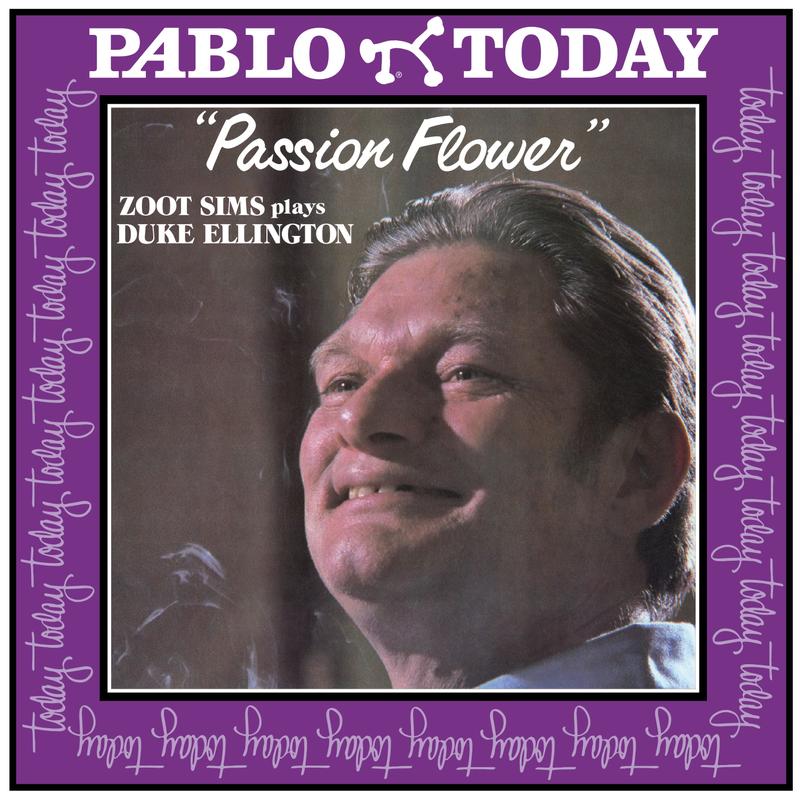
A Duke Ellington melody can flourish inside an orchestra and acquire a different intimacy when a small group takes it up. That change of perspective is central to Passion Flower. Zoot Sims remains the focus, but the setting around his saxophone does not stay the same. Benny Carter’s orchestral arrangements shape the first side; quintet performances occupy the second. The size of the ensemble is less important than the different possibilities it gives Sims for responding to the musicians around him.
Released by Pablo Today in 1980, the album draws on three distinct recording dates or groups of dates: an orchestral session in Los Angeles in August 1979, small-group recordings that December and further work in New York in May 1980. Knowing that history makes the two sides especially rewarding. They offer contrasting approaches to a shared body of music, rather than documenting one unchanging band in a single sitting.

Benny Carter builds the setting
The five selections on side one come from August 14, 1979. Carter arranged and conducted the orchestra, with Sims as the featured soloist. Its personnel include trombonists J. J. Johnson and Britt Woodman, alongside Frank Wess and Buddy Collette. Jimmy Rowles is at the piano, providing a musical personality that also links the smaller groups. These are individual voices with substantial histories, not anonymous support behind a famous name.
“It Don’t Mean a Thing” and “In a Mellow Tone” provide familiar entry points. “I Got It Bad,” “I Let a Song Go Out of My Heart” and “Black Butterfly” complete the side. One pleasure is following how a saxophone line finds its place inside a larger arrangement. Listen beyond the soloist to the instrumental responses: when does the orchestra reinforce a phrase, when does it answer, and when does it leave the line room to stand on its own?

A brother, a pianist and changing rhythm sections
The quintet recordings introduce trombonist Ray Sims, Zoot’s brother. They were not all made in the same studio or with the same rhythm section. John Heard and Shelly Manne took part in the December sessions at Group IV in Los Angeles; Michael Moore and John Clay appear on the New York RCA date that May. Rowles remains the connecting piano voice. Even within the smaller format, the album therefore contains more than one ensemble character.
“Bojangles” and “Your Love Has Faded” were recorded in December, while “Do Nothin’ Till You Hear from Me” and the title track belong to May. That distinction is worth keeping in mind because other performances from these sessions appeared on different Pablo releases. Passion Flower presents a particular selection, not every piece recorded on those days. Its coherence belongs partly to the musicians and partly to the decisions that turned their work into this album.
The flower belongs to Billy Strayhorn
The subtitle Zoot Sims Plays Duke Ellington identifies the musical world being explored. Yet “Passion Flower,” the composition that supplies the album’s main title, was written by Billy Strayhorn. The distinction matters. Ellington’s musical legacy also includes the people who helped shape its repertoire; paying tribute to that world need not mean assigning every composition to a single author.
For Sims, the connection reached back decades. Ellington’s orchestra of 1940–41, and Ben Webster in particular, had been important early influences. Here that history becomes something more personal than imitation. Familiar melodies establish a shared language while Sims retains his own way of telling a story. After the memorable themes, follow the smaller events: the end of a phrase, a response from Rowles, or the moment a trombone moves the conversation into another register. Those details keep the tribute alive as present-tense music.
Customer question: Buying Analogue Productions records in Europe
Series: Pablo – all 30 records, musicians and the session book
Musicians
Documented selection of participating musicians. Personnel may vary by track; this list does not claim to be complete.
- Zoot SimsTenor saxophone
- Benny CarterConductor
- Jimmy RowlesPiano



Reviews
There are no reviews yet.