Yes establish their own musical form
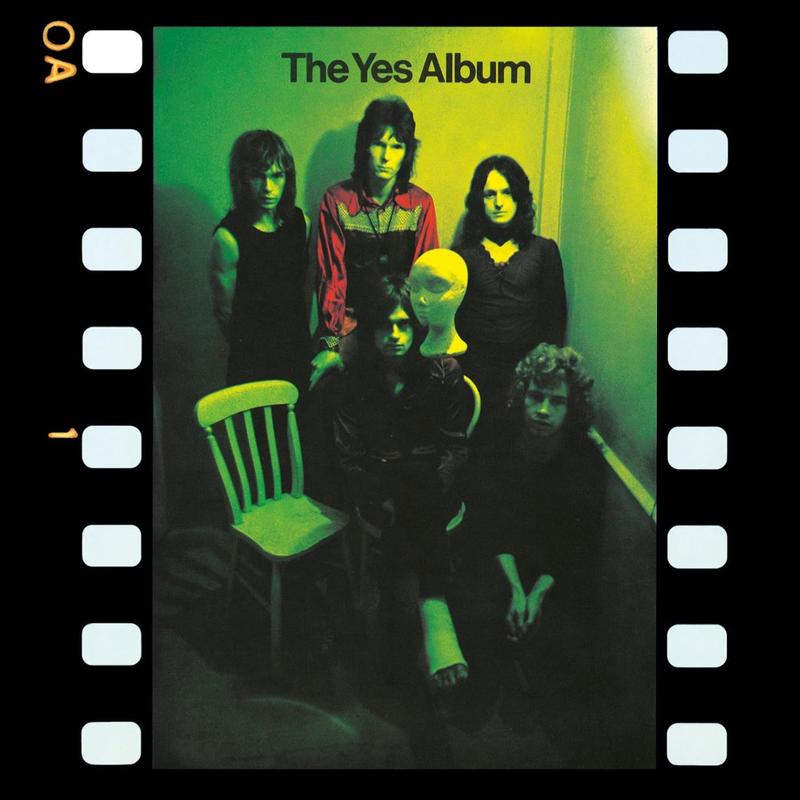
Released in 1971, The Yes Album was the band’s third studio album and its first made entirely from original compositions. Steve Howe had replaced Peter Banks on guitar. Alongside Jon Anderson, Chris Squire, Tony Kaye and Bill Bruford, he helped develop music that brought multi-part structures, distinctive vocal lines and contrasting instrumental colours into the same programme.
The studio recordings took place at Advision in London during autumn 1970, with Yes and Eddy Offord producing, following work on the material in Devon. The album captures a particular stage in the group’s development. Howe’s guitar possibilities meet Kaye’s organ and piano, Squire’s bass and Bruford’s drums. These are the musicians on the recording; later Yes line-ups should not be projected back onto this album.

Steve Howe, electric guitar and Clap
Yours Is No Disgrace opens the record, while Starship Trooper combines Life Seeker, Disillusion and Würm. The last section draws on musical material from Howe’s time with Bodast. Such connections reveal how a band’s new work can incorporate ideas a player brings from an earlier musical life.
Clap occupies a place of its own. Howe’s solo acoustic performance was recorded live at London’s Lyceum on July 17, 1970. Early releases mistakenly called it The Clap; Clap is the correct title. Howe plays alone here. The brief performance changes the scale between the longer band pieces and demonstrates how different approaches to the guitar can belong naturally within one album.

Small colours within larger pieces
I’ve Seen All Good People contains Your Move and All Good People. In the first section, Howe plays a Spanish laúd, also identified in the credits as “Vachalia”, while Colin Goldring contributes recorder. Goldring’s guest appearance belongs specifically to Your Move, rather than to the album as a whole. Details like these provide another way to approach even very familiar music.
Tony Kaye’s piano solo in A Venture is worth its own moment of attention. The extended structures of The Yes Album coexist with shorter passages and distinctive instrumental touches. Perpetual Change closes the programme. Following the transitions offers a rewarding listening path: when does a vocal line lead, when does an instrument take over, and how do separate sections become a larger piece? Discovering those relationships is part of the pleasure of returning to this music.
The Atlantic 75 double-LP edition
Analogue Productions released this Atlantic 75 edition in 2024 on two stereo 180-gram LPs playing at 45 RPM. Kevin Gray handled the cut at Cohearent Audio, with the publisher identifying the original analogue master tape as the source. The presentation includes a Stoughton tip-on gatefold jacket.
The publisher specifies QRP for the first 2,000 numbered copies; subsequent pressings may come from QRP or RTI. A particular number or pressing plant therefore cannot be promised without checking the individual copy. The six main selections are spread over four sides, with Perpetual Change on side D. The format provides an occasion to spend time with an album on which Yes explore the possibilities of their own writing with considerable curiosity.
You order from Michael 45 in Germany. We arrange the US import and dispatch from Hilden.
Also on SACD: The Yes Album
More by Yes: 90125 · Close To The Edge
Artist page: All titles by Yes
Customer questions: Atlantic 75: which titles are worth buying? · Buying Analogue Productions records in Europe
Series: Atlantic 75 Series – all 75 albums, time journey and the people behind Atlantic
Musicians
Participants and documented credit status. Track references correspond to the tracklist.
- Jon Andersonlead vocals, percussionParticipation: Album personnel except B1 (Clap)
- Chris Squirebass, vocalsParticipation: Album personnel except B1 (Clap)
- Steve Howeelectric guitar, acoustic guitar, laúd (“Vachalia”), vocalsParticipation: Album personnel · B1 solo · laúd C1a
- Tony Kayepiano, organ, Moog synthesizerParticipation: Album personnel except B1 (Clap)
- Bill Bruforddrums, percussionParticipation: Album personnel except B1 (Clap)
- Colin GoldringrecorderParticipation: C1a (Your Move)


Clap (B1) is Steve Howe solo, live at the Lyceum on July 17, 1970. Colin Goldring plays recorder only on Your Move (C1a). Album credits do not imply every instrument on every track. Produced by Yes and Eddy Offord.
How Michael hears this edition
Listening impression · paraphrased from the video
Michael highlights the dynamics and powerful drums on this Atlantic 75 edition. Despite the dense music, he hears air between the instruments and a strong sense of space, making individual instruments easy to follow. He explicitly did not compare it directly with a UK first pressing here because he could not obtain a copy in suitable condition.

Reviews
There are no reviews yet.