Two sides of the Stax story
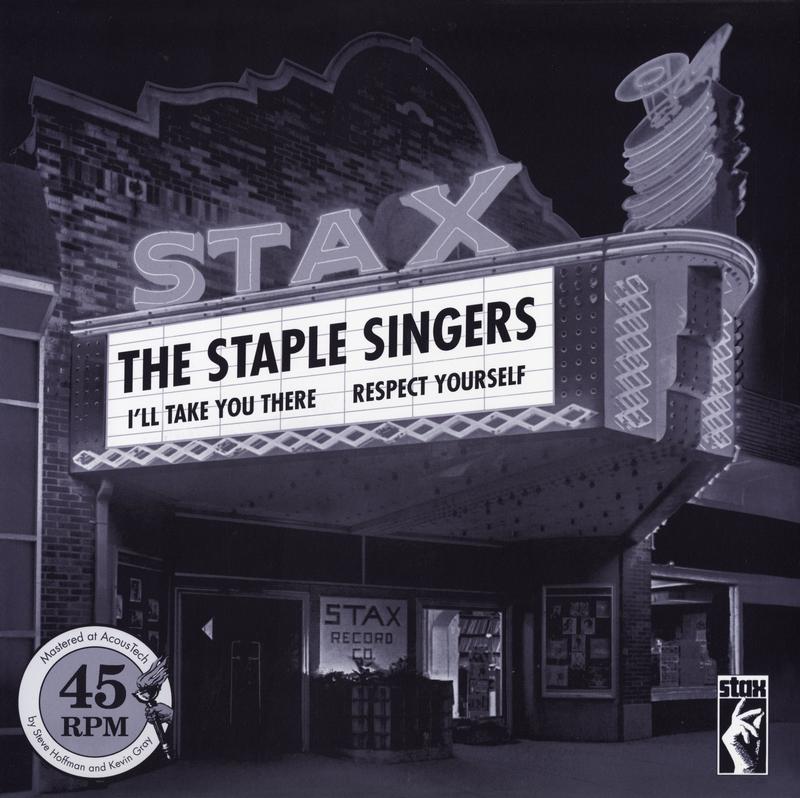
Hit Singles is a concentrated encounter with the Staple Singers: one twelve-inch record, two selections, a side each for “I’ll Take You There” and “Respect Yourself”. It is neither a collection of numerous hits nor the complete Be Altitude: Respect Yourself album associated with this music. Each performance receives a side of its own, making the programme unusually direct and clearly defined.
The family group brought a long history to these recordings. Roebuck “Pops” Staples built the group in Chicago; gospel, his guitar background and involvement in the civil rights movement were part of its foundation. The Staple Singers joined Stax in 1968. After initial productions with Steve Cropper, Al Bell took over and developed the combination of voices and rhythm that led to these two successes.

Mavis and the road to Muscle Shoals
For the rhythm tracks, Bell worked with musicians in Muscle Shoals including bassist David Hood, drummer Roger Hawkins, electric pianist Barry Beckett and guitarist Jimmy Johnson. Mavis Staples sang the guide vocal during that work. Further recording and mixing followed at Ardent in Memphis with Terry Manning. The finished performances combine musicians playing together with carefully considered later studio contributions.
“I’ll Take You There” naturally draws attention to the bass. Jamaican influences belong to its recording history: Manning later described the deliberate pursuit of an early reggae feel. Listen to how few harmonic changes are needed to sustain the piece. Its movement comes from entrances, pauses and responses between the voice and the accompaniment, rather than from a constantly changing sequence of chords.

Pops, Mavis and a shift of perspective
“Respect Yourself” was written by Luther Ingram and Mack Rice. It places the group’s outlook in a different musical setting from “I’ll Take You There”. Pops and Mavis share the leading roles while the rhythm section, horns and further studio contributions shape the progression. The family’s identity remains central even as the production extends beyond its original gospel configuration.
On another listen, change your focus: first the voices, then bass and drums, then the extra lines within the arrangement. Pops’ distinctive guitar is important to his history, but not every guitar solo in these productions was played by him. These recordings involved a larger studio ensemble. That makes it worth attending to the whole performance without automatically attaching every instrumental part to a familiar face.
The twelve-inch 45 RPM edition
AAPP 4116-45 is the Analogue Productions release on one 180-gram twelve-inch record at 45 RPM. The publisher credits Kevin Gray and Steve Hoffman at AcousTech Mastering, working from the original analogue tapes. The documented runouts contain the corresponding initials. A pressing plant for the currently offered stock is not securely identified, and no particular copy number is promised.
Listed running times of roughly four and a half minutes per side are substantially longer than the shortened original seven-inch singles. The title Hit Singles should therefore not be read as a guarantee of those brief radio versions. For listeners wanting these two performances as individual record sides, the scope is straightforward: the two named tracks, without the remaining album programme or an additional selection of bonus material.
You order from Michael 45 in Germany. We arrange the US import and dispatch from Hilden.
Customer question: Buying Analogue Productions records in Europe
Musicians
Documented selection of participating musicians. Personnel may vary by track; this list does not claim to be complete.
| Name | Instrument / role |
|---|---|
| Pops Staples | Vocals |
| Yvonne Staples | Vocals |

Reviews
There are no reviews yet.