
Returning to Los Angeles
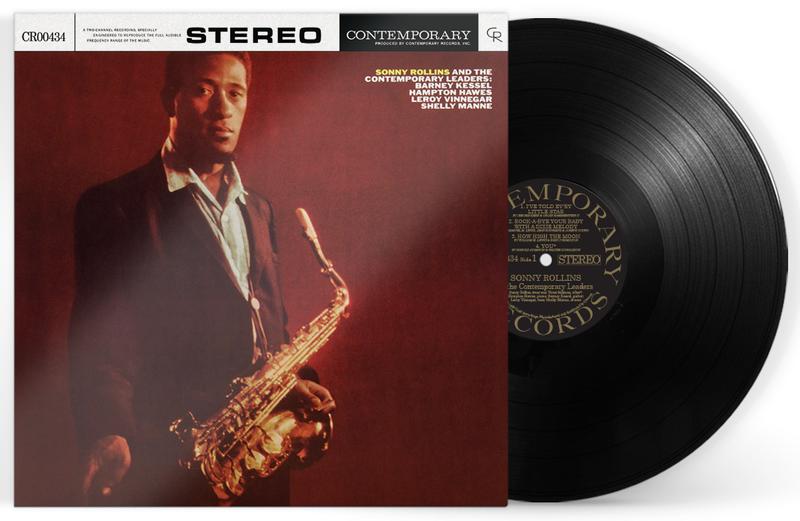
In October 1958, Sonny Rollins returned to Contemporary in Los Angeles for three days of recording. A year and a half earlier, he had made Way Out West there with Ray Brown and Shelly Manne. This time the ensemble expanded: Hampton Hawes played piano, Barney Kessel guitar, Leroy Vinnegar bass and Manne again supplied the drums. Victor Feldman added vibraphone on “You”. The title Sonny Rollins and the Contemporary Leaders describes a meeting with several independent musical personalities from the label's circle.
Lester Koenig produced the sessions of 20–22 October, and Roy DuNann engineered them. The album followed in 1959. Hawes, Kessel, Vinnegar, Manne and Feldman had already released Contemporary records under their own names; many also knew one another through other groups. Rollins was entering a musical environment with established relationships of its own. That background distinguishes the ensemble from a casually assembled collection of accompanists and broadens the context for his second recording project with the label.

Piano, guitar and one appearance by vibraphone
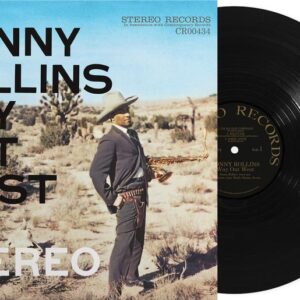
Kessel and Manne worked together in the Poll Winners, and Hawes had recently recorded Four! with them. Vinnegar had joined André Previn and Manne for My Fair Lady. Those connections reappear here as practical experience shared between players. Piano and guitar provide different harmonic resources, placing Rollins' tenor in another relationship with the rhythm section from the piano-less trio of Way Out West. The two records offer a clear comparison of instrumental settings, not simply of album titles.
Feldman's contribution is limited to “You”. The vibraphone is consequently a particular colour within the programme rather than a sixth instrument heard throughout. That distinction should remain visible in the personnel information. For listening, compare the accompaniment from one selection to another: how does the setting around the saxophone change when another instrument enters, or when one element recedes? A group containing so many experienced accompanists rewards attention to those shifts as well as to the featured soloist's line.

Eight songs before an extended pause
Rollins included no original compositions on this album. Its eight selections range from “I've Told Ev'ry Little Star” and “Rock-a-Bye Your Baby with a Dixie Melody” to “Alone Together” and “The Song Is You”. Two come from Jerome Kern and Oscar Hammerstein II. The programme explores older songs that offer the tenor player different melodic starting points, placing “In the Chapel in the Moonlight” alongside the particularly familiar jazz repertoire piece “How High the Moon”.
These became Rollins' final studio recordings of the 1950s. After further concert appearances, he withdrew from public performance in 1959 and spent an extended period practising on New York's Williamsburg Bridge. That period eventually led to The Bridge. The later story should not overwhelm the music here, but it gives the album a particular position in his career: an established studio chapter was ending. Familiar song forms and a known label environment immediately precede a sustained period of private musical work and reconsideration.
Bernie Grundman and an RTI pressing
ACONC 600 is part of Craft's Contemporary Records Acoustic Sounds Series. The edition contains one 180-gram LP in a tip-on jacket. Craft states that Bernie Grundman cut the lacquers from the original master tapes through an AAA chain. Manufacturing is specifically credited to RTI. That makes this title an exception to many other records in the series, which were pressed at Quality Record Pressings. Applying the general series wording without checking the individual edition would identify the wrong plant.
Craft previously brought Rollins' two Contemporary albums together in the Go West! box. Documented runouts on this standalone LP contain related identifiers, but those inscriptions alone do not conclusively establish the reuse of particular lacquers or metal parts. The secure details are Grundman's credited cut, RTI manufacture and the original eight-track programme. Session alternate takes are not included. The release preserves the album as a distinct encounter between Way Out West and the next stages of Rollins' musical development.
You order from Michael 45 in Germany. We arrange the US import and dispatch from Hilden.
More by Sonny Rollins: East Broadway Run Down · On Impulse
Artist page: All titles by Sonny Rollins
Series: Contemporary – all 24 records: sunny jazz from Los Angeles
Musicians
Documented participants. Some personnel details or individual track assignments remain unresolved.
| Name | Instrument / role | Participation |
|---|---|---|
| Sonny Rollins | tenor saxophone | Album personnel |
| Hampton Hawes | piano | A1, A2, A4, B1, B2, B3, B4 |
| Barney Kessel | guitar | Album personnel |
| Leroy Vinnegar | double bass | Album personnel |
| Shelly Manne | drums | A1, A2, A4, B1, B2, B4 · B3 unresolved |
| Victor Feldman | vibraphone | A4 |
Victor Feldman appears only on A4 (“You”). Shelly Manne’s participation on B3 is not securely documented.


Reviews
There are no reviews yet.