A harmonica takes the lead
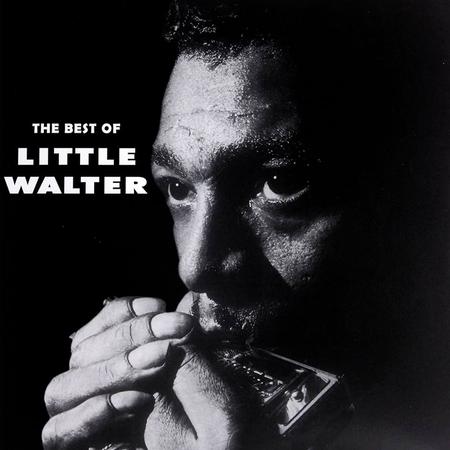
A small harmonica, two cupped hands and an amplifier gave Little Walter a voice that could stand alongside electric guitars. The Best of Little Walter reveals how flexible that voice could be. It drives a rhythm, answers a vocal line or tells the entire story without words. These twelve selections come from his early success in the 1950s. Originally issued by Checker as his first LP, the collection brought together music that had already reached its audience on singles.
Walter Jacobs was a member of Muddy Waters’ band when his instrumental “Juke” became a hit in its own right in 1952. Waters and Jimmy Rogers played guitar on the recording, with Elgin Evans on drums. That background matters: Walter developed his solo voice inside a working band. After success allowed him to lead his own group, his instinct for brief replies and rhythmic shifts remained central. His harmonica takes the foreground while keeping an ear on everything happening behind it.

From “Juke” to “My Babe”
“Juke” does not need a singalong chorus. A memorable figure, small variations and the tension between entrances carry the performance. It reached the top of the American R&B chart. Here it opens the second side, while the first begins with Willie Dixon’s equally successful “My Babe”. Together they introduce Walter’s complementary identities: an inventive instrumentalist and a singer who could make a simple line stick through the force of its delivery.
There is just as much to discover beyond those obvious calling cards. “Sad Hours” allows the harmonica time to develop a thought. “Blues with a Feeling” draws on a song by Rabon Tarrant, while “Mean Old World” reaches back to T-Bone Walker. Walter approaches existing songs as material for a language of his own. The sequence moves between instrumentals and vocals, concentrated bursts and more restrained phrases. A collection of individual singles gradually becomes a remarkably coherent musical portrait.

Small gestures, lasting consequences
Listen closely to the transitions in Walter’s tone: where does a clear note acquire its rough edge? His hands around the instrument and microphone shape the sound, while amplification gives even a small movement weight. That offers a more useful way into his influence than a roll call of famous admirers. These performances demonstrate how a pocket-sized instrument can shape an electric band without filling every available moment. The spaces around a phrase are part of its effect.
The accompaniment is therefore essential to this record’s story. Guitars place figures beneath the melody, the drums maintain the flow, and Walter chooses when to join them and when to leave room. Try “Off the Wall” followed by a vocal performance such as “Last Night”. The instrument’s role changes, but its personality remains unmistakable. Those shifts make the collection rewarding even when “Juke” and “My Babe” have long been familiar: the celebrated soloist is also an attentive ensemble musician.
This edition
The Chess Acoustic Sounds Series presents The Best of Little Walter on one 180-gram LP, running at 33⅓ RPM in mono. Matt Lutthans handled mastering at The Mastering Lab, with the original analog tapes identified as the source by the publisher. Pressing is by Quality Record Pressings. Catalog number ACHE 49052 comes in a tip-on gatefold and reproduces the original liner notes by Studs Terkel. It contains the twelve selections of the classic compilation.
Series: Chess Records – all 10 records: singles that became albums
Musicians
Documented selection of participating musicians. Personnel may vary by track; this list does not claim to be complete.
| Name | Instrument / role |
|---|---|
| Little Walter | Lead vocals, Harmonica |
| Muddy Waters | Guitar |
| Jimmy Rogers | Guitar |
| David Myers | Guitar |
| Louis Myers | Guitar |
| Leonard Caston | Guitar |
| Robert Lockwood Jr. | Guitar |
| Willie Dixon | Bass |
| Elgin Evans | Drums |
| Fred Below | Drums |

Reviews
There are no reviews yet.