
A singing voice beside Coltrane’s tenor
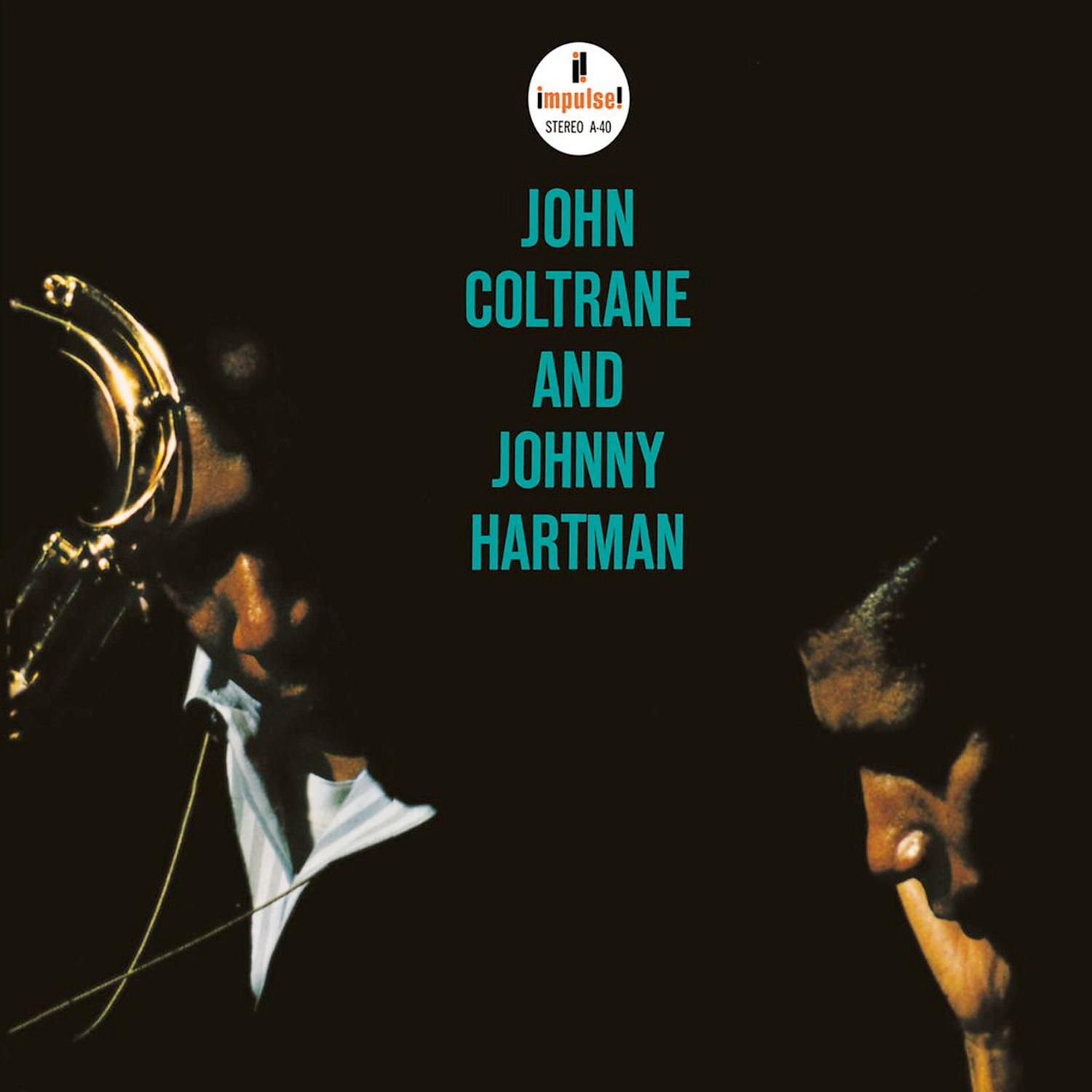
John Coltrane & Johnny Hartman centres on a particularly clear encounter: Hartman’s baritone voice and Coltrane’s tenor saxophone, accompanied by McCoy Tyner, Jimmy Garrison and Elvin Jones. Six songs make up the programme, recorded at Van Gelder Studio in Englewood Cliffs on March 7, 1963. If you want to buy John Coltrane & Johnny Hartman on vinyl, this Acoustic Sounds Series edition offers one 180-gram stereo LP at 33⅓ RPM. The album is concentrated and clearly framed around the relationship between singer and instrumental group.
Hartman introduces a different kind of expression into the ensemble. A sung phrase has words, verbal emphasis and a narrative perspective; a saxophone beside it can take up a melody, extend it or give it another weighting. The two voices need not perform the same task in order to belong together. Their different means of expression are part of the attraction. Coltrane is not simply alone in front of his quartet, and Hartman is not singing over a large, interchangeable backing orchestra. Both partners are explicitly present in the album’s title.
Tyner on piano, Garrison on double bass and Jones on drums provide a specific instrumental setting for the meeting. These are three musicians closely connected with Coltrane’s work. Their presence also makes the record inviting for listeners who first encountered the saxophonist through his instrumental albums. The familiar group works here with an additional human voice and with song lyrics. That changes the task without requiring the musicians to disappear into an anonymous accompanying function behind the singer.
The documented recording date is March 7, 1963. A conflicting date in an edition note was checked against the session discography; all six LP selections belong to this session. That provides a sufficiently clear basis for the album’s history. It does not need embellished anecdotes about what happened in the studio. The personnel and repertoire already make the encounter specific: five musicians, six songs and one recording occasion in a single location.

Three songs on the first side
They Say It’s Wonderful opens the LP. Irving Berlin’s song establishes the beginning of a programme devoted to composed songs and their interpretation. Hartman makes language an immediate part of the performance. Coltrane’s instrument works through different means: it cannot speak the words, but it remains within the song’s melodic setting. Their proximity offers a useful listening perspective, presenting the same material as a sung narrative and as a starting point for an instrumental voice.
Dedicated To You follows. The selection continues with a directly addressed, personal song perspective. On a vocal album, sequencing concerns more than keys or tempos; it also brings different narrative situations into relation. The pieces can be followed without knowing every detail of their original histories. Listeners who later explore the writers or other interpretations have a starting point in the tracklist, but the record itself continually brings attention back to the musicians performing together here.
My One And Only Love closes side one. Guy Wood and Robert Mellin are responsible for its music and lyrics. Within the album, the song has a clear place: it is the third of three selections, rather than an isolated highlight removed from its surroundings. The first side can therefore be heard as a small, complete sequence. Three songs provide changes in material, while the continuing presence of the same group establishes connections between them.
It is worth considering the scale of the contributions in a setting like this. A musical statement does not have to be particularly long to carry weight. Singing places specific demands on space, accompaniment and transitions, and the instruments can respond without continually expanding the form. The documented durations on the first side are all around five minutes. The record gives its songs room without turning them into extended suites. Concentration is part of the album’s shape, rather than an absence that needs to be filled.

Lush Life and the work of the accompanying trio
Billy Strayhorn’s Lush Life opens the reverse side. Its composer’s name connects the album with another important musical world, but Strayhorn is not a performer on this session. Hartman, Coltrane and the rhythm section take up his song. For a collector, this offers an appealing way to follow a writer through different interpreters. The experience is not simply another encounter with the same composition: a different personnel creates a different relationship between singing and instrumental playing.
You Are Too Beautiful, by Richard Rodgers and Lorenz Hart, comes next. Autumn Serenade, by Peter DeRose and Sammy Gallop, then closes the LP. Again, there are three songs on the side. The complete album remains a six-track programme without another session or later bonus material appended to it. That limited number makes its order easy to hold in mind, allowing transitions and recurring instrumental relationships to become more apparent on subsequent playings.
McCoy Tyner’s piano is part of those relationships. It can clarify a song’s harmonic surroundings while also offering a line of its own. Jimmy Garrison’s double bass and Elvin Jones’s drums complete the group. Their importance does not rest merely on the familiarity of their names. Their roles create the setting in which Hartman’s vocal phrases and Coltrane’s tenor meet. After initially concentrating on the two principal voices, the trio provides a natural focus for another, differently attentive hearing of the record.
Bob Thiele produced the recording, and Rudy Van Gelder handled the engineering. Those responsibilities belong to the session’s history rather than its performing personnel. The songwriters likewise remain distinct from the five musicians. On a repertoire album, clear attribution prevents a long list of names from obscuring the actual group. The musician section therefore identifies the players directly, while the surrounding text connects the songs, recording occasion and particular edition offered here.
The single-LP Acoustic Sounds Series edition
The reissue carries catalogue number AIMP 80001 and was released in 2022 as part of the Verve/UMe Acoustic Sounds Series. Ryan K. Smith handled the mastering at Sterling Sound from the original analogue tapes. The single stereo LP weighs 180 grams and was pressed by Quality Record Pressings. Stoughton Printing supplied the tip-on gatefold jacket. These details identify the offered edition, while Impulse! and the year 1963 establish the original album’s historical setting.
At 33⅓ revolutions per minute, with three selections on each side, the sequence remains easy to follow. Turning the record separates two small groups of songs without dissolving the connection between performances from the same session. The format suits an album whose purpose is not to accumulate the greatest possible playing time. You can hear one complete side or follow all six pieces in order. The tracklist below makes the precise contents of the LP visible before choosing it.
For Coltrane listeners, the album offers another view of a familiar group. For listeners interested in jazz singing, it presents Hartman with a small and clearly named ensemble. Those two approaches complement one another. There is no need to choose between singer and saxophonist before finding a way into the record. It can be approached through a song’s words, the contour of a melody or the supporting trio’s work, then revisited from another direction on the next playing.
That is part of its value as a complete release. The six songs do not simply sit beside one another as recognisable titles. The same five musicians connect them through a shared session and a clearly defined instrumental setting. Hartman’s voice gives the group a verbal centre, while Coltrane’s tenor supplies another melodic perspective. The LP preserves both within a manageable programme that can be discovered without extensive prior knowledge and revisited with closer attention as the relationships between its players become more familiar.
You order from Michael 45 in Germany. We arrange the US import and dispatch from Hilden.
Series: Impulse! – all 19 records: the house that Trane built
Musicians
Participants and documented credit status. Track references correspond to the tracklist.
- Jimmy GarrisonExisting portrait; not a session depictiondouble bassParticipation: Album personnel; individual scope unspecified
- Elvin JonesExisting portrait; not a session depictiondrumsParticipation: Album personnel; individual scope unspecified
- Johnny HartmanLater reference: undatedvocalsParticipation: Album personnel; individual scope unspecified
- McCoy TynerPortrait reference: 1962pianoParticipation: Album personnel; individual scope unspecified
- John ColtraneExisting portrait; not a session depictiontenor saxophoneParticipation: Album personnel; individual scope unspecified


Five musicians; session discography verifies March7,1963 against the erroneous March3 credit. Bob Thiele: producer; Rudy Van Gelder: recording. Songwriters are not additional performers. Ryan K. Smith / Sterling Sound: mastering from original analogue tapes; QRP: pressing; Stoughton: jacket.
How Michael hears this edition
Listening impression · paraphrased from the video
Michael hears an analytical yet warm presentation with a beautiful soundstage. He notices a difference in Johnny Hartman’s midrange compared with another recording of the singer but cannot confidently identify its cause. He rates it a strong 8.5 to 9 out of 10 and did not perform a direct pressing comparison.
🎧 Review video: John Coltrane And Johnny Hartman - The Acoustic Sound Series
This video is hosted by YouTube (Google). It only loads once you switch on “Functional” in the cookie settings.

Reviews
There are no reviews yet.