Two tunes for “Rabbit”
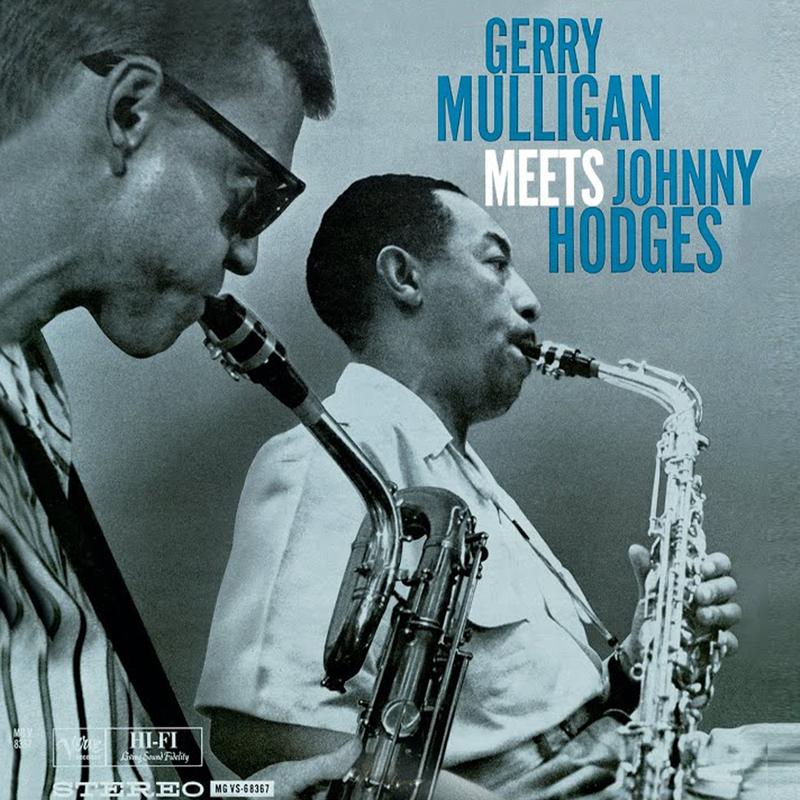
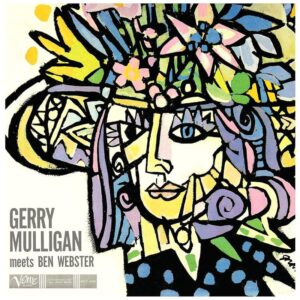
“Bunny” and “18 Carrots for Rabbit” are not arbitrary titles. Johnny Hodges was known among musicians as “Rabbit,” and Gerry Mulligan used the nickname for two compositions dedicated to his partner. The track list already tells you something about the meeting: the baritone saxophonist brings material that explicitly places his guest at the centre of the occasion.
The session took place in Los Angeles on November 17, 1959. Claude Williamson plays piano, Buddy Clark bass and Mel Lewis drums alongside Mulligan and Hodges, with Norman Granz producing. The six selections come from the compositional world of the two horn players. Instead of relying on a programme of widely known standards, the meeting is shaped by their own contributions and the different settings those pieces provide.

The composer leaves the spotlight to his guest
One particularly revealing detail belongs to “What’s the Rush.” The composition is credited to Gerry Mulligan and Judy Holliday, the actress who was his partner at the time. Yet Mulligan sits out on this very piece. Hodges supplies the sole horn voice, accompanied by the rhythm section. A listener expecting both saxophones throughout the album therefore encounters a deliberate exception.
That change offers a useful comparison. Hear “What’s the Rush” on its own, then return to it in the context of the other tracks. How does your attention shift when the second horn is present? Where do the instruments support one another, and when do their contrasting registers become more apparent? “Bunny,” “Back Beat” and “Shady Side” provide further starting points for following the players’ roles, without reducing the meeting to a simple demonstration of alto versus baritone.

Hodges, Ellington and his own band
Hodges had been associated with Duke Ellington since 1928. In 1951 he left the orchestra for several years to lead his own group, returning in 1955. Ben Webster and John Coltrane both played with that independent band at different times. The connections lead from this meeting towards musicians whose later recordings would occupy very different chapters of jazz history.
Mulligan’s background gives arranging an importance alongside solo playing. His baritone and Hodges’ alto are placed here in front of a small rhythm section. Claude Williamson, Buddy Clark and Mel Lewis consequently do more than fill out a personnel list: they help establish the conditions in which the two horns work together. On a return listen, focus on that interaction. What response comes from the piano, how long does a bass figure remain in play, and where does the drummer take up an accent? The original compositions provide changing contexts in which to ask those questions.
The single-LP stereo edition
AVER 77189 is a 180-gram stereo LP playing at 33⅓ RPM in the Acoustic Sounds Series. Acoustic Sounds credits Matthew Lutthans at The Mastering Lab, identifying the original analogue tapes as the mastering source. The record is pressed at Quality Record Pressings and packaged in a Stoughton tip-on gatefold jacket. All six selections are included. The absence of Mulligan’s baritone on “What’s the Rush” is a feature of that performance, rather than an omission from the personnel credits.
Michael 45 keeps the record in Germany and sends it from Hilden, allowing buyers to avoid arranging a personal import from the United States and the resulting customs wait.
Musicians
Documented selection of participating musicians. Personnel may vary by track; this list does not claim to be complete.
| Name | Instrument / role |
|---|---|
| Gerry Mulligan | Baritone saxophone |
| Johnny Hodges | Alto saxophone |
| Claude Williamson | Piano |
| Buddy Clark | Bass |
| Mel Lewis | Drums |
🎧 Review video: 15 Amazing New Reissues you might want in your Collection
This video is hosted by YouTube (Google). It only loads once you switch on “Functional” in the cookie settings.

Reviews
There are no reviews yet.