

Christmas with warmth, poise and an unerring sense of time
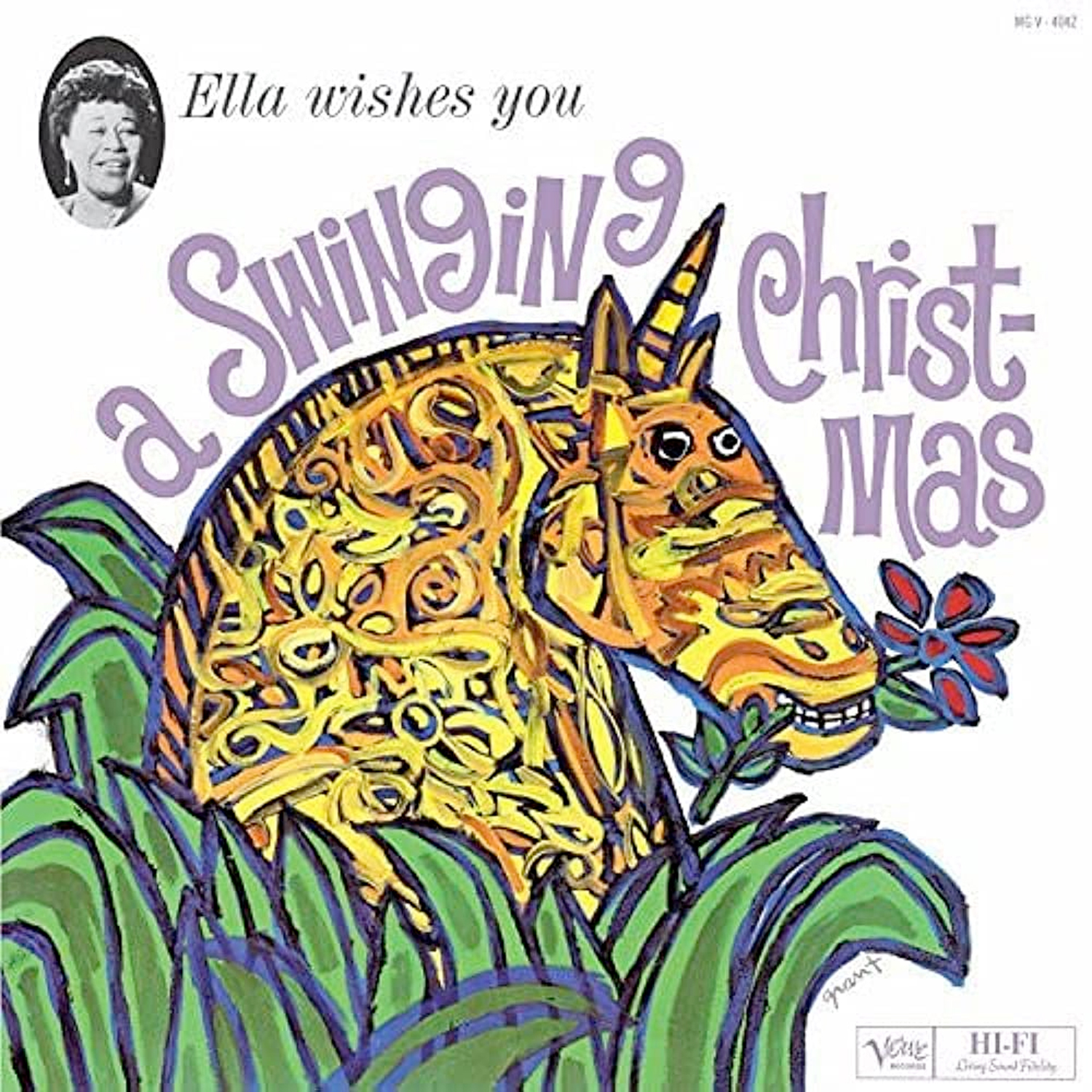
Some Christmas records decorate a mood; others turn familiar songs into small encounters. Ella Wishes You a Swinging Christmas belongs to the latter group. Ella Fitzgerald needs neither ceremonial weight nor extravagant gestures to achieve it. She gives these melodies the attention she would give a fine jazz standard: a word receives a little space, a line acquires a different emphasis, and a song you have known since childhood suddenly has a personality again. The seasonal atmosphere remains, but it moves. The title promises a friendly, alert musical visitor rather than a room in which everyone must sit reverently still.
Recorded for Verve in 1960, the album was produced by Norman Granz, with arrangements and orchestral direction by Frank De Vol. The documented sessions took place in New York during July and August. There is something appealing about that seasonal displacement: these winter images were made in the middle of summer. What mattered was the musicians’ imagination, not the weather outside the studio. De Vol provides an orchestral setting in which Fitzgerald can remain an agile storyteller. Her voice does not have to battle a heavy backdrop; the accompaniment can answer, add an accent and then make room again.
The twelve selections draw on America’s secular Christmas repertoire: snow, sleighs, familiar characters, the wish for companionship and the question of who will share New Year’s Eve. That also distinguishes this Verve recording from Fitzgerald’s later Christmas album of sacred material. For collectors, the difference is more than a cataloguing detail. This is the singer who understands popular songs as living music, working within a concentrated seasonal programme. If you enjoy her great Songbook recordings, you will recognise the same respect for melody and language in a smaller setting. Apparent simplicity makes the assignment particularly demanding: nothing can hide behind the novelty of the material.

Twelve familiar songs with twelve distinct temperaments
The first side opens with Jingle Bells and Santa Claus Is Coming to Town. Their pairing immediately suggests how much depends on the relationship between movement and words. Both numbers arrive carrying well-known images, but Fitzgerald’s task is not merely to confirm their familiarity. She can play with the rhythm while keeping the melody recognisable. When listening, try following the beginnings and endings of phrases rather than only the tune’s central line. Those small decisions often separate a competent reading of an evergreen from an interpretation that draws you in as though no effort were involved.
Have Yourself a Merry Little Christmas and Frank Loesser’s What Are You Doing New Year’s Eve? bring the personal address forward. The latter is a tentative invitation rather than a general declaration about the holidays. It gives the programme a beautifully human scale: behind the season stands someone hoping for an answer. Sleigh Ride then restores a sense of motion before The Christmas Song closes the side. The sequence moves through animation, reflection and comfort without losing its lightness. It is worth hearing those transitions as part of an album, rather than treating every number as an interchangeable seasonal favourite.
The opening of side two is especially revealing. Good Morning Blues reminds us that Fitzgerald brings the blues with her even into a Christmas programme. Let It Snow, Winter Wonderland, Rudolph, the Red-Nosed Reindeer and Frosty the Snow Man follow. Childlike subjects do not require childish treatment; clarity and humour are enough. White Christmas finally brings memory and longing together in the closing position. The order matters to the pleasure of the record. Instead of invoking the same feeling twelve times, it approaches one season from several directions. Divided across two LP sides, the programme retains a satisfying, modestly scaled shape, with room for both the bustling songs and the quieter invitations.

Ella Fitzgerald and Frank De Vol: making room for the singer
Fitzgerald’s particular strength here lies in the relationship between precision and warmth. A beautifully shaped melody can become remote; an insistently affectionate performance can become sugary. This repertoire makes both risks easy to recognise. One useful way into the album is therefore to follow the exchange between clear diction and the musical line. How long can a syllable remain suspended? Where does an everyday question acquire a small charge of expectation? How can a sentence stay intelligible while its rhythm gently springs forward? Such details sustain a record whose material may seem thoroughly familiar before the needle has even reached it.
Frank De Vol is an essential partner in that process. Arranging here means creating possibilities for a voice: a different colour beneath a phrase, a brief reply, a transition that prepares a new mood. His roles as arranger and conductor are documented. The album sources consulted, however, do not supply a complete, securely identified list of every orchestral player. Familiar studio names have therefore not been inserted retrospectively into the personnel. Nor should Russ Garcia, whose work appears through an additional selection on expanded editions, automatically be credited with the twelve performances included on this LP. Respect for the musicians also means keeping the boundary of the original programme clear.
Within a jazz collection, the album can occupy its own place without continually competing with Fitzgerald’s major concert or Songbook recordings. It demonstrates how much an exceptional singer can bring to a short, approachable form. You can follow the complete sequence or return to an individual ballad; both approaches work because the interpretation reaches beyond the occasion. The Christmas imagery makes an easy entrance, but the music’s staying power lies in the care of its construction. Listeners who initially put it on as background may find considerably more to notice when they give it their attention. A simple melody becomes an opportunity for exactness, and familiarity becomes an invitation to listen again.
Acoustic Sounds Series: the original programme on one LP
This edition, AVER 74601, belongs to the Verve Acoustic Sounds Series. It is not a separate Analogue Productions release, although Acoustic Sounds and Chad Kassem are involved in overseeing the series. According to the publisher, Ryan K. Smith at Sterling Sound mastered it from the original analogue tapes. The 180-gram LP is pressed at Quality Record Pressings and presented in a Stoughton tip-on gatefold jacket. These are specific production details for this reissue, considerably more useful than a blanket assertion that it must surpass every earlier version of the album.
Playback is at 33⅓ RPM. For a record of this length, the single LP is an especially coherent format: six selections per side, two continuous stretches and just one interruption. You can follow the programme’s shape without returning to the turntable after every few songs. A 45 RPM cut is not a compulsory badge of quality for every recording; careful mastering and a side layout that suits the music matter here. This release preserves the original twelve-song programme and does not import the additional recordings found on expanded CD editions. That distinction is useful when comparing listings that share an album title but offer different material.
The result is an attractive choice both for Fitzgerald collectors and for listeners seeking a Christmas record with musical substance of its own. The carefully made jacket gives it a satisfying physical presence, while the real argument remains the unity of the album: a great singer, an attentively arranged orchestra and familiar repertoire made supple through personality. It is easy to welcome and rewarding to revisit. You order from Michael 45 in Germany. We arrange the US import and dispatch from Hilden.
More by Ella Fitzgerald: Let No Man Write My Epitaph · Fine and Mellow
Series: Verve – all 34 records: voices, organ and bossa nova
Musicians
Participants and documented credit status. Track references correspond to the tracklist.
- Ella FitzgeraldExisting individual portrait; not a session depictionvocalsParticipation: All twelve tracks
- Frank De Volarranging, conductingParticipation: All twelve tracks
- Orchester unter Frank De Volorchestra; individual players not identifiedParticipation: Album personnel

Twelve original LP selections, New York July/August 1960. Produced by Norman Granz; arranged/conducted by Frank De Vol. Individual orchestral personnel unconfirmed. Russ Garcia belongs to a bonus track on expanded editions, not this programme.

Reviews
There are no reviews yet.