

Why Norman Granz decided these performances should be heard
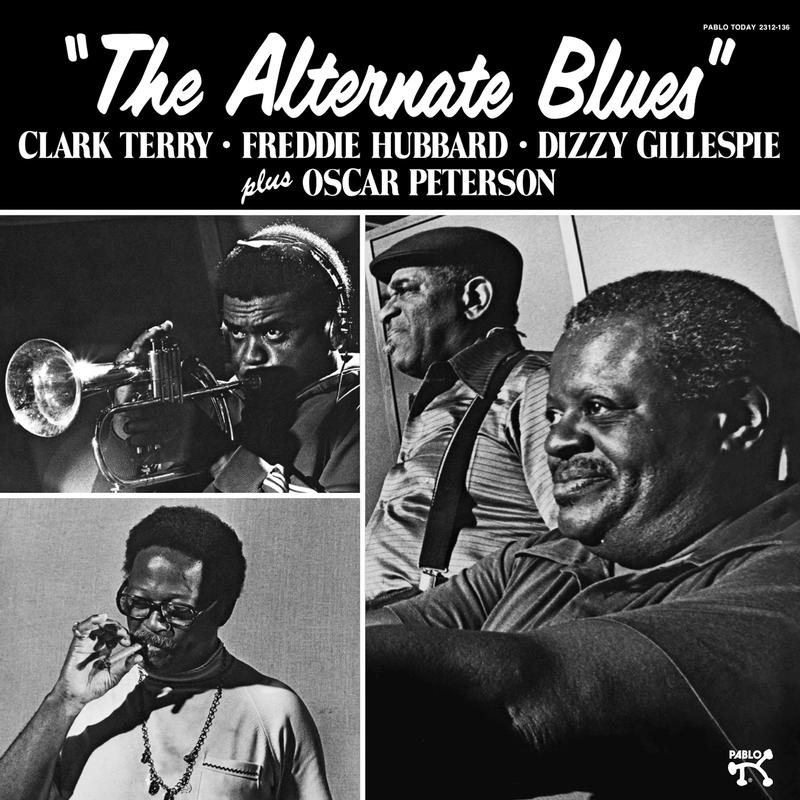
The Alternate Blues reveals something about jazz through the circumstances of its release. A recording session often produces more material than appears on the first album. Some performances are set aside because an entrance is missed or a sequence unfolds differently from the plan. Producer Norman Granz made an exception here to his reluctance to issue alternative takes. As the publisher explains, the three trumpeters’ playing persuaded him that these versions deserved an audience despite problems in the proceedings. A valuable musical moment could not be judged entirely by the absence of procedural imperfections.
The meeting took place at Group IV Studios in Los Angeles on March 10, 1980. Dizzy Gillespie, Clark Terry and Freddie Hubbard joined a quartet led by Oscar Peterson, with Joe Pass on guitar, Ray Brown on double bass and Bobby Durham on drums. The same date also produced The Trumpet Summit Meets the Oscar Peterson Big 4. Released by Pablo Today in 1982, The Alternate Blues offers another view of the encounter. The distinction between the two album titles matters: they share a session, while presenting different programmes and a particular editorial purpose for this later release.
For collectors, that is a compelling premise because the alternative becomes the album’s central subject. These are not simply bonus tracks added after a familiar sequence. Four blues performances form the core, before other material broadens the view of the participating musicians. Repetition becomes a way of recognising change. A common framework can remain while phrases, responses and decisions take new directions. An accessible form makes those differences easier to follow. There is no need to transcribe a solo to become involved; noticing an entrance or the different weight given to a phrase provides a useful starting point.

Four approaches to the blues, followed by a different conclusion
The first side contains Alternate One, Alternate Two and Alternate Three. Their plain titles focus attention on the playing. A recurring blues framework takes the place of three unrelated narratives, creating an unusual opportunity for a listening session. Follow one performance in its entirety, then listen for different relationships in the next. Who carries a line forward? Where does a contrast emerge? What happens when a brief reply follows a longer phrase? Interest develops through choices made within the familiar structure, without requiring a fresh theme to begin each encounter or a new setting to establish its identity.
Alternate Four opens side B. The side change briefly interrupts the succession of blues performances before allowing it to continue. Wrap Your Troubles in Dreams then introduces a named standard, the song by Harry Barris, Ted Koehler and Billy Moll. It occupies a separate track before a Ballad Medley concludes the record. This is more than a practical extension of the running time. After the repeated blues framework, established song melodies receive their own space. The second side consequently moves from another opportunity for comparison towards a different kind of musical storytelling, changing the listener’s point of reference.
The medley joins Here’s That Rainy Day, The Gypsy and If I Should Lose You. Together with Wrap Your Troubles in Dreams, these constitute the four standards that the publisher identifies as additional material absent from the first album. The tracklist retains the medley as one continuous entry with three named components. That distinction explains why different listings can appear to count the programme differently. This LP contains six principal tracks, the last incorporating three songs. Four blues versions followed by the standard repertoire give the release a considered shape, rather than leaving it to resemble a miscellaneous collection of unused material.

Three horn personalities and four equally important partners
The combination of Gillespie, Terry and Hubbard naturally encourages attention to individual character. Gillespie is credited with trumpet, while Terry and Hubbard are listed with trumpet and flugelhorn. The consulted album credits do not allocate each instrument to every track. What they establish is the shared setting: three distinct horn players responding within the same recording date. Listen for the beginning of a note, the length of a phrase or the balance between motion and a pause. Such features allow personality to emerge without requiring the encounter to be treated as a contest in which one participant must win.
Oscar Peterson and Joe Pass bring together two instruments capable of providing both harmony and melodic lines. Piano can establish chords or develop a thought; guitar can support, respond and move into the foreground in turn. Ray Brown and Bobby Durham add the bass-and-drums partnership supporting the whole group. Peterson’s “Big 4” is therefore much more than an anonymous backing unit behind the celebrated trumpeters. Its four members are individual musical personalities. A second listening can follow this layer more closely: how does the quartet prepare room for another soloist, and how is continuity maintained when the horns change direction?
The release’s history also sharpens the distinction between an orderly procedure and a persuasive musical moment. Granz’s decision does not mean that every irregularity is intrinsically valuable. His selection asks what was worth preserving in these particular performances. Within a collection, the record extends the idea of the finished recording: the initially preferred take need not be the only one with something significant to reveal. Listeners who know these musicians from other ensembles have an especially useful point of comparison. Here, familiar approaches can be followed in immediate exchange, with recurring conditions making some of the differences easier to appreciate.
Doug Sax, Pablo and this particular 33⅓ RPM edition
AAPJ 152 is part of the Analogue Productions Pablo reissue series, presented as a 180-gram stereo LP at 33⅓ RPM. The publisher credits Doug Sax at The Mastering Lab with mastering from the original analogue master tape, Quality Record Pressings with pressing, and Stoughton Printing with the tip-on jacket. Those specific responsibilities identify this edition’s production. Sax’s credit should remain attached to this title when considering neighbouring Pablo releases: the series includes work by different mastering engineers, and its manufacture cannot be reduced to a single name applied indiscriminately across the catalogue.
The historical production credits identify Steve Williams for engineering and Dennis Sands for the remix. Phil Stern supplied photography, while Sheldon Marks and Norman Granz are associated with layout and design. These details belong to the record’s publication history, with the present vinyl release adding its own manufacturing stage. The documented reissue follows an earlier Analogue Productions edition. That relationship does not imply that Sax created a new cut in 2024. Similarly, documentation of numbering on an initial portion of the run is not a promise that every copy currently offered carries a number.
A single LP presents the programme in two extended stretches. One side change separates the first three blues takes from the fourth and the subsequent standards. This is a practical feature of the edition, not a universal claim about one playback speed being superior to another. For listeners interested in improvisational alternatives, three distinctive horn players and Peterson’s quartet, the record provides an unusually well-defined meeting. It rewards attention to the process of making a performance as well as to the result that survives on the record. You order from Michael 45 in Germany. We arrange the US import and dispatch from Hilden.
Customer question: Buying Analogue Productions records in Europe
Series: Pablo – all 30 records, musicians and the session book
Musicians
Participants and documented credit status. Track references correspond to the tracklist.
- Dizzy GillespieExisting portrait reference 1974trumpetParticipation: Album personnel; no track-by-track allocation documented
- Clark TerryExisting portrait reference 1964trumpet, flugelhornParticipation: Album personnel; no track-by-track allocation documented
- Freddie HubbardExisting portrait reference 1962trumpet, flugelhornParticipation: Album personnel; no track-by-track allocation documented
- Oscar PetersonExisting portrait reference 1977pianoParticipation: Album personnel; no track-by-track allocation documented
- Joe PassExisting portrait; not a session depictionguitarParticipation: Album personnel; no track-by-track allocation documented
- Ray BrownExisting portrait reference 1976double bassParticipation: Album personnel; no track-by-track allocation documented
- Bobby DurhamdrumsParticipation: Album personnel; no track-by-track allocation documented


Group IV, Los Angeles, March 10, 1980; released in 1982. Norman Granz: producer; Steve Williams: engineer; Dennis Sands: remix; Phil Stern: photography; Sheldon Marks and Norman Granz: design. Seven credited session players; no unsupported claim that every soloist plays on every take. Four blues takes, Wrap Your Troubles in Dreams and a three-part ballad medley. Doug Sax: earlier AP cut at The Mastering Lab, not a newly made 2024 cut.
How Michael hears this edition
Listening impression · paraphrased from the video
Michael particularly praises the flat, quiet vinyl of his copy of this Pablo reissue. For him, the many quiet passages in the opening track on side one especially benefit from it. His enthusiasm concerns both that undisturbed playback and the musicians’ blues-inflected interplay.

Reviews
There are no reviews yet.