Jazz on six nylon strings
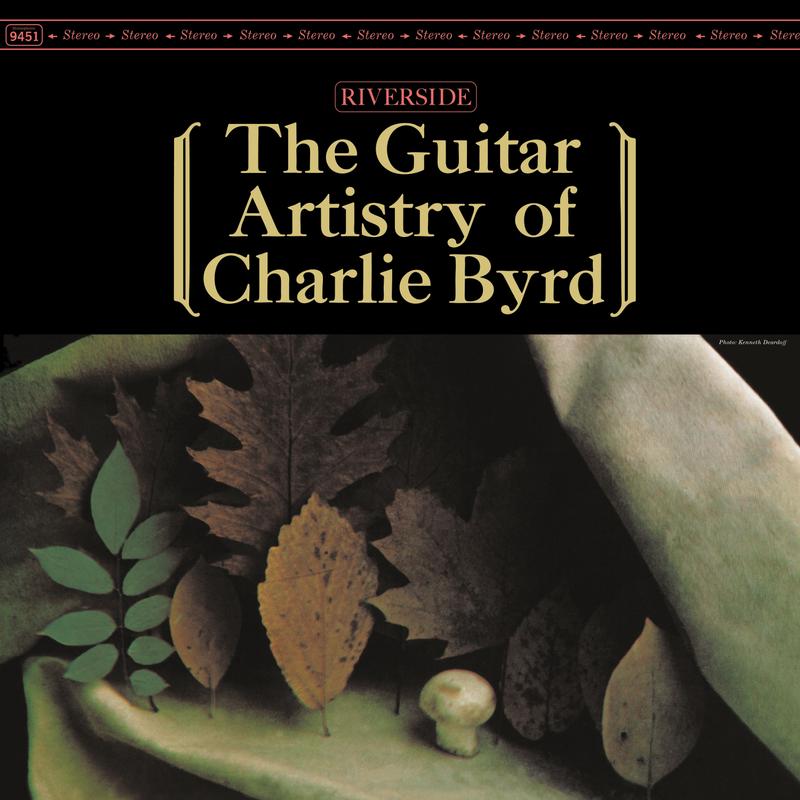
Charlie Byrd recorded this music at Edgewood Studios in Washington, D.C., in 1960. He plays an unamplified Spanish classical guitar, placing it in a jazz trio with bassist Keter Betts and drummer Buddy Deppenschmidt. The combination brings different approaches together: the possibilities of a classical instrument and the shared movement of an improvising rhythm section.
The release history can be misleading. The material first appeared on the Offbeat label as part of the “Jazz at the Showboat” series. Despite that title, these are studio recordings. Riverside reissued them in 1963, after “Jazz Samba” with Stan Getz had brought Byrd to a wider audience. The music itself predates that success, offering a view of his work before the better-known collaboration.

Two connections with Django
Django’s name appears in the programme in two different ways. “Nuages” was composed by Django Reinhardt, while “Django” was written by John Lewis. Byrd plays the Lewis composition on unaccompanied guitar. A guitarist’s own piece and another composer’s remembrance of him therefore coexist within the album, while remaining quite distinct works.
The twelve tracks also range from “Taking a Chance on Love” and “Moonlight in Vermont” to “House of the Rising Sun”. Betts contributes “Ring Them Harmonics”, and Byrd supplies “To Ginny”. The extended “Taboo” occupies a particular place in the programme. These selections allow the small group to move between different melodies, rhythmic approaches and forms.

Listening from the bass upwards
Keter Betts merits a separate listening pass. Follow his line beneath the guitar, noticing when the two instruments come together and when they take on different tasks. Byrd can already combine bass parts and chords on a classical guitar. Adding a double bass therefore raises an interesting question about how the two players share the lower register of an arrangement.
Deppenschmidt’s drums complete that relationship. In the solo performance of “Django”, both partners are absent, leaving Byrd to organise time, accompaniment and melody himself. The move between trio and solo instrument makes some of the record’s possibilities particularly easy to follow. Listeners who associate Byrd mainly with bossa nova can discover an earlier part of his work here.
This edition
Analogue Productions’ AAPJ 209-45 belongs to the Fantasy 45 Series: two stereo LPs at 45 RPM on 180-gram vinyl, pressed at QRP. Mastering is credited to Kevin Gray and Steve Hoffman at AcousTech. The package includes a matte-finish Stoughton tip-on gatefold. No specific tape source is named for this edition. All twelve tracks derive from the 1960 studio recordings.
Michael 45 holds the records in Germany and dispatches them from Hilden, so customers can avoid arranging a personal US import or waiting for customs processing.
Customer question: Buying Analogue Productions records in Europe
Musicians
Documented selection of participating musicians. Personnel may vary by track; this list does not claim to be complete.
| Name | Instrument / role |
|---|---|
| Charlie Byrd | Guitar |
| Keter Betts | Bass |
| Buddy Deppenschmidt | Drums |

Reviews
There are no reviews yet.