
Five times Mingus: familiar music taking a new shape
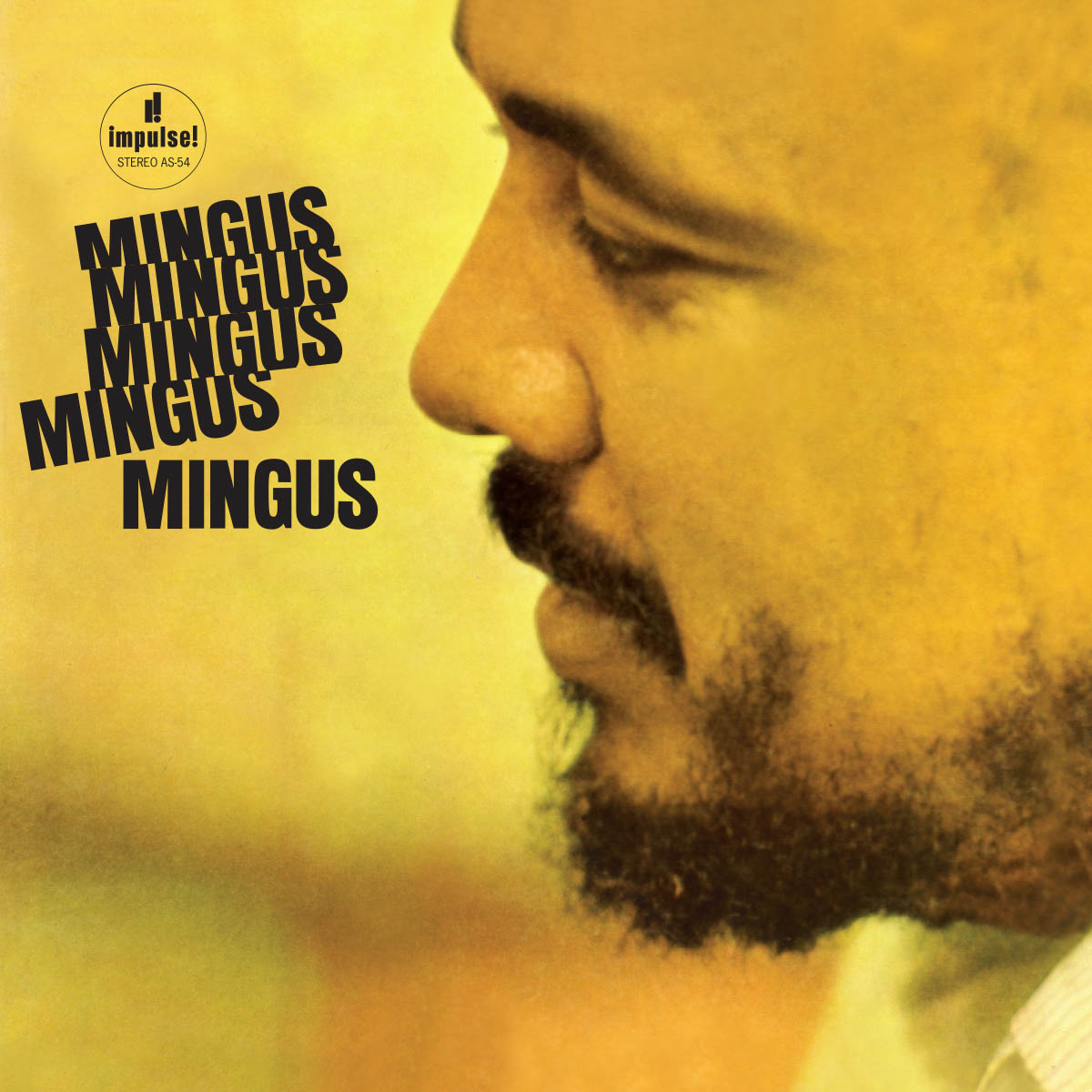
The title Mingus Mingus Mingus Mingus Mingus resembles an emphatic signature. Musically, however, the album offers something more interesting than simple repetition. Charles Mingus takes his own material back into his hands, changes its shape and places it within a larger ensemble. Familiar themes acquire new names or different surroundings; the past is worked on again rather than treated as finished. For listeners who know some of his earlier records, this is an especially rewarding approach. A recognisable outline returns, while a different arrangement, a changed group of musicians and a new moment reveal how much can still happen inside it.
The seven performances come from two New York sessions in 1963, produced by Bob Thiele for Impulse!. Bob Hammer contributed arranging and orchestration, and Bob Simpson is credited as recording engineer. That collaboration matters. Mingus’ music consists of more than themes followed by solos: voices can overlap, one figure can answer or challenge another, and the colour of the ensemble belongs to the composition itself. A larger group makes different possibilities available from those of a small quintet. At the same time, individual characters need to remain present if density is to mean something more than an accumulation of sound.
The album can therefore be approached as a workshop of musical memory. Earlier ideas are gathered together without being placed behind glass. Mingus’ connections with blues, gospel, Ellington and the improvising present remain active. The one composition outside his own writing, Mood Indigo, belongs within that process too. It is not simply a courteous guest among original pieces; it points towards a conception of instrumental colour with which Mingus engages deeply. In a collection, the record can serve both as an entrance and as a further exploration: a manageable programme whose relationships extend well beyond its seven selections, yet whose immediate musical interest does not depend on recognising every reference.

From II B.S. to Hora Decubitus: a catalogue in motion
II B.S. opens with material previously known as Haitian Fight Song. The new title already encourages a distinction between a composition and any single recording of it. A piece can remain recognisable without being exhausted by one version. If you know both, follow the functions within the ensemble: what carries the central idea, where do the responses become denser, and how does the larger group change the perspective? Such a comparison does not need to produce a winner. It reveals a composer treating his own music as something capable of continuing to live, with further decisions still available to him.
I X Love and Celia come from the January session. The literature identifies different antecedents for I X Love, including Duke’s Choice, while Nat Hentoff’s accompanying notes point towards Nouroog. For listening, it is more useful to attend to this particular performance than to turn the comparison of names into a supposedly unambiguous family tree. Celia occupies the entire second side of this 45 RPM edition. That creates a distinctive listening space within the double album, giving the piece a conclusion of its own before the musicians of the September session return. The physical layout becomes a small but noticeable part of the experience.
Side three contains Mood Indigo and Better Get Hit in Yo’ Soul. The latter leads back to Better Git It in Your Soul on Mingus Ah Um; even the shifting spellings offer a reminder of the work’s changing history. Theme for Lester Young then reconnects with Goodbye Pork Pie Hat. The tribute to the tenor saxophonist has been renamed rather than displaced. Hora Decubitus, related to E’s Flat, Ah’s Flat Too from Blues & Roots, closes the programme. These connections provide useful landmarks, but the album retains an independent sequence. It does not require a complete Mingus library before it can be enjoyed as music in its own right.

Two sessions, two ensembles and the people connecting them
The January 20, 1963 session produced I X Love and Celia. Its players include Rolf Ericson and Richard Williams on trumpets, Quentin Jackson on trombone, Charlie Mariano on alto saxophone, Jay Berliner on guitar and Dannie Richmond on drums. Jaki Byard contributes piano and Don Butterfield tuba, while Jerome Richardson and Dick Hafer broaden the woodwind colours. Mingus is credited with double bass and, within this session, piano as well. This is a more accurate starting point than a single undifferentiated personnel list that appears to assign every musician to every performance.
The remaining material included here was recorded on September 20, 1963. Eddie Preston, Britt Woodman, Booker Ervin, Eric Dolphy and Walter Perkins now appear in the corresponding ensemble roles. Dolphy therefore does not play on I X Love or Celia. His documented instruments for the September date include alto saxophone, flute and bass clarinet, but that does not mean all three are heard on every selection. Hafer’s additional instrument credits also differ between the two dates. Details such as these help explain why the record can possess a coherent overall conception while containing different internal colours and combinations of personalities.
For attentive listening, try following an ensemble figure first, then a single instrumental voice and finally the movement of the bass. Mingus’ instrument belongs to the foundation, but it can also make a demand of the music around it. Byard’s piano, the lower brass and the changing drummers open further perspectives. The interesting tension is between the composed structure and the individual characters of the players. Reducing the album to a succession of soloists does not make it clearer; hearing only the collective force is equally incomplete. Much of its appeal lies in the relationship between those levels. Once that relationship becomes apparent, another hearing can reveal new connections without losing the familiarity of the themes that brought you back.
Analogue Productions: seven selections across two 45 RPM LPs
The edition here is Analogue Productions AIPJ 54, a stereo double LP at 45 RPM in a gatefold jacket. The documented release credits Kevin Gray and Steve Hoffman for lacquer cutting, with Gray also listed for mastering. Those credits can coexist and should not be artificially reduced to a single name. Conversely, automatically applying the production standards of a present-day series to this older release would be imprecise. A pressing plant and a complete manufacturing chain have therefore not been borrowed from unrelated Analogue Productions editions. The description concerns this specific double album and the details established for it.
Its sequence places II B.S. and I X Love on side A, Celia alone on B, Mood Indigo and Better Get Hit in Yo’ Soul on C, and Theme for Lester Young with Hora Decubitus on D. Freedom is not included. That selection appears on expanded reissues and explains a spoken-vocal credit for Mingus that should not be carried across to the seven performances here. This edition is neither an expanded CD programme nor a single 33⅓ RPM LP, regardless of what an overly general catalogue category might suggest. Keeping those distinctions visible is part of choosing the right record for a collection.
The 45 RPM layout gives the cutting process short sides and corresponding room to work, while requiring more frequent changes than the original single album. A well-mastered 33⅓ RPM edition still makes sense for listeners who prefer longer uninterrupted sequences. Here the choice is specifically for this release’s four-part presentation. The underlying musical argument remains Mingus’ treatment of his own work: recollection becoming a fresh departure, carried by exceptional musicians whose contributions can be named with care. You order from Michael 45 in Germany. We arrange the US import and dispatch from Hilden.
Also in another edition: Mingus Mingus Mingus Mingus Mingus
More by Charles Mingus: The Clown · Oh Yeah
Musicians
Participants and documented credit status. Track references correspond to the tracklist.
- Charles MingusExisting individual portrait; not a session depictiondouble bass; piano on January sessionParticipation: Both sessions; all seven tracks
- Jaki ByardExisting portrait · 1965pianoParticipation: Both sessions; all seven tracks
- Richard WilliamstrumpetParticipation: Both sessions; all seven tracks
- Don ButterfieldtubaParticipation: Both sessions; all seven tracks
- Jerome RichardsonExisting individual portrait; not a session depictionsoprano/baritone saxophone, fluteParticipation: Both sessions; all seven tracks
- Dick Hafertenor saxophone, flute; oboe January, clarinet SeptemberParticipation: Both sessions; all seven tracks
- Bob Hammerarranging, orchestrationParticipation: Both sessions; all seven tracks
- Rolf EricsonExisting portrait · 1955trumpetParticipation: January 20, 1963 · A2, B1
- Quentin JacksontromboneParticipation: January 20, 1963 · A2, B1
- Charlie MarianoExisting portrait · late 1970salto saxophoneParticipation: January 20, 1963 · A2, B1
- Jay BerlinerguitarParticipation: January 20, 1963 · A2, B1
- Dannie RichmondExisting individual portrait; not a session depictiondrumsParticipation: January 20, 1963 · A2, B1
- Eddie PrestontrumpetParticipation: September 20, 1963 · A1, C1, C2, D1, D2
- Britt WoodmantromboneParticipation: September 20, 1963 · A1, C1, C2, D1, D2
- Booker ErvinExisting individual portrait; not a session depictiontenor saxophoneParticipation: September 20, 1963 · A1, C1, C2, D1, D2
- Eric DolphyExisting portrait · 1960alto saxophone, flute, bass clarinetParticipation: September 20, 1963 · A1, C1, C2, D1, D2
- Walter PerkinsExisting portrait · circa 1963drumsParticipation: September 20, 1963 · A1, C1, C2, D1, D2


Seven selections from two 1963 sessions. Producer: Bob Thiele; engineer: Bob Simpson; liner notes: Nat Hentoff. Instruments listed by session, not every instrument on every selection. Freedom is excluded, so no spoken-vocal credit. B1 Celia occupies side B alone.
How Michael hears this edition
Listening impression · paraphrased from the video
Michael compares this earlier AP 45 RPM edition with the newer Acoustic Sounds 33⅓ RPM edition and prefers the 33 in this comparison. He finds the gap smaller than on The Black Saint and the Sinner Lady, also discussed in the video. This is his personal judgment of these two editions, not a general ranking of 33⅓ versus 45 RPM.

Reviews
There are no reviews yet.