A party with a long history behind it
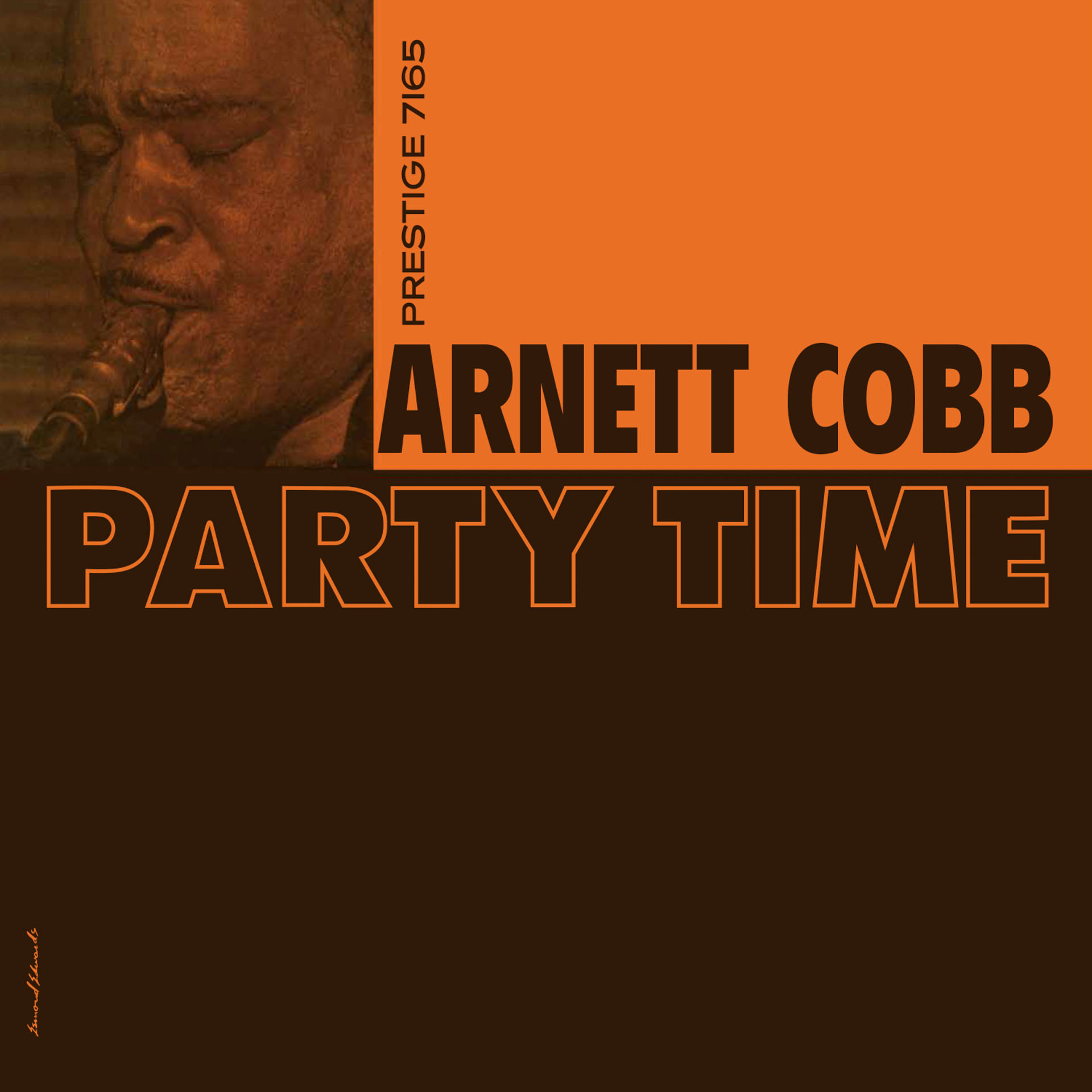
The title suggests an uncomplicated good time. Behind Party Time, however, stands a musician who had to work his way back onto the stage. Arnett Cobb survived a serious car accident in 1956, and its consequences stayed with him for the rest of his life. When he joined four colleagues at Rudy Van Gelder’s Hackensack studio on 14 May 1959, he brought more than a selection of standards and original blues pieces. This album belongs to his return as an independent bandleader. There is no need to turn that history into a claim about music providing a cure to appreciate what another recording session could mean in an artist’s working life.
Cobb was already an established tenor player. Born in Houston, he had worked in Milt Larkin’s band from 1936 to 1942, an important environment for Illinois Jacquet and Eddie “Cleanhead” Vinson as well. He then took Jacquet’s place with Lionel Hampton. It was in that setting that his reputation as the “Wild Man of the Tenor Sax” developed: a musician whose direct, physical appeal did not observe a strict boundary between the concert platform and the dance floor. Against that background, Party Time can be approached as a small group carrying a substantial big-band memory. One distinctive voice takes the place of a whole section of horns.
The session took place in Hackensack, rather than at Van Gelder’s later studio in Englewood Cliffs. For a recording made in 1959, that distinction matters. So does the date: although a label description mentions 1957, the documented session is 14 May 1959. Esmond Edwards is credited as producer, while Bob Snead supplied the liner notes. Prestige released the album as PRLP 7165. Its sociable title therefore belongs to a specific moment in Cobb’s career, rather than to an arbitrarily assembled later collection of mood music.

Five players and two rhythmic perspectives
The instrumentation is compact enough to keep every participant in view, yet unusual enough to deserve particular attention. Cobb plays tenor saxophone, Ray Bryant piano, Wendell Marshall double bass and Art Taylor drums. Ray Barretto completes the quintet on conga. All five are documented throughout the seven tracks. Barretto’s instrument is part of the conception of the session, rather than a decorative element added afterwards. Following the relationship between Taylor’s drum kit and Barretto’s hand drum is consequently as useful a way into the music as following the saxophone melody.
A drum kit and a conga provide different resources, even when both help establish the pulse. Taylor has cymbals and drums at his disposal; Barretto works with the finely differentiated attacks of a drum played by hand. Where they leave one another room, where they place accents and how Bryant responds are rewarding questions to carry through a complete side. The label particularly draws attention to Barretto on “Cocktails for Two”. That observation need not become a blanket description of the whole record as Latin jazz. The more interesting point is the additional colour available to this particular blues- and swing-oriented band.
Bryant is an equally significant counterpart to the tenor. A pianist’s contribution extends beyond supporting the tune: harmony can be confirmed, thickened or left open for a moment. Marshall and Taylor give that mobile centre its rhythmic foundation. On a record led by someone with such an emphatic nickname, paying attention to the supporting musicians is especially worthwhile. A strong saxophone personality on an ensemble recording does not exist in isolation. The immediate appeal of the leader and the carefully coordinated work of the rhythm section belong to the same musical event.

Familiar songs, original blues and a Hampton connection
“When My Dream Boat Comes Home” opens side one, followed by “Lonesome Road”. These choices immediately establish a repertoire with a life beyond this particular session. Bassist Oscar Pettiford’s “Blues in the Closet” then brings the programme directly into the blues tradition. Cobb’s own “Party Time” closes the side. The sequence helps explain the album’s attraction: familiar song material sits directly alongside the leader’s writing. A useful listening approach is to consider how much of Cobb’s identity enters a well-known melody before the improvisation begins to travel further from its starting point.
“Flying Home”, which opens the second side, carries a particular biographical association. It points back to Lionel Hampton and to the orchestra in which Cobb had done so much to establish his reputation. The performance on Party Time is a new small-group treatment in a different context, rather than an old Hampton recording brought forward. That connection makes the selection especially appealing to collectors. A repertoire piece can show how a player carries his past with him without merely repeating an earlier arrangement. The starting point here is the 1959 quintet, complete with conga.
Another Cobb composition, “Slow Poke”, follows, before “Cocktails for Two” brings the album to a close. These seven selections constitute the original LP programme, not the order in which the musicians recorded them. In the session discography, “Cocktails for Two” actually comes first. A different progression was chosen for the finished record. Keeping the distinction between recording order and album sequence in mind can enrich the experience: an album also represents a decision about how a band will introduce itself to its audience.
Party Time is particularly attractive for listeners who do not want swing, blues and the direct appeal of a major tenor saxophonist confined to separate compartments. Its historical interest resides both in Cobb and in this particular rhythm section. Rather than allowing the nickname to explain everything, a second pass can concentrate on Bryant, Marshall, Taylor and Barretto. There are five hosts at this party, even though only one is named as the leader on the cover. Their individual roles are worth hearing within the shared programme.
This Analogue Productions edition
The edition offered here is APRJ 7165, part of the Analogue Productions Prestige Stereo series. It is a single LP playing at 33⅓ rpm. The label credits Kevin Gray with cutting from the analogue master tapes and Quality Record Pressings with manufacture; Gary Salstrom is credited for plating. A tip-on jacket completes the presentation. These details concern the reissue being offered. Rudy Van Gelder belongs to the original recording history in 1959: capturing the session and cutting a later vinyl edition are separate stages in the record’s life.
The weight needs to be distinguished by edition. The current label listing specifies 180 grams, while an earlier numbered AP issue from 2016 is documented at 200 grams. A later unnumbered issue is listed at 180 grams. This does not establish which historical pressing batch an individual stock copy comes from. Weight and numbering should not be carried over from an older collector entry as promises about every present-day copy. The stereo format, seven-track programme and specific AP catalogue number are the key identifiers here.
Two continuous LP sides suit the shape of this repertoire. Side one arrives at the title composition; side two moves from the Hampton connection towards “Cocktails for Two”. For a collector, Party Time is therefore both a clearly defined Prestige session and a chapter in the history of the Texas tenor tradition. This reissue returns that combination to the shelf as an album in its own right, with Cobb at its centre and ample reason to pay attention to all four of his partners. Its appeal lies in that particular meeting of personalities, repertoire and recording date, rather than in a generic promise about the sound of jazz on vinyl. You order from Michael 45 in Germany. We arrange the US import and dispatch from Hilden.
More by Arnett Cobb: Ballads By Cobb
Customer question: Buying Analogue Productions records in Europe
Series: Analogue Productions Prestige – all 50 records, musicians and session paths
Musicians
Participants and documented credit status. Track references correspond to the tracklist.
- Arnett CobbPortrait 1979tenor saxophoneParticipation: Album personnel
- Ray BryantpianoParticipation: Album personnel
- Wendell Marshalldouble bassParticipation: Album personnel
- Art TaylordrumsParticipation: Album personnel
- Ray BarrettocongaParticipation: Album personnel


Recorded 14 May 1959, Hackensack. Rudy Van Gelder, engineer. Analogue Productions: Kevin Gray, cutting; QRP, pressing. Personnel on all tracks.

Reviews
There are no reviews yet.