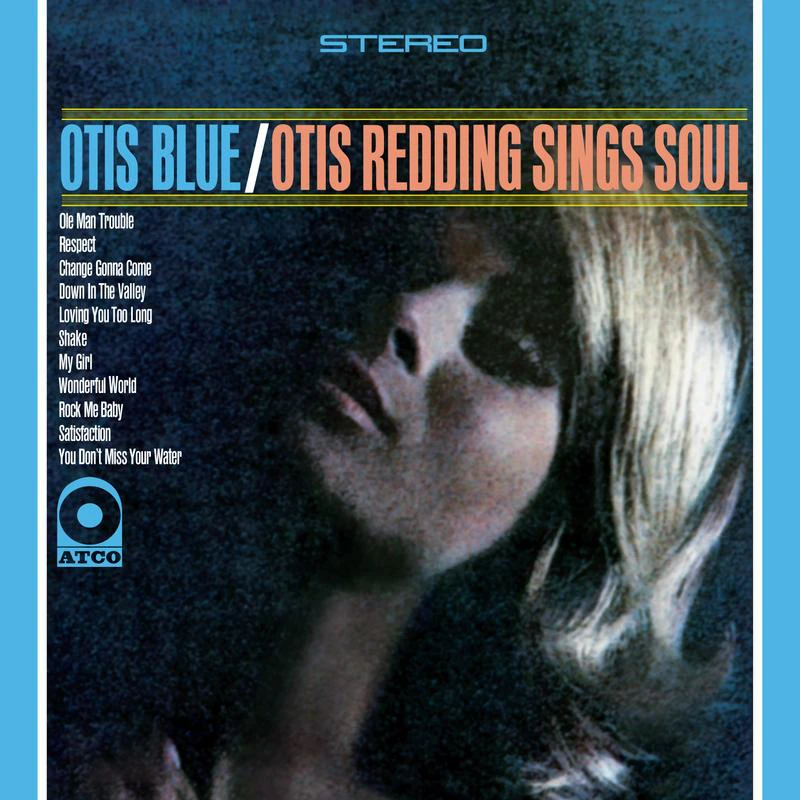


Otis Blue / Otis Redding Sings Soul as a hybrid stereo SACD from the Atlantic 75 Series, mastered to DSD by Kevin Gray at Cohearent Audio from the original master tape. Eleven tracks in one sequence – from “Ole Man Trouble” and “Respect” to William Bell’s “You Don’t Miss Your Water”.
Memphis, summer 1965
On Otis Blue, Otis Redding brings his musical identity into sharp focus across an entire album. After Pain In My Heart and The Great Otis Redding Sings Soul Ballads, it was his third album. Most of it was recorded in July 1965 at the Stax studio in Memphis, a converted cinema on East McLemore Avenue, and it was released that September on Stax’s sister label Volt, with the full title Otis Blue/Otis Redding Sings Soul. Eleven songs connect Redding’s own compositions with material from other artists’ repertoires – held together by his voice and the studio musicians around him.
Those musicians included Booker T. Jones, Steve Cropper, Donald “Duck” Dunn and Al Jackson Jr., alongside Isaac Hayes and the horn players Wayne Jackson, Gene “Bowlegs” Miller, Andrew Love and Floyd Newman. Their parts vary from track to track, but together they stand for the musical community this album grew out of. Jim Stewart is credited with supervision and Tom Dowd with engineering – in a studio whose house musicians shaped many Stax and Volt releases.

Three songs for Sam Cooke
Sam Cooke had died in December 1964. Three songs associated with him appear on Otis Blue: “Change Gonna Come”, “Shake” and “Wonderful World”. They make Cooke’s place in Redding’s musical world tangible – and in more than one way, because they are three very different kinds of song rather than a single tribute. Placed among Redding’s own compositions, they reveal what he loved as well as what he was creating himself.
“Ole Man Trouble” and “Respect” are Redding originals, and he wrote “I’ve Been Loving You Too Long” with Jerry Butler. Elsewhere, the album reaches into other catalogues with “My Girl”, “Rock Me Baby” and “Satisfaction”, and William Bell’s “You Don’t Miss Your Water” brings the closing track back to the Stax community. Every song had a life before – Redding’s choice and performance give them a new relationship and turn them into an album with a clear identity.

The stereo album has its own story
On Otis Blue, mono and stereo differ in more than placement: “Ole Man Trouble”, “Respect” and “I’ve Been Loving You Too Long” use different recordings on the stereo album. The earlier single version of “I’ve Been Loving You Too Long” had first been recorded only in mono, and another performance was made for stereo. Comparing editions can therefore reveal differences in the singing and playing themselves.
The songs went on to remarkable lives: Aretha Franklin made “Respect” central to her own career in 1967, and the Rolling Stones recorded “I’ve Been Loving You Too Long” – while Redding, for his part, sings their “Satisfaction” here. Otis Blue became his first number-one album on the American R&B album chart, and it still captures a moment in which original songs, tribute and borrowed repertoire meet in eleven purposeful tracks.
The Atlantic 75 hybrid stereo SACD
CAPA 035 SA is a hybrid stereo SACD from the Analogue Productions Atlantic 75 Series. According to the publisher, Kevin Gray at Cohearent Audio mastered it to DSD from the original master tape.The SACD layer plays on SACD-capable players, the CD layer on any conventional CD player. The disc contains the eleven tracks of the original album.
You order from Michael 45 in Germany. We arrange the US import and ship from Hilden.
More from the series: Atlantic 75 Series
Also in another edition: Otis Blue / Otis Redding Sings Soul
More SACDs by Otis Redding: The Dock Of The Bay · The Otis Redding Dictionary Of Soul · Pain In My Heart
Customer question: Buying Analogue Productions records in Europe
Musicians
Participants and documented credit status. Track references correspond to the tracklist.
| Name | Instrument / role | Participation |
|---|---|---|
| Otis Redding | vocals | Album personnel |
| Booker T. Jones | keyboards, piano | Album personnel |
| Isaac Hayes | piano, keyboards | tracks 1, 2, 3, 4, 6, 7, 8, 9, 10, 11 |
| Steve Cropper | guitar | Album personnel |
| Donald „Duck“ Dunn | bass | Album personnel |
| Al Jackson Jr. | drums | Album personnel |
| Wayne Jackson | trumpet | tracks 1, 2, 3, 4, 6, 7, 8, 9, 10, 11 |
| Gene „Bowlegs“ Miller | trumpet | tracks 1, 2, 3, 4, 6, 7, 8, 9, 10, 11 |
| Andrew Love | tenor saxophone | tracks 1, 2, 3, 4, 6, 7, 8, 9, 10, 11 |
| Floyd Newman | baritone saxophone | Album personnel |
| Earl „Speedo“ Sims | backing vocals | track 2 |
| William Bell | backing vocals | track 2 |
Assignments refer to the stereo version. Isaac Hayes’s participation on track 5 is disputed and is not asserted here.

Reviews
There are no reviews yet.