

Seventeen years of Chicago in twelve songs
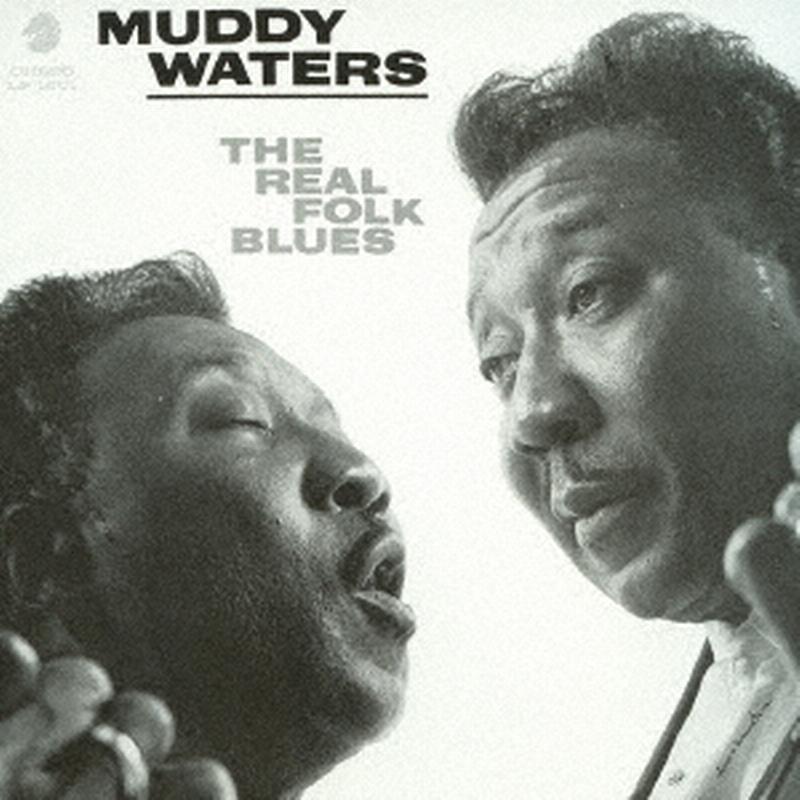
Muddy Waters can set an entire band in motion with one vocal phrase. In “Mannish Boy”, the exchange becomes almost ritualistic: a recurring instrumental call provides firm ground on which McKinley Morganfield can change the weight of every accent. Harmonic travel is not the point. The excitement lies in the fit between voice and reply—confident, physical and governed by an instinctive sense of timing.
The Real Folk Blues gathers recordings made between 1947 and 1964. That span reaches from Muddy’s early Aristocrat releases into his established Chicago career. This is neither a single studio session nor a sequel to the acoustic Folk Singer. It traces a development through individual songs, changing accompanists and different recording occasions. His vocal authority creates continuity without disguising those differences.

An answer to an answer
“Mannish Boy” carries a revealing story about musical exchange. Bo Diddley’s “I’m a Man” had drawn inspiration from “Hoochie Coochie Man”; Muddy answered in turn with “Mannish Boy”, recorded in 1955. Its writing credit joins Waters, Mel London and Ellas McDaniel—Bo Diddley’s real name. Rather than an isolated invention, the song belongs to a conversation carried forward through records.
Knowing that history changes the way its persistence registers. The repeating figure is not a shortage of ideas: it is the dramatic foundation. Muddy can lean against it, confirm it and load the next statement with fresh emphasis. The band maintains a form within which repetition becomes personal expression. It is a useful illustration of the difference between a recognisable blues pattern and a performance that makes the pattern feel necessary.

From Aristocrat beginnings to the Chess ensemble
“Gypsy Woman” reaches back to Muddy’s first Aristocrat single in 1947. Willie Dixon’s “Same Thing”, recorded in 1964, stands at the other end of the collection’s timeline. Between them are “Walkin’ Blues”, “Rollin’ and Tumblin’” and “Forty Days and Forty Nights”. Older material, Muddy’s own repertoire and contributions from other writers coexist here as living music, not as items arranged in a historical display case.
Little Walter, Junior Wells, Otis Spann and Willie Dixon are among the musicians heard across the different sessions. They do not constitute a single line-up playing every track. That makes changes in accompaniment worth following: harmonica pushing against a vocal line, piano bringing movement to the space between statements, a guitar response preparing the singer’s next entrance. Muddy’s way of gathering these individual voices around him is the constant.
Why “folk blues” does not mean acoustic
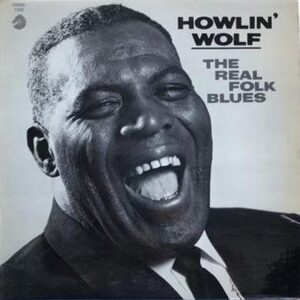
This compilation launched Chess’s Real Folk Blues series. Its title addressed a younger audience discovering older American music through the folk boom. It should not be read as an instrumentation guide. The album certainly does not document only the years before electric blues. Its long recording span is central to its interest; reducing it to an imagined acoustic early period would obscure much of what it contains.
The pleasure is in hearing musical inheritance take on a new setting. An older song form remains identifiable while Muddy’s phrasing and the players’ responses give it a different social and expressive presence. These twelve performances work immediately, without requiring a history lesson. A little context nevertheless brings their distinctions into sharper focus: intimate statement and public assertion, an open-ended vocal phrase and the exact instrumental answer. Those relationships offer a reason to return even when the songs themselves have long been familiar.
More by Muddy Waters: Folk Singer · The Best Of Muddy Waters
Series: Chess Records – all 10 records: singles that became albums
Musicians
Personnel checked against album sources.
- Muddy WatersVocals, Guitar
- Pat HareGuitar
- Sammy LawhornGuitar
- James “Pee Wee” MadisonGuitar
- Jimmy RogersGuitar
- Baby Face Leroy FosterGuitar
- Johnny JonesPiano
- Otis SpannPiano
- Sunnyland SlimPiano
- Little WalterHarmonica
- Junior WellsHarmonica
- Big CrawfordBass
- Willie DixonBass
- Ransom KnowlingBass
- Andrew StephensonBass
- Francis ClayDrums
- Odie PayneDrums
- Fred BelowDrums


🎧 Review video: 5 Legendary Reissues: Before Van Halen, Pulp Fiction & Rolling Stones Name
This video is hosted by YouTube (Google). It only loads once you switch on “Functional” in the cookie settings.

Reviews
There are no reviews yet.