
A pupil conducts his teacher
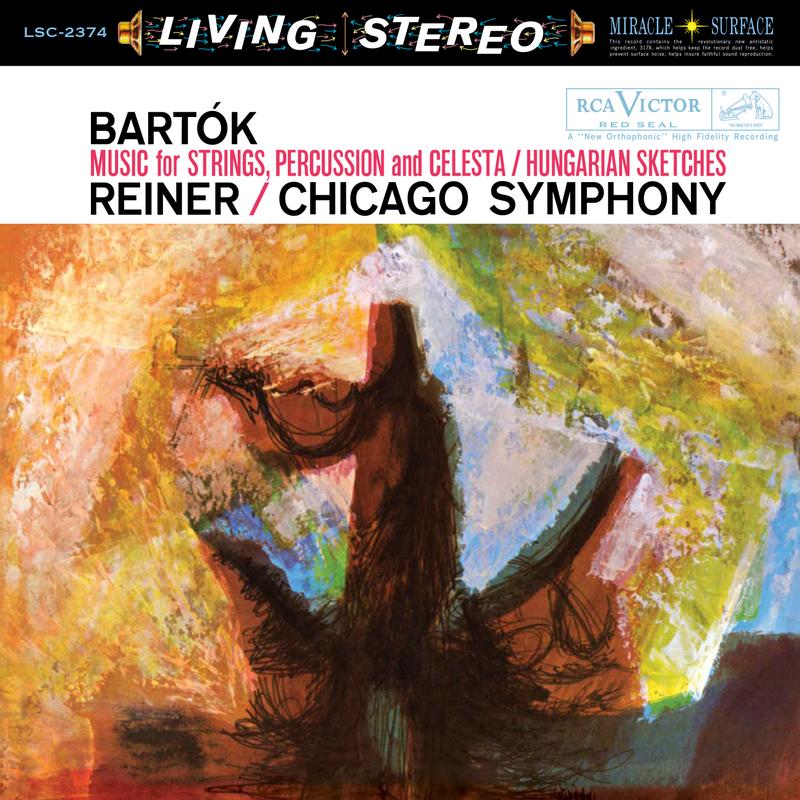
Fritz Reiner had studied piano with Béla Bartók at the music academy in Budapest. When he recorded Music for Strings, Percussion and Celesta with the Chicago Symphony Orchestra in December 1958, his connection to the composer therefore extended beyond a conductor’s interest in the score. The sessions took place at Orchestra Hall on December 28 and 29, with Richard Mohr producing and Lewis Layton responsible for the recording.
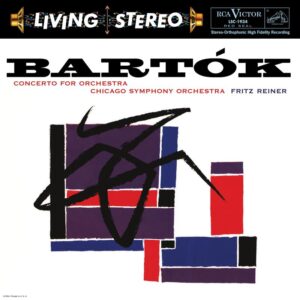
The performance earned the Chicago Symphony Orchestra its first Grammy in 1961. On this edition, the four-movement work is paired with Bartók’s Hungarian Sketches. The Concerto for Orchestra, another well-known Reiner recording, belongs to a different programme and is not included here.

The seating arrangement belongs to the score
Bartók composed the work in 1936 for Paul Sacher and the Basel Chamber Orchestra. Sacher conducted its premiere in January 1937. The score divides the strings into two groups, intended to sit opposite one another. Their spatial relationship is consequently a compositional decision before it becomes a question of how to capture them in stereo.
The first movement begins as a slow fugue. A musical idea is taken up by successive voices and placed within an expanding structure. One way to listen is to resist trying to grasp the entire texture immediately. Follow an individual entry, then its relationship to the next. The second and fourth movements use the two groups in other ways. The changing activity between them is part of the work’s construction, rather than a decorative effect added to a conventional orchestral layout.

Night music and five smaller pictures
Alongside strings, the instrumentation includes harp, piano, celesta and percussion. The third movement opens with a distinctive xylophone rhythm and belongs to the world often described as Bartók’s night music. It rewards attention to the intervals between events: individual attacks, their recurrence and the instruments that follow them. The percussion supplies more than an additional rhythmic layer beneath the strings.
The fourth record side contains the five Hungarian Sketches: “An Evening in the Village,” “Bear Dance,” “Melody,” “Slightly Tipsy” and “Swineherd’s Dance.” The large four-movement work is thus followed by a sequence of shorter pieces. Their titles offer different points of reference without requiring you to invent a fixed story for the music. Together, the works place an extended formal structure beside compact character pieces, with Reiner and the Chicago Symphony Orchestra connecting the two scales of the programme.
Tape-copy source and side arrangement
AAPC 2374-45 presents the programme in stereo on two 180-gram LPs at 45 RPM, pressed at Quality Record Pressings. Acoustic Sounds credits Matthew Lutthans at The Mastering Lab and explicitly names a tape copy as the source. An insert is included. The first LP carries movement one on side A and movements two and three on side B. The second contains movement four, followed by Hungarian Sketches on its reverse. Each movement of the main work remains complete on its allotted side.
Michael 45 keeps the records in Germany and sends them from Hilden, avoiding a personal US import and the customs wait connected with it.
More from the series: RCA Living Stereo Series
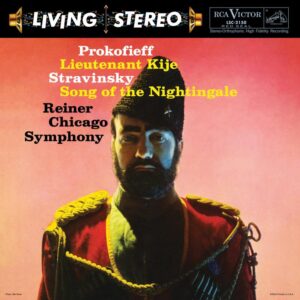
More by Fritz Reiner: Prokofiev: Lieutenant Kije / Stravinsky: Song of the Nightingale · Spain
Artist page: All titles by Fritz Reiner
Customer question: Buying Analogue Productions records in Europe
Series: RCA Living Stereo – all 25 titles, conductors and soloists
Musicians
Documented selection of participating musicians. Personnel may vary by track; this list does not claim to be complete.
| Name | Instrument / role |
|---|---|
| Fritz Reiner | Conductor |
| Chicago Symphony Orchestra | Orchestra |

Reviews
There are no reviews yet.