


A composition that resists an easy solution
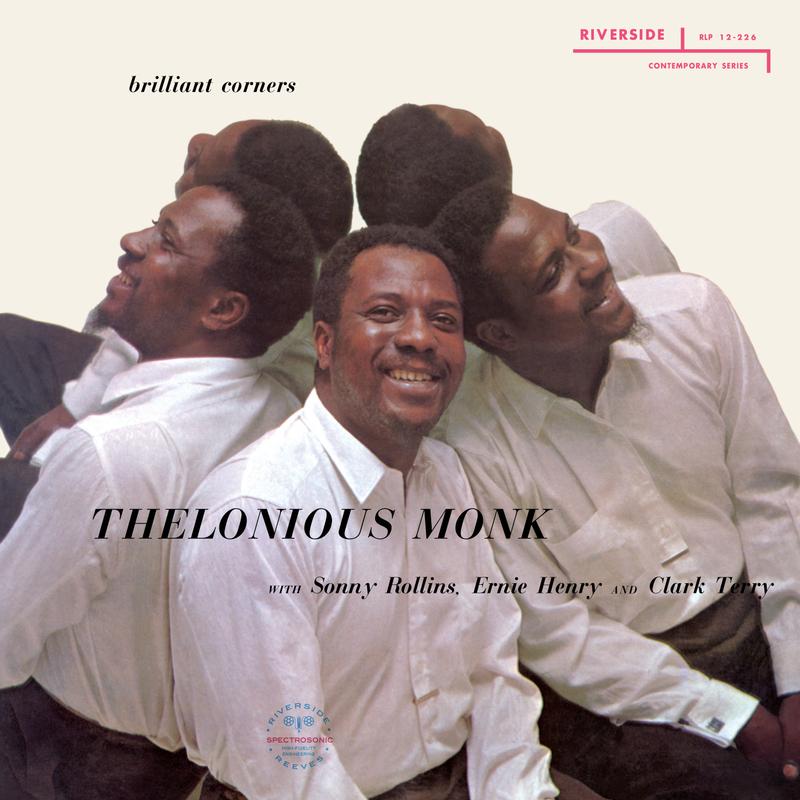
Brilliant Corners does not emerge from one effortless performance. In October 1956, Monk’s band repeatedly attempts to negotiate the title composition’s unusual form. After 25 takes, no complete version has been achieved. Producer Orrin Keepnews assembles the released performance from several takes. That effort belongs to the album’s story: the musical idea extends beyond any single successful attempt.
Recorded at Reeves Sound Studios in October and December 1956, the album appears on Riverside in 1957. Monk brings his compositions into contact with strongly individual musicians. Patience here is an invitation to discover a distinctive musical logic, rather than an entrance examination.

Celesta, saxophones and timpani
Sonny Rollins, Ernie Henry, Oscar Pettiford and Max Roach participate in the October sessions. On “Pannonica,” Monk plays celesta as well as piano. The title refers to Pannonica de Koenigswarter; “Ba-lue Bolivar Ba-lues-are” also points toward her world, through Manhattan’s Bolivar Hotel. People and places stand behind these unusual titles.
For “Bemsha Swing,” Clark Terry takes the trumpet part and Paul Chambers the double bass, while Max Roach adds timpani to his drum kit. “I Surrender, Dear” offers another setting altogether: Monk at the piano alone. The personnel list therefore identifies contributions by track, rather than suggesting that everyone plays throughout.

Corners worth exploring
The title composition combines sections of unequal length with changes in tempo feel. There is no need to count every bar before engaging with it. Following the transitions and the musicians’ collective response provides a direct way in. Alongside that challenge are a dedication to a patron, an unaccompanied standard and the instrumental colors of “Bemsha Swing.”
This range makes Brilliant Corners more than a celebrated title on a shelf. It reveals how much personality a composition can contain, and how differently musicians may answer it. It belongs in a collection that values musical curiosity as much as familiarity.
Mono and the history of the cut
This Analogue Productions edition is AAPJ 12-226: one 180-gram LP at 33⅓ RPM, in mono. Kevin Gray’s AcousTech cut belongs to the Riverside Tenor Sessions project prepared in 1997. Later individual pressings use that metalwork too; a repress is not a new mastering.
For the current edition, the publisher specifies QRP, Stoughton packaging and the original analog master tape. An earlier RTI pressing is documented under the same catalogue number, so identifying an individual copy requires its physical markings. This mono program includes all five titles, from Monk’s solo performance to “Bemsha Swing.”
You order from Michael 45 in Germany. We arrange the US import and dispatch from Hilden.
More by Thelonious Monk: Misterioso · Monk’s Music
Artist page: All titles with Sonny Rollins
Customer question: Buying Analogue Productions records in Europe
Musicians
Participants and documented credit status. Track references correspond to the tracklist.
- Thelonious Monkpiano, celestaParticipation: All tracks · celesta B1
- Sonny Rollinstenor saxophoneParticipation: A1, A2, B1, B3
- Ernie Henryalto saxophoneParticipation: A1, A2, B1
- Oscar Pettiforddouble bassParticipation: A1, A2, B1
- Max Roachdrums, timpaniParticipation: A1, A2, B1, B3 · timpani B3
- Clark TerrytrumpetParticipation: B3
- Paul Chambersdouble bassParticipation: B3


Produced by Orrin Keepnews. Recorded by Jack Higgins. B2 is solo Monk; celesta on B1 and timpani on B3.

Reviews
There are no reviews yet.