

Returning to 1957
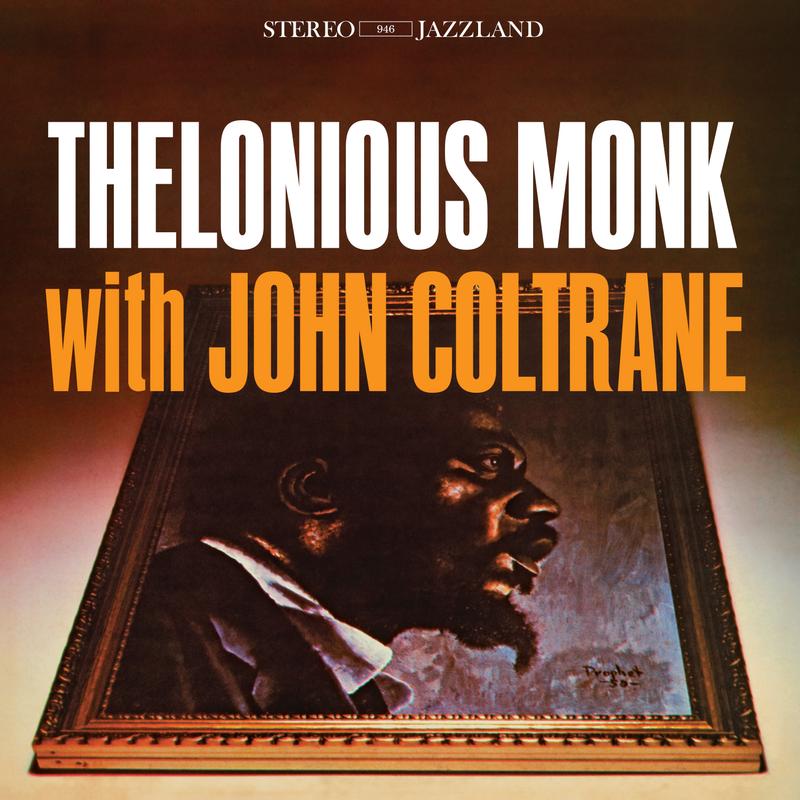
When Thelonious Monk With John Coltrane appeared on Jazzland in 1961, the brief partnership of its two principal musicians was already several years in the past. Their months together at New York’s Five Spot belong among the defining encounters of this period in jazz. The six performances on this record, however, were made in the studio. They return us to three separate sessions from 1957, rather than preserving a night at the club.
Three quartet recordings from July form the heart of the collection: “Ruby, My Dear,” “Trinkle, Tinkle” and “Nutty.” Monk and Coltrane are joined by Wilbur Ware on double bass and Shadow Wilson on drums at Reeves Sound Studios. The later compilation brought these encounters to a wider audience. That distance is part of the record’s fascination: a shared working moment could now be heard with a clearer sense of its significance.

From quartet to septet
“Ruby, My Dear” offers the entrance of a ballad, while “Trinkle, Tinkle” and “Nutty” explore other aspects of Monk’s writing. Follow Coltrane’s line, then shift attention to the piano: to an accompanying phrase, a placed accent or a space Monk leaves open. Ware and Wilson are as much a part of the conversation as the two names on the cover.
The personnel change for “Off Minor” and “Epistrophy.” Both come from the June sessions for Monk’s Music, but the performances selected here are alternatives. Coleman Hawkins adds a second tenor voice, with Ray Copeland on trumpet and Gigi Gryce on alto saxophone. Art Blakey takes over the drums. The expanded horn section broadens the perspective without turning the compilation into a single septet session.

Ending with Monk alone
“Off Minor” is Take 4; “Epistrophy” is the short alternative version. “Functional” closes the album with solo piano from the April session for Thelonious Himself. This is Take 1, and Coltrane does not participate. The sequence of quartet, larger ensemble and unaccompanied piano therefore tells more than the story of one celebrated partnership.
That variety gives the record a particular place in a Monk collection. Listeners who know Monk’s Music can set the alternative takes beside it; those arriving through Coltrane gain an introduction to Monk’s own musical thinking. Follow the changes in personnel and allow “Functional” its separate space. “Monk’s Mood,” added to a later CD edition, is not included on this LP.
The AAPJ 946 edition
Analogue Productions presents the six tracks on one 180-gram LP at 33⅓ RPM. The publisher identifies Kevin Gray, the original analog master tape, Quality Record Pressings and a Stoughton tip-on jacket. The cutting history of the Riverside Tenor Sessions series reaches back to 1997/98; this reissue should consequently not be described as a new 2024 mastering.
Published information conflicts over the mono/stereo presentation of this individual edition. Its channel configuration remains unconfirmed without inspecting the actual copy. That distinction belongs in a careful description of the pressing. The musical programme is clear: AAPJ 946 contains six studio performances from 1957, including the documented alternative takes.
You order from Michael 45 in Germany. We arrange the US import and dispatch from Hilden.
Artist page: All titles by John Coltrane
Customer question: Buying Analogue Productions records in Europe
Musicians
Participants and documented credit status. Track references correspond to the tracklist.
- Thelonious MonkpianoParticipation: All tracks · B3 solo
- John Coltranetenor saxophoneParticipation: A1, A2, A3, B1, B2
- Wilbur Waredouble bassParticipation: A1, A2, A3, B1, B2
- Shadow WilsondrumsParticipation: A1, A2, B1
- Art BlakeydrumsParticipation: A3, B2
- Coleman Hawkinstenor saxophoneParticipation: A3, B2
- Ray CopelandtrumpetParticipation: A3, B2
- Gigi Grycealto saxophoneParticipation: A3, B2


Produced by Orrin Keepnews. Quartet A1/A2/B1; septet A3/B2; B3 solo Monk.

Reviews
There are no reviews yet.