
An album that brings an inner world into the open
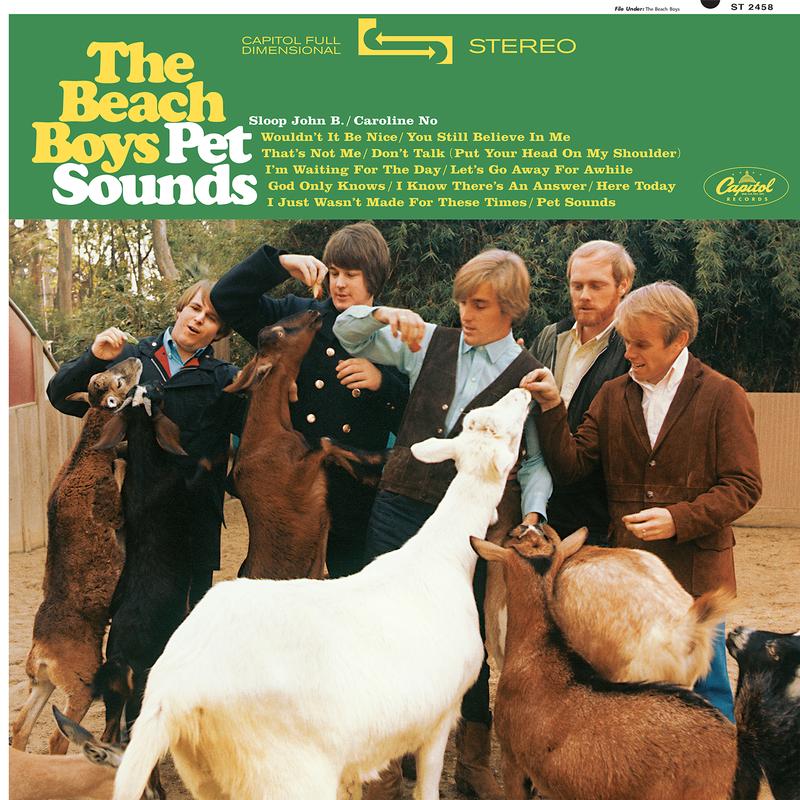
Pet Sounds begins with a wish: to reach a point where love, everyday life and growing up can finally belong together. “Wouldn’t It Be Nice” turns that wish into a miniature drama. The music presses forward while the words describe a life that is not yet possible. When Capitol released the album on May 16, 1966, Brian Wilson had opened the familiar Beach Boys world to a much wider emotional landscape. Longing remained, but its destination was less a place on the coast than a sense of inner security. Beneath the memorable melodies lie uncertainty, vulnerability and the feeling of being unusually sensitive to a world that does not quite understand.
Wilson produced and arranged the recordings and wrote most of the music, with Tony Asher becoming his principal lyrical collaborator. Work extended from 1965 into the spring of 1966, concentrated particularly in the early months of 1966. Western, Gold Star, Sunset Sound and CBS Columbia Square were among the Hollywood studios involved, and Chuck Britz was an important technical partner. While the Beach Boys toured, Wilson developed instrumental tracks with players who later became widely known under the collective name of the Wrecking Crew. That division of labour did not make this an album without the Beach Boys. Their voices give the elaborate arrangements an unmistakably human identity.
The songs do not follow a continuous plot, yet they form a coherent emotional journey. The opening hope leads towards self-doubt, reassurance, estrangement and memory. “That’s Not Me” places the desire for independence alongside the need for closeness; “I Just Wasn’t Made for These Times” describes not belonging without turning it into a grand gesture. “Caroline, No” closes the sequence with a sense of loss that reaches beyond one particular farewell. The everyday sounds that follow bring this carefully constructed musical world back outside. That combination of intricate craft and recognisable human questions is a large part of the album’s continuing accessibility.

The voices behind the arrangements
Brian Wilson frequently takes the lead, but the distribution of lead vocals reveals how differently the Beach Boys tell these stories. Mike Love sings “Here Today” and substantial portions of “That’s Not Me”; his voice and Brian’s share “Sloop John B.” Al Jardine contributes to “I Know There’s an Answer.” Carl Wilson sings “God Only Knows” with a directness that keeps the song from becoming merely a display of compositional ingenuity. Brian Wilson and Bruce Johnston join its closing vocal interplay. These distinct voices are part of the album’s dramatic design, even as the group’s harmony singing repeatedly draws them together.
An unusually versatile ensemble works beneath them. Carol Kaye on electric bass and Lyle Ritz on acoustic double bass represent two different foundations, often appearing together in the documented credits. Hal Blaine is one of the central drummers, with Jim Gordon and other colleagues taking part on individual tracks. Barney Kessel, Glen Campbell, Billy Strange and Jerry Cole contribute different guitar colours. Larry Knechtel and Al de Lory extend the keyboard palette, while woodwinds, strings, accordions and percussion carry the music far beyond the usual equipment of a pop group. These names describe changing combinations of players, not a single band performing every song with an identical line-up.
“God Only Knows,” for example, brings accordion, strings and French horn into contact with the rhythm section. “You Still Believe in Me” uses harpsichord and woodwind colours. On “I Just Wasn’t Made for These Times,” Paul Tanner played the Electro-Theremin, an electronic instrument whose pitch was controlled mechanically. It is often abbreviated to theremin in credits, but it was not an instrument played by moving the hands freely between two antennae. Such distinctions matter because Wilson was looking for particular combinations of sound. The two instrumental pieces, “Let’s Go Away for Awhile” and “Pet Sounds,” are equally purposeful. They allow the arrangements to speak for themselves and create two differently shaped spaces within the sequence.

Thirteen songs that reward being heard together
One rewarding way into the album is to follow its bass lines and the movement between vocal parts. Accompaniments often gain their flexibility from doing more than simply holding a root note underneath the melody. Instrumental colours can also change within a very short space. In “Don’t Talk (Put Your Head on My Shoulder),” listen to how the strings frame the intimacy of the singing without burdening the lyric with another narrative. “I’m Waiting for the Day” places a more vigorous rhythmic movement against the vulnerability elsewhere. The result is considerable variety within a closely connected emotional world.
“Sloop John B” occupies a special position. Al Jardine suggested the traditional song after knowing the Kingston Trio’s version. Its account of an unhappy voyage initially seems some distance from the surrounding material. Yet the desire to get back home connects it with the questions of belonging and reassurance that run through the record. Among the more personally inflected songs, it opens a window onto another kind of story. The coexistence of a familiar folk song, two instrumentals and such intimate new writing demonstrates the breadth of Wilson’s approach to making an album rather than simply assembling a sequence of potential singles.
For collectors, the interest extends beyond the record’s subsequent reputation. Pet Sounds is an album whose mixing history is closely connected with artistic intention. Wilson conceived the original release in mono. A true stereo version arrived decades later through Mark Linett’s work and appeared in connection with The Pet Sounds Sessions in 1997. The two perspectives therefore have different historical foundations. Choosing a particular edition can be a conscious part of approaching the music. It is worth returning to these familiar melodies as a complete album sequence, from the impatient hope of its opening to the unresolved question left by “Caroline, No,” rather than allowing the best-known songs to stand apart from their neighbours.
The stereo version across four sides
Catalogue number AAPP 067-45 identifies the stereo edition on two LPs playing at 45 RPM. Analogue Productions credits Kevin Gray at Cohearent Audio with mastering, Gary Salstrom with plating and Quality Record Pressings with pressing the records. They are housed in a Stoughton gatefold jacket. The current publisher specification is 180 grams, while the documented 2017 edition was offered at 200 grams. Both belong to the pressing history and do not establish the exact batch of every copy now held in stock.
The origins of the stereo mix remain equally important on this 45 RPM edition. Mark Linett combined separately recorded instrumental and vocal tracks using a digital intermediate stage, with the documented chain subsequently returning to analogue tape. This is therefore not an original all-analogue stereo mix made in 1966. The higher playback speed does not alter that source history. For collectors, separating the original recording material, the later mix and the manufacture of the offered records is particularly useful.
The thirteen songs are spread across four sides, with changes after “Don’t Talk,” “Sloop John B” and “Here Today.” This creates shorter listening sections and makes the set different in everyday use from the single stereo LP at 33⅓ RPM. It is the appropriate AP variant for someone seeking the later stereo perspective in a double-LP format. Whether that arrangement or the longer sides of the 33⅓ edition better suits a particular listening session depends on personal habits; a general promise of superior quality cannot make that decision on the listener’s behalf.
You order from Michael 45 in Germany. We arrange the US import and dispatch from Hilden.
Also on mono vinyl: Pet Sounds
More by The Beach Boys: Little Deuce Coupe
Customer question: Buying Analogue Productions records in Europe
Musicians
Participants and documented credit status. Track references correspond to the tracklist.
- Al CaseyGuitarParticipation: B2, B3, C3
- Al de LoryHarpsichord, Organ, PianoParticipation: A1, A2, A4, B1, B2, B3, C2, D3
- Alan JardineLead VocalsParticipation: C2
- Alan RobinsonFrench HornParticipation: C1
- Arnold BelnickViolinParticipation: A4, B2
- Barney KesselPortrait: existing portraitGuitar, MandolinParticipation: A1, A2, B2, C2, D1, D3
- Bill GreenPercussionParticipation: D2
- Bill PitmanGuitarParticipation: A1
- Billy StrangeElectric Guitar, GuitarParticipation: A2, A4, B3, D2
- Bobby KleinTenor SaxophoneParticipation: C2, D1
- Brian WilsonPortrait: 1966Lead Vocals, Organ, Piano, VocalsParticipation: A1, A2, A3, A4, B1, B3, C1, C2, D1, D2, D3
- Bruce JohnstonLead VocalsParticipation: C1
- Carl FortinaAccordionParticipation: A1, C1
- Carl WilsonGuitar, Lead VocalsParticipation: A3, C1
- Carol KayeElectric BassParticipation: A1, A2, A3, A4, B1, B2, B3, C1, C3, D2, D3
- Chuck BerghoferAcoustic BassParticipation: D1
- Darrel TerwilligerViolaParticipation: C1
- Dennis WilsonDrumsParticipation: A3
- Don RandiPianoParticipation: C1, C3, D1
- Ernie TackBass TromboneParticipation: C3
- Frank CappBells, Timpani, Percussion, Glockenspiel, VibraphoneParticipation: A1, A3, A4, B3, C3, D1, D3
- Frank MaroccoAccordionParticipation: A1, C1
- Gail MartinTromboneParticipation: C3
- Gary ColemanTimpani, BongosParticipation: B1
- Glen Campbell12-String Acoustic Guitar, GuitarParticipation: A3, A4, C2, D1, D3
- Hal BlainePortrait: 1995Drums, Timpani, BongosParticipation: A1, A2, A4, B2, B3, C1, C2, D1, D3
- Harry HyamsViolaParticipation: B1, B2
- Jack NimitzBaritone SaxophoneParticipation: B3, C3
- James GetzoffViolinParticipation: B2
- Jay MiglioriBaritone Saxophone, Bass Clarinet, Clarinet, Flute, SaxophoneParticipation: A1, A2, B1, B2, B3, C1, C2, C3, D1, D2, D3
- Jerome ReislerViolinParticipation: B2
- Jerry ColeElectric Guitar, GuitarParticipation: A1, A2, B3, D2
- Jerry WilliamsPercussionParticipation: A2
- Jesse EhrlichCelloParticipation: C1
- Jim GordonPortrait: existing portraitDrums, PercussionParticipation: B1, C1
- Jim HornBaritone Saxophone, Flute, Saxophone, Tenor SaxophoneParticipation: A2, B1, B2, B3, C1, C2, D2, D3
- Joseph DiFioreViolaParticipation: B2
- Joseph DiTullioCelloParticipation: B2
- Joseph SaxonCelloParticipation: A4, B2
- Jules JacobFluteParticipation: B2
- Julius WechterPercussion, Timpani, VibraphoneParticipation: A2, B2, C2
- Justin DiTullioCelloParticipation: B1
- Larry KnechtelPortrait: existing portraitOrganParticipation: A1, B1, C1, C2, C3
- Leonard HartmanClarinet, Bass Clarinet, English HornParticipation: B1, C1
- Leonard MalarskyViolinParticipation: B1, B2, C1
- Lyle RitzAcoustic Bass, UkuleleParticipation: A1, A2, A3, A4, B1, B2, B3, C1, C2, C3, D2, D3
- Mike DeasyGuitarParticipation: C3
- Mike LoveLead VocalsParticipation: A1, A3, B3, C2, C3
- Mike MelvoinHarpsichordParticipation: D1
- Nick MartinisDrumsParticipation: C3
- Norman BotnickViolaParticipation: A4
- Paul HornTenor SaxophoneParticipation: C2
- Paul TannerElectro-ThereminParticipation: D1
- Plas JohnsonFlute, Percussion, Saxophone, Tenor SaxophoneParticipation: A1, A2, B2, D1, D2, D3
- Ralph SchaefferViolinParticipation: A4, B1, B2
- Ray PohlmanBass, Electric Bass, Guitar, MandolinParticipation: A1, B1, C1, C2, D1
- Richie FrostDrums, PercussionParticipation: D2
- Ron SwallowTambourineParticipation: B3 · assignment uncertain
- Roy CatonTrumpetParticipation: A1, B2, D2
- Sidney SharpViolinParticipation: A4, B1, B2, C1
- Steve DouglasClarinet, Flute, Percussion, Saxophone, Tenor SaxophoneParticipation: A1, A2, A4, B2, B3, C2, D1, D3
- Terry MelcherTambourineParticipation: C3
- Tibor ZeligViolinParticipation: A4, B2
- Tommy MorganHarmonicaParticipation: C2, D1
- Tommy TedescoAcoustic GuitarParticipation: D2
- William GreenFlute, Saxophone, Tenor SaxophoneParticipation: A2, B1, C1, D2, D3
- William KuraschViolinParticipation: B1, B2
- The Beach BoysvocalsParticipation: Harmony vocals; complete track assignments unconfirmed


Track assignments follow documented reissue credits. Instrument lists combine roles and do not imply every listed instrument on each track. Individual harmony-vocal assignments remain incomplete. Paul Tanner played an Electro-Theremin controlled mechanically, not a hands-in-the-air theremin.

Reviews
There are no reviews yet.