A World Of Piano!: one pianist, two trios
Turning a record over can mean more than a brief interruption. On A World Of Piano!, the entire rhythm section changes with the side: Paul Chambers and Philly Joe Jones accompany the first half, Sam Jones and Louis Hayes the second. Phineas Newborn Jr. remains at the piano. This straightforward, unusually well-documented arrangement makes the album an invitation to meet one pianist in conversation with two different partnerships. Eight pieces, two recording dates and five musicians do not amount to a loose collection of guest appearances. Each half of the record has its own consistent personnel.
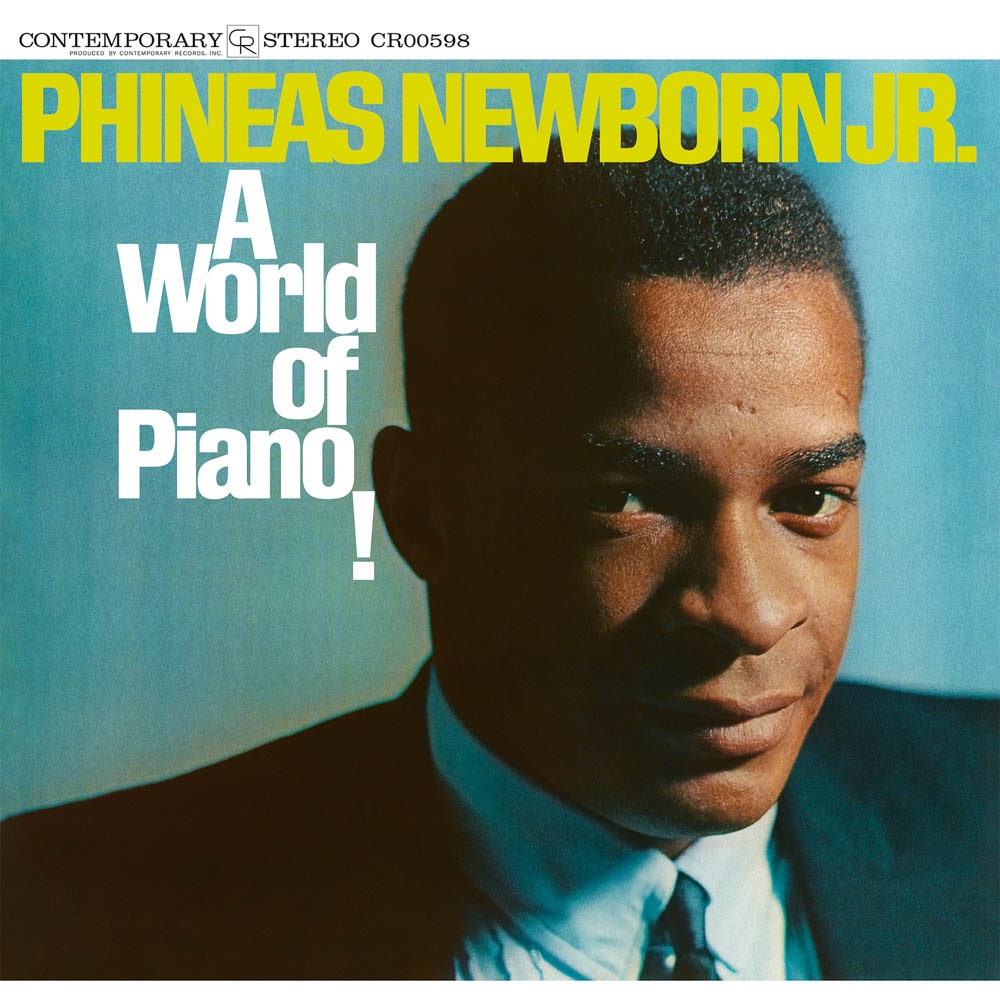
The first session took place on October 16, 1961, the second on November 21, 1961, at Contemporary Records in Los Angeles. The album was released in June 1962. A change of calendar year separates recording and release; a change of musical partners separates the two sides. The title A World Of Piano! initially suggests the possibilities of a single instrument. The personnel extend that idea: the piano’s world also includes musicians who catch its lines, answer them rhythmically and help carry their harmonic direction. The four accompanists therefore deserve attention well beyond the small print on the sleeve.
Newborn’s technical ability is central to the recording’s historical reputation. Leonard Feather, who wrote the original notes, expressed unusually strong admiration for the pianist. That contemporary enthusiasm helps explain the expectations surrounding the album, but need not dictate an individual listener’s response. The breadth of the chosen material offers a more practical starting point. Its composers range from Charlie Parker and Dizzy Gillespie through Billy Strayhorn and Clifford Brown to Sonny Rollins and Horace Silver. The piano finds itself among several distinct compositional voices rather than working exclusively within one narrow strand of the repertoire.

From Cheryl to Cabu: eight pieces with distinct origins
Side A begins with Charlie Parker’s Cheryl. It continues with Manteca, written by Dizzy Gillespie, Chano Pozo and Gil Fuller, Billy Strayhorn’s Lush Life, and Clifford Brown’s Dahoud. Those names alone give the first half a striking framework. Repertoire associated with horns as well as keyboards becomes the material of a piano trio. A melody need not remain attached to its original instrumentation. The piano can bring melodic line, chord and rhythmic movement together within one instrument, while bass and drums retain independent voices instead of merely duplicating the keyboard player’s responsibilities.
Lush Life brings into this sequence a composition that many collections contain as a vocal standard. Here it belongs to an instrumental programme. That shifts the listener’s attention: a lyric no longer determines the thought being expressed at a particular moment. Instead, one can follow the shape of the melody and the weight given to its transitions. Manteca, meanwhile, points towards a different rhythmic lineage. These contrasts in the material provide useful starting points without imposing a predetermined mood on every passage. The album leaves plenty of room to discover personal connections between its pieces through repeated listening.
Side B opens with Sonny Rollins’ Oleo, followed by Horace Silver’s Juicy Lucy, Leroy Vinnegar’s For Carl and Roland Alexander’s Cabu. The second half therefore has four equally clear compositional identities. Vinnegar supplies a particularly appealing connection: he appears here as a composer, while his own Leroy Walks! offers another view of the same Contemporary world. He does not, however, play on A World Of Piano!. Keeping authorship separate from performance is part of understanding this record. Jazz repertoire acquires much of its continuing life precisely because compositions travel through the hands of other musicians.

Chambers and Jones, Jones and Hayes: the partners on each side
Paul Chambers plays double bass and Philly Joe Jones drums on the first four selections. Sam Jones and Louis Hayes take over those instruments for the remaining four. The recurring surname can easily cause confusion; the side-by-side allocation makes the distinction unambiguous. Neither drummer is assigned indiscriminately to the whole album, and the bassists do not alternate within either documented session. Newborn is the only musician present on all eight tracks. Turning the LP over preserves its central voice while changing the musical environment immediately around that voice, a particularly tangible feature of this programme.
This creates a rewarding starting point for comparative listening. There is no need to look for a winning rhythm section. Instead, consider how piano, bass and drums distribute their responsibilities: where does the bass provide orientation, when does a drum figure attract attention, and how do the piano phrases relate to both? The different compositions and recording dates also matter. It would be too simple to attribute every perceived change exclusively to one player. The combination of reliable personnel information and an open-ended musical experience is precisely what makes returning to the record so worthwhile.
Lester Koenig produced the album. Roy DuNann and Howard Holzer are documented as its recording engineers, although their respective responsibilities cannot securely be allocated track by track here. Contemporary used a shipping room as a recording space. That practical setting forms part of the history of a label which produced important jazz recordings with comparatively modest facilities. The accompanying illustration interprets the relationship between record shipping and music symbolically. It is neither a historical photograph nor a reconstruction of the exact arrangement on either recording date. The recording and its credits, rather than an imagined scene, document the musical event.
The Contemporary edition: analogue mastering and an intact programme
This edition belongs to Craft Recordings’ Contemporary Records Acoustic Sounds Series. It presents the album on one 180-gram stereo LP playing at 33⅓ rpm. Bernie Grundman handled the explicitly all-analogue mastering from the original tapes, with pressing by Quality Record Pressings and a Stoughton Printing tip-on jacket. Released on December 15, 2023, the reissue carries catalogue number CR00606 and is identified in the shop as ACONC 606. These specifications describe this particular reissue, rather than the manufacture of the original album released in 1962. The recording dates and reissue date remain distinct.
The single LP preserves the album’s easily understood architecture: four pieces with the first personnel, then four with the second. The tracklist follows this edition’s timings and its spelling of Dahoud. Such details are useful when comparing releases whose listings differ slightly. Record weight describes a manufacturing specification; it is not, on its own, a measure of sound quality. The traceable tape source, named mastering engineer and precise position within the Contemporary series are more informative features of this edition. How it fits an individual system and collection ultimately remains a matter for personal listening.
If you want to buy A World Of Piano! on vinyl, this is a clearly identified edition for exploring Newborn and his four partners. It works as a self-contained piano album while also connecting with other Contemporary recordings where the same musicians appear in different roles. You order from Michael 45 in Germany. We arrange the US import and dispatch from Hilden. The current availability and delivery information beside the purchase controls remain decisive for an order. Describing this reissue does not promise that a copy is presently in stock or reserve one for a future purchase.
Series: Contemporary – all 24 records: sunny jazz from Los Angeles
Musicians
Participants and documented credit status. Track references correspond to the tracklist.
- Phineas Newborn Jr.pianoParticipation: All tracks
- Paul ChambersPortrait reference: 1958double bassParticipation: A1–A4 · side A
- Sam Jonesdouble bassParticipation: B1–B4 · side B
- Philly Joe JonesPortrait reference: 1962drumsParticipation: A1–A4 · side A
- Louis HayesdrumsParticipation: B1–B4 · side B


Produced by Lester Koenig. Recording: Roy DuNann and Howard Holzer; individual track allocation unconfirmed. Original liner notes: Leonard Feather. Cover design: Robert Guidi; portrait photograph: William Claxton. Reissue mastering and lacquer cutting: Bernie Grundman (2023).

Reviews
There are no reviews yet.