
A familiar title and a distinctive gathering of musicians
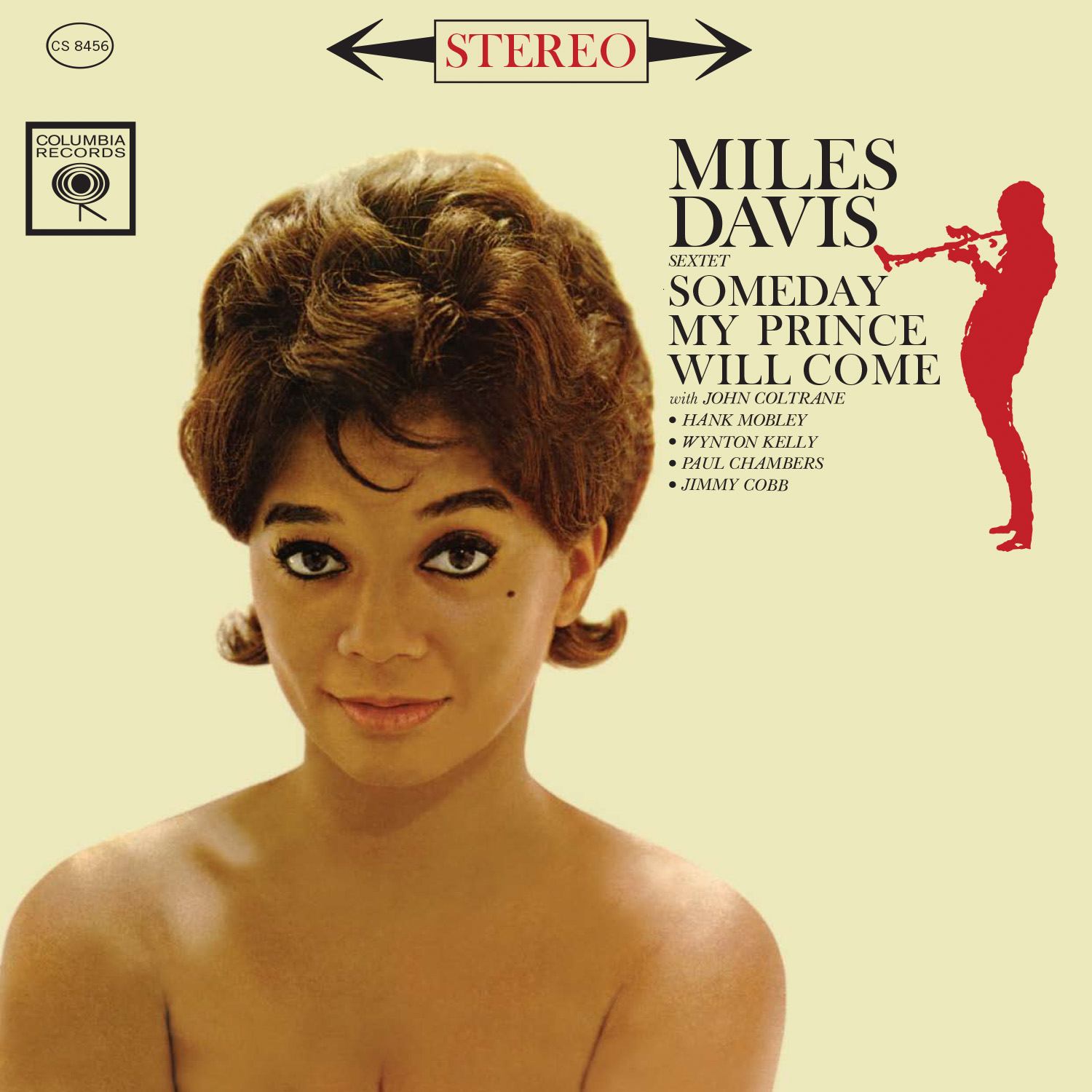
Someday My Prince Will Come presents Miles Davis in 1961 with a small group moving between familiar standards and original compositions. Six selections bring trumpet and tenor saxophone together with the rhythm section of Wynton Kelly, Paul Chambers and Jimmy Cobb. Hank Mobley is part of the lineup, while John Coltrane contributes to two tracks. If you want to buy Someday My Prince Will Come on vinyl, this is the Analogue Productions edition on a single 180-gram LP at 33⅓ RPM, rather than the separate double-LP version at 45 RPM.
The music was recorded in March 1961 at Columbia’s 30th Street Studio in New York, and the album appeared on Columbia later that year. Teo Macero produced; Fred Plaut and Frank Laico are credited with recording work. Within the relatively intimate framework of a small group, the programme explores different relationships between melody, accompaniment and solo statements. Three standards sit alongside three Davis compositions. That balance gives the album a clear outline without requiring every piece to fulfil the same musical purpose or develop over the same span of time.
The Miles Davis Sextet designation associated with the album should not be taken as an unchanging personnel description for every performance. Both Mobley and Coltrane appear on the title track. Teo features Coltrane in place of Mobley. This assignment is confirmed by the official Miles Davis website and corrects a conflicting entry in a pressing database. Elsewhere, the smaller lineup with Mobley is the relevant point of reference. The actual variation is more revealing than the assumption that the same sextet plays throughout the record.
The album consequently allows comparison within a coherent setting. These are not two saxophonists encountered on unrelated recordings assembled across a long period, but players heard within the same album’s musical world. Kelly, Chambers and Cobb provide its rhythmic and harmonic foundation. Their names are not a footnote beneath the celebrated horns. Their continuing work is part of what makes the changes at the front of the group intelligible, giving the programme continuity while allowing the individual pieces to develop their own identities.

Kelly, Chambers and Cobb as the common foundation
Wynton Kelly plays piano, Paul Chambers double bass and Jimmy Cobb drums. All three are credited across the six selections on this LP. A consistent rhythm section can give a varied programme cohesion without treating every song in the same way. A standard poses different questions from a new composition; an extended performance requires a different development from a concentrated ballad. Accompanying responsibilities change with the course of the music even when the names printed in the personnel remain constant. That distinction rewards attention.
It is therefore worth moving your focus away from the trumpet occasionally. How does the bass sustain movement? Where does the piano place a reply, and where does it leave space? How do the drums influence the relationship between stillness and momentum? These questions lead towards the accompanying players without reducing the album to a technical demonstration. In a small group, a musical decision can often be understood through its relationship to another: an entrance gains meaning from what happens just before it or alongside it.
Mobley and Coltrane occupy different places within this setting. The title track is their shared point of reference, while Teo is the other documented Coltrane contribution. There is no need to turn that relationship into a contest. The pieces offer different possibilities for a tenor voice, and each player brings an individual approach to phrasing. A collector may value the encounter as part of the history of Davis’ groups, but the music also remains accessible to someone who does not know that personnel history in detail.
A further distinction concerns expanded CD editions. Blues No. 2, which features Philly Joe Jones, is not among the six tracks on the LP offered here. He therefore does not appear in its personnel section. That additional recording matters to the wider session history, but it should not be presented as part of every release carrying the album title. The same principle applies to alternate versions. The relevant programme is the one actually included on this record, shown in full below with its two-side sequence.

From the title track to I Thought About You
Someday My Prince Will Come opens side one. Frank Churchill and Larry Morey’s composition introduces a programme that uses familiar song melodies as starting points for jazz. At just over nine minutes, the title selection has room to develop, while its position at the beginning also introduces the participating musicians. Both tenor saxophonists are documented here. You can follow the melody and then attend to the way musical responsibility moves between the soloists and the rhythm section as the performance progresses beyond its opening statement.
Old Folks follows with a different song, written by Willard Robison and Dedette Lee Hill. Pfrancing completes the first side as a Davis composition. The sequence places a familiar song, another standard and an original next to one another without requiring a side change inside a performance. It forms a manageable arc for repeated listening. The first side can be enjoyed as a programme in itself while retaining the anticipation of what follows when the record is turned over. The physical division makes that sequence particularly easy to recognise.
Side two begins with Drad-Dog and moves through Teo to I Thought About You. The first two are Davis compositions; the concluding song belongs to Jimmy Van Heusen and Johnny Mercer. Teo takes its name from producer Teo Macero. Running for more than nine minutes, it forms a second extended centre of attention. Precise personnel information is useful here, since Coltrane’s contribution belongs specifically to this selection. A misplaced database credit would obscure an important part of the album’s musical story rather than merely introduce a minor administrative error.
I Thought About You closes the record by returning to the standard repertoire. Across the six titles, established songs and Davis originals remain in balance. That keeps several routes into the album open: you may arrive through a known melody or through an interest in the band. Both approaches lead into the same performances. The record does not need to represent every aspect of Davis’ career at once. Its character comes from this particular programme, its clearly defined participants and the way those elements work together.
The single Analogue Productions LP at 33⅓ RPM
Catalogue number AAPJ 8456 identifies this edition. It presents the original six-track programme on one 180-gram LP playing at 33⅓ revolutions per minute. Ryan K. Smith at Sterling Sound is credited with cutting from the original analogue tape. The documented pressing is by RTI, rather than QRP. This is a detail to establish for the actual release instead of inferring a pressing plant from the Analogue Productions name alone. A tip-on-style gatefold jacket completes the physical presentation of the edition offered here.
The single record divides the music into two sides with three tracks each. Compared with a four-side presentation, the immediate difference is in the listening sequence: only one side change is required, and each group of three remains together. There is no need to turn this into a hierarchy of formats. For a listener who prefers the programme in two longer sections, the 33⅓ RPM edition offers a clearly identifiable choice. Its catalogue number distinguishes it from the 45 RPM version and from SACD releases.
The personnel and track information are equally specific to this LP. CD bonus performances have not been added to its contents, and alternate versions are not presented as extra album tracks. Such distinctions matter with a frequently reissued title whose name alone does not identify the exact programme being sold. Format, mastering credit, pressing plant and the complete tracklist work together to provide a dependable basis for choosing an edition. They clarify the product without allowing technical specifications to replace the musical story.
Someday My Prince Will Come fits a collection following Davis’ small groups, but it also makes sense within a selection of approachable jazz albums built partly around familiar songs. The personnel gives the listener much to explore while the programme remains compact. Six pieces provide several views of the same circle of musicians, including an encounter whose particular interest does not require extensive historical preparation before the record can be enjoyed.
You order from Michael 45 in Germany. We arrange the US import and dispatch from Hilden.
Artist page: All titles by Miles Davis
Customer question: Buying Analogue Productions records in Europe
Musicians
Participants and documented credit status. Track references correspond to the tracklist.
- Miles DavisExisting portrait; not a session depictiontrumpetParticipation: Album personnel
- Wynton KellypianoParticipation: Album personnel
- Paul ChambersPortrait reference: 1958double bassParticipation: Album personnel
- Jimmy CobbExisting portrait; not a session depictiondrumsParticipation: Album personnel
- Hank MobleyExisting portrait; not a session depictiontenor saxophoneParticipation: A1, A2, A3, B1, B3
- John ColtraneExisting portrait; not a session depictiontenor saxophoneParticipation: A1, B2


Coltrane appears on the title track and Teo according to the official Miles Davis website; the conflicting Discogs B3 credit is corrected. Philly Joe Jones appears only on Blues No. 2, absent from this LP. Teo Macero: producer; Fred Plaut/Frank Laico: recording. Ryan K. Smith / Sterling Sound: cut from the original analogue tape; RTI: pressing. CD bonus tracks are not included.

Reviews
There are no reviews yet.