

A new guitarist, a renewed identity
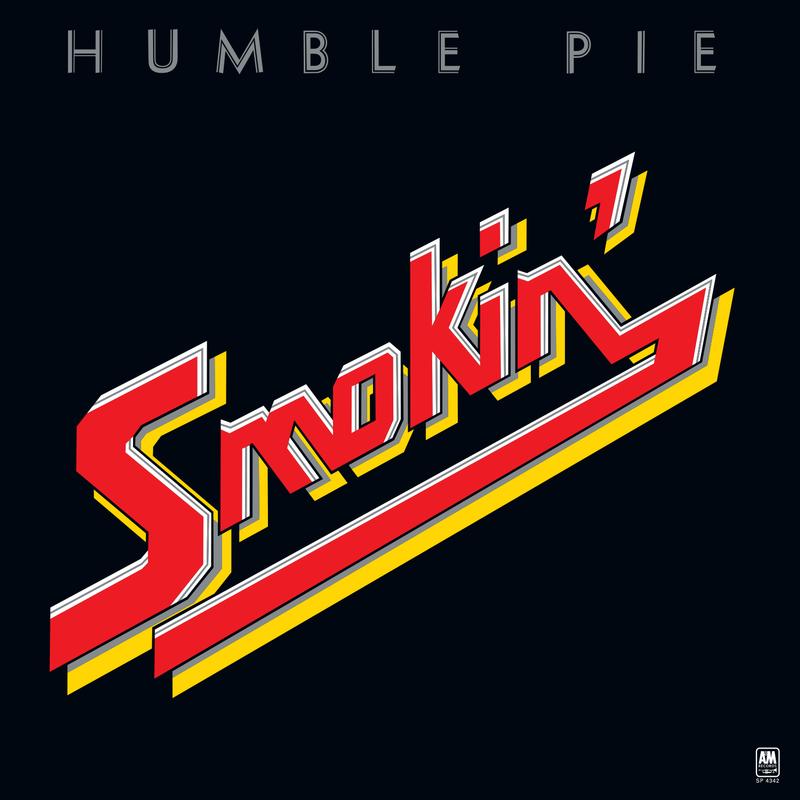
Humble Pie entered 1972 with a changed line-up. Peter Frampton had departed, and Clem Clempson, previously a member of Colosseum, had joined Steve Marriott, Greg Ridley and Jerry Shirley. Recorded at Olympic Studios in London, Smokin’ captures that quartet establishing its own balance. Marriott’s voice remains central, but the record also draws on shared vocals, musicians moving between instruments and a repertoire that connects heavy rock with older blues and soul traditions. The personnel change is the starting point of the story, rather than a reason to treat the album as the work of one dominant performer.
The band already knew how to make a song expand. Performance: Rockin’ the Fillmore had presented that ability in concert; Smokin’ brings it into a studio programme with several different kinds of material. “Hot ’N’ Nasty” opens the first side, while “30 Days In The Hole” opens the second. Between the more compact songs are an acoustic detour and passages with room for instrumental development. The sequencing gives the record a changing profile, allowing the group’s musical interests to appear in forms that extend beyond a succession of similar guitar workouts.

Guests passing through Olympic
Stephen Stills provides one of the session’s memorable connections. In later recollections, Shirley and Clempson described his visit and contribution to the vocals on “Hot ’N’ Nasty”. The detail evokes the working environment of a busy London studio, where musicians in neighbouring rooms could find themselves on another artist’s recording. His documented role here is a guest vocal on that song. Keeping the contribution specific helps preserve the character of the album: this is still Humble Pie’s record, with a visitor becoming part of one moment in it.
Other guests contribute elsewhere. Doris Troy and Madeline Bell appear as backing singers on “You’re So Good To Me”. Alexis Korner joins “Old Time Feelin’” on vocals and tiple, a small stringed instrument that brings a different colour to the album’s acoustic passage. Clempson also sings on that track. These contributions complement a band whose members were themselves flexible: Shirley is documented at the piano on “You’re So Good To Me”, while Marriott’s credits extend to keyboards and harmonica as well as guitar and voice. The personnel is more varied than a simple four-instrument description suggests.

The traditions inside the songs
The borrowed material offers a useful route through the record. Eddie Cochran and Jerry Capehart’s “C’mon Everybody” carries a rock ’n’ roll connection, while “Road Runner” brings in the Holland–Dozier–Holland songwriting partnership. “I Wonder” reaches back to Cecil Gant; Clempson recalled Ray Charles’ version as an inspiration. Those connections make the coexistence of soul phrasing, blues material and electric guitars easier to understand. The group was drawing from an interconnected musical vocabulary, and the songs retain their distinct histories within the new setting.
On the second side, “Road Runner” continues into “Road Runners ’G’ Jam”, preserving the band’s interest in developing material beyond the original song. The album has nine programme numbers, with that medley containing two separately named parts. “Sweet Peace And Time” closes the sequence. Across the two sides, the changes in scale are part of the appeal: a direct song can lead to something looser, and an acoustic piece can alter the perspective on the heavier material around it. The resulting programme documents what the 1972 line-up could do together at a particularly consequential point in the band’s history.
The edition and its earlier lacquer cut
This Analogue Productions release is AAPP 168, a single 180-gram LP at 33⅓ RPM. Kevin Gray handled the mastering and lacquer cutting at AcousTech Mastering. The publisher specifically identifies the source as a ½-inch flat tape copy of the original master tape. That wording matters: the source is a copy, rather than the original master itself. The pressing introduced in 2024 continues the lacquer-cutting work used for the Analogue Productions edition of 2009, rather than representing an entirely new 2024 cut.
Quality Record Pressings manufactures this version, which is packaged in a Stoughton Printing tip-on gatefold jacket containing session photographs by Michael Putland. Its history therefore combines an earlier cut with a later pressing and updated presentation. It is distinct from the separately issued 45-RPM double LP. Here the original two-side programme remains intact, from “Hot ’N’ Nasty” through the acoustic interlude and the extended “Road Runner” pairing to “Sweet Peace And Time”. The format preserves the album’s sequence while making the particular source and production history of this reissue clear.
You order from Michael 45 in Germany. We arrange the US import and dispatch from Hilden.
Also on 45 RPM vinyl: Smokin’
Customer question: Buying Analogue Productions records in Europe
Musicians
Participants and documented credit status. Track references correspond to the tracklist.
| Name | Instrument / role | Participation |
|---|---|---|
| Steve Marriott | vocals, guitar, harmonica, keyboards, Hammond organ (A1), piano (A1), electric piano (B1) | Album personnel |
| Clem Clempson | guitar, keyboards, vocals, lead vocals (A5) | Album personnel |
| Greg Ridley | bass, vocals, lead vocals, verses (B4), shared lead vocals (A3) | Album personnel |
| Jerry Shirley | drums, keyboards, piano (A3) | Album personnel |
| Alexis Korner | vocals, tiple (Martin) | A5 |
| Stephen Stills | backing vocals | A1 |
| Doris Troy | backing vocals | A3 |
| Madeline Bell | backing vocals | A3 |
Band credits apply to the album, not every instrument on every track. Guests: Korner A5, Stills A1, Troy and Bell A3.
How Michael hears this edition
Listening impression · paraphrased from the video
Michael describes this 33⅓-RPM edition as immediately accessible blues rock: straightforward, direct and full of impact. He finds the record wonderful sounding and enthusiastically recommends it to listeners who enjoy powerful blues rock.
🎧 Review video: 14 Amazing New Reissues
This video is hosted by YouTube (Google). It only loads once you switch on “Functional” in the cookie settings.

Manfred Stock –
Once again a great sound. If you listen to the album quietly, you might be disappointed at first. Make sure you listen at a higher volume. Suddenly the sound explodes with an incredible punch and richness of detail. A phenomenon that I have not yet experienced with AP releases is that the sound seems to open up with increasing volume. Fabulous.