

A second message with a different colour
A week can be enough in jazz to reveal the same musical personality in a different light. Hank Mobley recorded Mobley’s Message on 20 July 1956; on 27 July he returned to Rudy Van Gelder’s studio in Hackensack for Mobley’s 2nd Message. Doug Watkins and Art Taylor remained on double bass and drums. With Kenny Dorham on trumpet and Walter Bishop Jr. on piano, however, the personnel changed significantly. The title therefore means more than a second instalment recorded in quick succession. Mobley’s tenor saxophone has new partners in the conversation, and their presence opens different possibilities for the music.
Mobley was 26 and had already belonged to one of the groups that helped give hard bop its shape: the early Jazz Messengers with Horace Silver and Art Blakey. Dorham and Watkins were part of that history too. Yet the quintet on this record is not simply the Messengers under another name. Bishop and Taylor contribute their own experience, while Mobley shapes the programme as leader with three compositions of his own. The combination of established relationships and a new configuration is central to the record’s interest. These musicians knew one another through shared work without being obliged to say exactly the same thing in every ensemble.
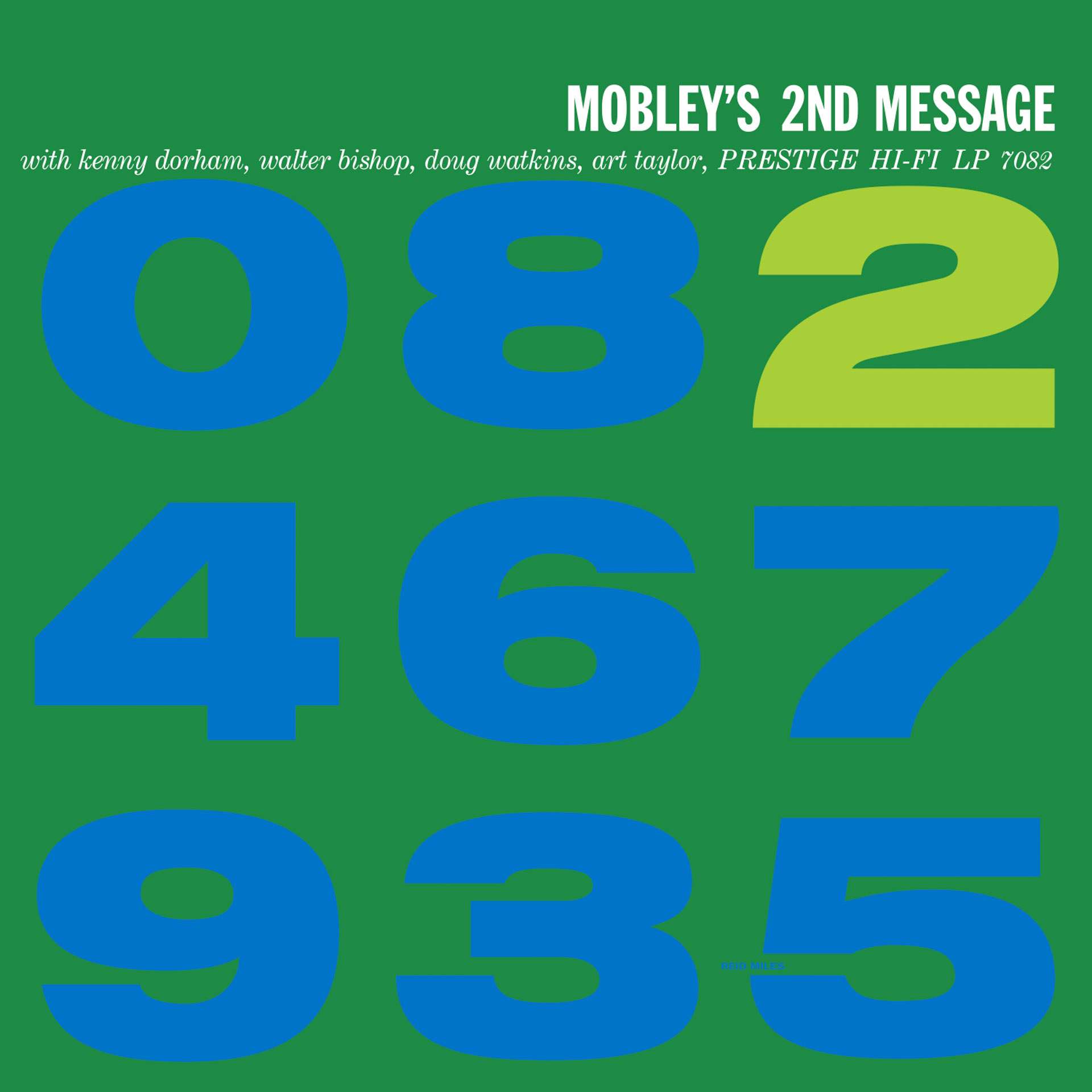
The recording appeared on Prestige in 1957 as PRLP 7082. Bob Weinstock supervised the production, Ira Gitler wrote the liner notes, and Reid Miles designed the cover. Those names belong to the album’s history, but its musical centre is a wonderfully manageable arrangement: two horns in front of a three-piece rhythm section. A theme played together can establish unity; once the instruments step forward separately, distinctions of tone, breath and phrasing become more apparent. With Mobley and Dorham, those transitions are particularly rewarding to follow. Their partnership involves a shared sense of proportion as well as the individual character of each voice.

Kenny Dorham and a rhythm section with a shared history
Kenny Dorham did not arrive at this session still searching for his musical identity. His experience with Charlie Parker and the early Jazz Messengers already lay behind his trumpet playing. Alongside Mobley’s tenor, he supplies a second melodic perspective: different attacks, different lengths of phrase and another way of bringing an idea to its conclusion. Listening first to the themes as a whole and then following the individual solo voices reveals how delicately a quintet can distinguish a common language from a personal signature. Such contrasts do not have to depend on a contest in volume or bravura.
Walter Bishop Jr. deserves particular attention here. The pianist had worked with both Charlie Parker and Miles Davis, so his connection with bebop is a matter of musical biography as well as style. Within the quintet, the piano carries several responsibilities. It can clarify harmonic direction, provide rhythmic encouragement to the horns and develop an independent narrative as a solo instrument. A rewarding way into the record is to notice Bishop before his solo begins. The brief responses between horn phrases can be just as revealing about the imagination involved in accompanying another musician.
Doug Watkins and Art Taylor connect this session with the preceding Mobley recording. Watkins had come to New York from Detroit and, like Mobley and Dorham, had played in the Jazz Messengers. Taylor was one of the busy drummers of the New York recording scene. Together they provide the music with a foundation that remains capable of movement. A bass line is more than a succession of roots, and a cymbal accent does more than identify the beat. Both give a soloist something to lean on or to phrase against. That makes the rhythm section worth following even while a horn occupies the foreground.
All five musicians are documented across the six titles. The album therefore changes character within a stable ensemble. For attentive listening, that continuity is an advantage: the responses of the same partners can be compared as the material changes, without having to adjust to a different band after every selection. The movement between the leader’s originals and established songs is especially useful in this respect. The players need neither abandon their bebop background nor force every melody into precisely the same expressive shape. The individual pieces remain distinct while belonging to the same group portrait.

Three Mobley originals and three other starting points
Side one opens with These Are the Things I Love, the song by Harold Barlow and Lew Harris. It is followed by Message from the Border and Xlento, both written by Mobley. His composition The Latest begins the second side, ahead of I Should Care and Benny Harris’s Crazeology. This sequence presents Mobley as both composer and interpreter. His own pieces do not sit in a separate compartment beside music by other writers; they form part of an album whose changing material offers the quintet different melodic tasks.
The originals invite us to consider themes as part of Mobley’s identity. Here the leader determines not only how he will improvise over an existing harmonic framework but also the material with which the conversation begins. That provides another perspective on a saxophonist so often discussed first in terms of his sound and solos. Across these three pieces, listeners can follow the relationship between an initial melodic idea, its ensemble presentation and its improvised continuation. No harmonic analysis is required to enjoy that relationship. Simply recognising the return of a theme after the solos can reveal something of the music’s internal architecture.
I Should Care was written by Sammy Cahn, Axel Stordahl and Paul Weston. As a song, it brings a different kind of memory into the programme from a bebop composition. Even without a singer, the melodic shape and the possibility of sustained, breathing phrases remain. Crazeology, in turn, leads directly back to the bebop repertoire. The second side gains much of its interest from this proximity: an original, an established song and a piece from the language in which these players had developed. The album does not need a single tempo or mood to establish its coherence.
Prestige mono across one complete LP
Analogue Productions’ APRJ 7082 belongs to its Prestige Mono series. The label identifies Kevin Gray at Cohearent Audio as the cutting engineer, working from analogue masters, and Quality Record Pressings as the manufacturer. The currently described edition is a 180-gram LP presented in a high-gloss tip-on jacket. Earlier pressings of this title used 200-gram vinyl; weight alone therefore does not define its musical identity. The important considerations are the specific mono recording, the mastering and the preservation of the album programme. The traditional jacket construction contributes to the careful presentation of this Prestige reissue.
At 33⅓ rpm, Mobley’s 2nd Message remains an album on two sides. That suits its structure: three selections on each side give the band room to explore different starting points within a continuous sequence. The practical attraction is the uninterrupted progress of a complete side, rather than an abstract competition between playback speeds. A song melody, an original composition and the bebop language can be heard as related parts of the programme without dividing the material across additional records. The format serves the way this particular album is organised.
For a Mobley collection, the record becomes especially illuminating when placed between the early Jazz Messengers and his later work as a leader. It preserves a moment when the musicians already shared a rich history while their subsequent development remained ahead of them. Kenny Dorham, Walter Bishop Jr., Doug Watkins and Art Taylor make it a distinctive quintet encounter. This second message is a continuation with a character of its own: six pieces, five personalities and a tenor saxophonist whose musical thinking emerges through his themes as well as his improvised lines.
You order from Michael 45 in Germany. We arrange the US import and dispatch from Hilden.
Customer question: Buying Analogue Productions records in Europe
Series: Analogue Productions Prestige – all 50 records, musicians and session paths
Musicians
Participants and documented credit status. Track references correspond to the tracklist.
- Hank Mobleytenor saxophoneParticipation: Album personnel
- Kenny DorhamtrumpetParticipation: Album personnel
- Walter Bishop Jr.pianoParticipation: Album personnel
- Doug Watkinsdouble bassParticipation: Album personnel
- Art TaylordrumsParticipation: Album personnel


Recorded by Rudy Van Gelder, Hackensack, 27 July 1956. Supervision: Bob Weinstock. Liner notes: Ira Gitler. Cover: Reid Miles. AP mastering: Kevin Gray, Cohearent Audio.

Reviews
There are no reviews yet.