A new line-up finds its language
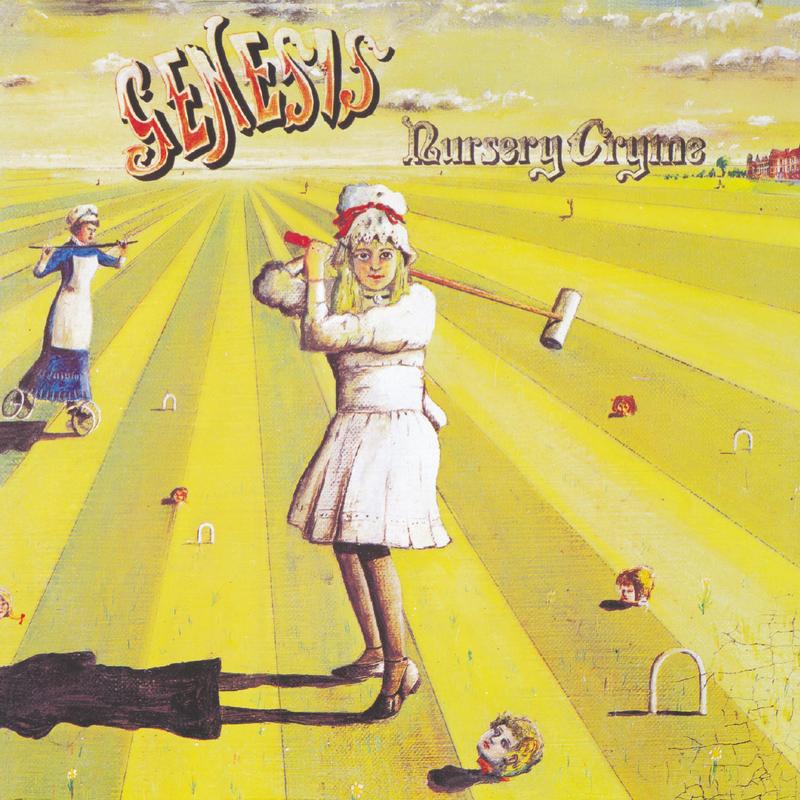
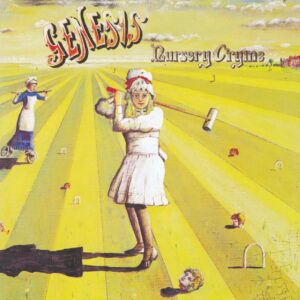
Released in 1971, Nursery Cryme was the third Genesis album and the first recorded with Steve Hackett and Phil Collins. Alongside Peter Gabriel, Tony Banks and Mike Rutherford, they formed the quintet that gave the band's early seventies work its distinctive identity. Recording took place at London's Trident Studios, with John Anthony producing and David Hentschel engineering.
The material continues the narrative direction of Trespass while expanding its possibilities. Hackett introduces new guitar colours, and Collins brings a flexible rhythmic vocabulary. Some of “The Musical Box”, however, has roots in the earlier period with Anthony Phillips. The new line-up was therefore working with a living history of ideas, developing existing material through the abilities of the musicians who had joined.

Small stories, large forms
“The Musical Box” begins quietly and unfolds a dark, Victorian-flavoured fantasy over roughly ten minutes. A mechanical music box is central to the tale. The movement between delicate passages and electric escalation carries its unease, while Gabriel's voice shifts in intimacy and urgency. Musical development becomes part of the storytelling rather than simply a backdrop for the words.
The shorter pieces are just as important to the album's pacing. “For Absent Friends” gives Phil Collins an early lead vocal, long before his later position as frontman. “Harlequin” explores the group's acoustic side, while “Harold the Barrel” condenses a bizarre narrative into a brief piece of musical theatre. These miniatures change the perspective between the longer compositions. They make the album more varied than a broad progressive-rock classification might suggest.

Twelve strings and a Mellotron
Tony Banks combines piano, Hammond organ and Mellotron with the band's network of guitars. Rutherford contributes twelve-string guitar as well as bass and bass pedals; Gabriel plays flute. The pastoral character of Nursery Cryme grows from specific instruments and the ways they fit together. It is built into the arrangements before the heavier electric passages arrive, making the quieter sections as worthy of attention as the climaxes.
“The Return of the Giant Hogweed” develops a grotesque tale around a threatening plant. “The Fountain of Salmacis” turns instead to classical mythology. Both show Genesis making their own song structures from imagined or inherited worlds. Following recurring motifs and the handover between instruments helps reveal the continuity inside the extended pieces, even as their setting, intensity and narrative stance change.
This SACD edition
The Analogue Productions hybrid stereo SACD CAPA 026 SA belongs to the Atlantic 75 series. Chris Bellman at Bernie Grundman Mastering receives the mastering credit, and the publisher specifies a direct DSD transfer from the original master tapes. This edition offers the original stereo mix rather than the later Nick Davis remix or a multichannel programme. Its CD layer plays on an ordinary CD player; accessing the high-resolution SACD layer requires SACD-compatible equipment.
Also in another edition: Nursery Cryme
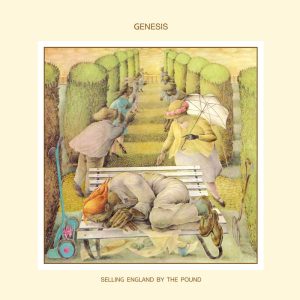
More by Genesis: Selling England By The Pound · Wind & Wuthering
Artist page: All titles by Genesis and Phil Collins
Customer question: Buying Analogue Productions records in Europe
Musicians
Documented selection of participating musicians. Personnel may vary by track; this list does not claim to be complete.
| Name | Instrument / role |
|---|---|
| Tony Banks | Backing vocals, Electric piano, Mellotron, Guitar, Piano, Organ |
| Mike Rutherford | Backing vocals, Guitar, Bass |
| Peter Gabriel | Lead vocals, Tambourine, Flute, Bass, Oboe |
| Steve Hackett | Electric guitar, Guitar |
| Phil Collins | Backing vocals, Percussion, Drums |



Reviews
There are no reviews yet.