Music taught through listening
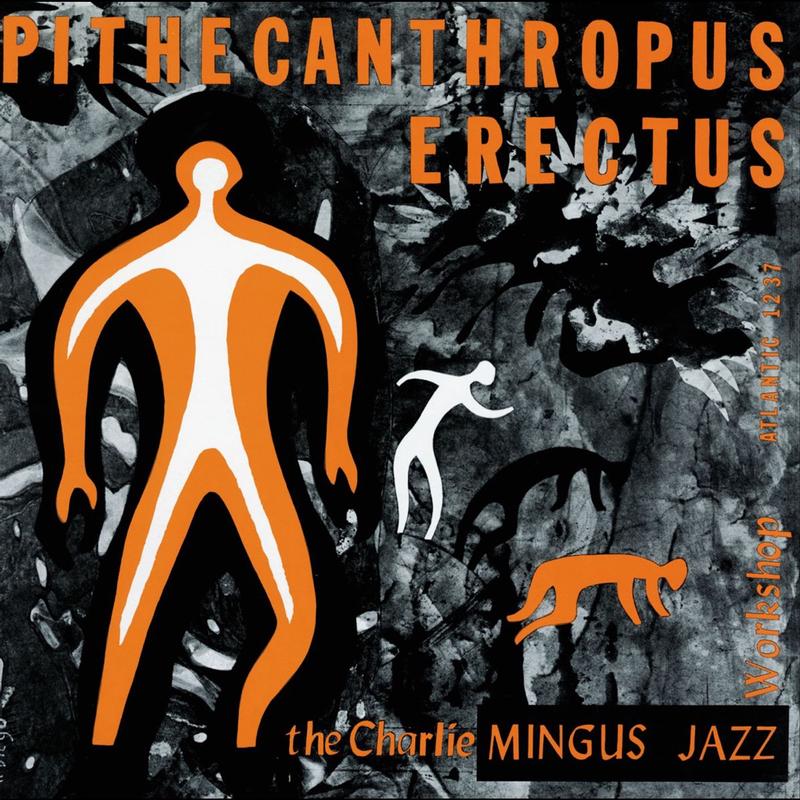
Charles Mingus explained his Jazz Workshop method as a process of communicating ideas by ear. He would play the framework at the piano and give his musicians room to develop their own lines within it. Recorded in New York on January 30, 1956, Pithecanthropus Erectus is an important document of that approach. Its pieces have distinct shapes and purposes, but the personalities of the players are part of the composition’s realisation. The album asks listeners to consider the relationship between a leader’s conception and the musicians who bring it into being.
Mingus plays double bass with Jackie McLean on alto saxophone, J. R. Monterose on tenor, Mal Waldron on piano and Willie Jones on drums. Nesuhi Ertegun supervised the production for Atlantic. The Audio-Video Studios session produced the four selections used on the record; an additional performance of “What Is This Thing Called Love” was not included. Four pieces are enough to establish a considerable range. Their contrasting lengths and functions allow the Workshop to appear in several different settings within one focused album.

A story of ascent and collapse
Mingus described the title piece as a musical account of human development, superiority and destruction. His own notes divide the idea into four stages. The title refers to the historical name given to Java Man, but the composition uses that association to explore a broader drama of human self-importance. Knowing the programme provides one possible way into the music. A listener can follow recurring material, changes in collective activity and the relationships between the individual instrumental voices as parts of a larger unfolding design.
The connection between composition and collective improvisation is central. Mingus gives the players responsibilities that extend beyond waiting for an isolated solo spot. Waldron and Jones had already been working with him at the Café Bohemia. “Love Chant” and “A Foggy Day” were performed there in December 1955, with a different horn line-up. The studio album therefore belongs to an ongoing workshop practice, in which material moved between performances and ensembles. The record catches a particular stage of that work rather than presenting four unrelated tunes assembled solely for a recording date.

A city scene and a personal portrait
George Gershwin’s “A Foggy Day” is the album’s sole composition from outside Mingus’ own repertoire. The arrangement gives the familiar song a new dramatic environment; commentators have described the instrumental effects in terms of city sounds. Alongside the title piece, it suggests how readily Mingus could think in images and situations. A recognisable melody becomes the centre of a setting created by the ensemble, inviting attention both to the song itself and to the activity taking place around it.
“Profile Of Jackie” turns towards a particular musician: Jackie McLean, who was 24 when the session took place. This brief portrait contrasts with the extended “Love Chant” that closes the programme. Together, the four pieces show several dimensions of Mingus’ work: a programmatic composition, a transformed standard, a compact dedication and a longer exploration. That variety makes the record a useful introduction to his musical world. The individuals retain their identities, while the selection and sequence reveal the organising imagination of the bassist and bandleader.
The mono programme at 45 RPM
This edition is AAPA 059-45 from the Analogue Productions Atlantic 75 Series. It presents the mono album on two 180-gram records at 45 RPM, with mastering by Kevin Gray at Cohearent Audio. The publisher names the original master tape as the source. Each of the four sides carries one composition, making the physical arrangement particularly straightforward. The original sequence is retained even though the programme now occupies two records instead of the original single LP.
Packaging is a Stoughton Printing tip-on gatefold jacket with two pockets. Quality Record Pressings is specified on the product page; later unnumbered editions in the series may also be manufactured at RTI, so no particular numbered copy is assumed. The sequence runs from the title work through “A Foggy Day” and “Profile Of Jackie” to “Love Chant”. It contains the original four-piece album, without the rejected fifth selection from the session or later alternate takes. The format changes the side divisions while keeping the musical conception of the release intact.
You order from Michael 45 in Germany. We arrange the US import and dispatch from Hilden.
Also on SACD: Pithecanthropus Erectus
More by Charles Mingus: The Black Saint And The Sinner Lady · Mingus Mingus Mingus Mingus Mingus
Customer questions: Atlantic 75: which titles are worth buying? · Buying Analogue Productions records in Europe
Series: Atlantic 75 Series – all 75 albums, time journey and the people behind Atlantic
Musicians
Participants and documented credit status. Track references correspond to the tracklist.
| Name | Instrument / role | Participation |
|---|---|---|
| Charles Mingus | double bass, bandleader | Album personnel |
| Jackie McLean | alto saxophone | Album personnel |
| J. R. Monterose | tenor saxophone | A1, B1, D1 |
| Mal Waldron | piano | Album personnel |
| Willie Jones | drums | Album personnel |
Monterose is documented on A1, B1 and D1; participation on C1 is disputed.



Reviews
There are no reviews yet.