
Chicago, the first season
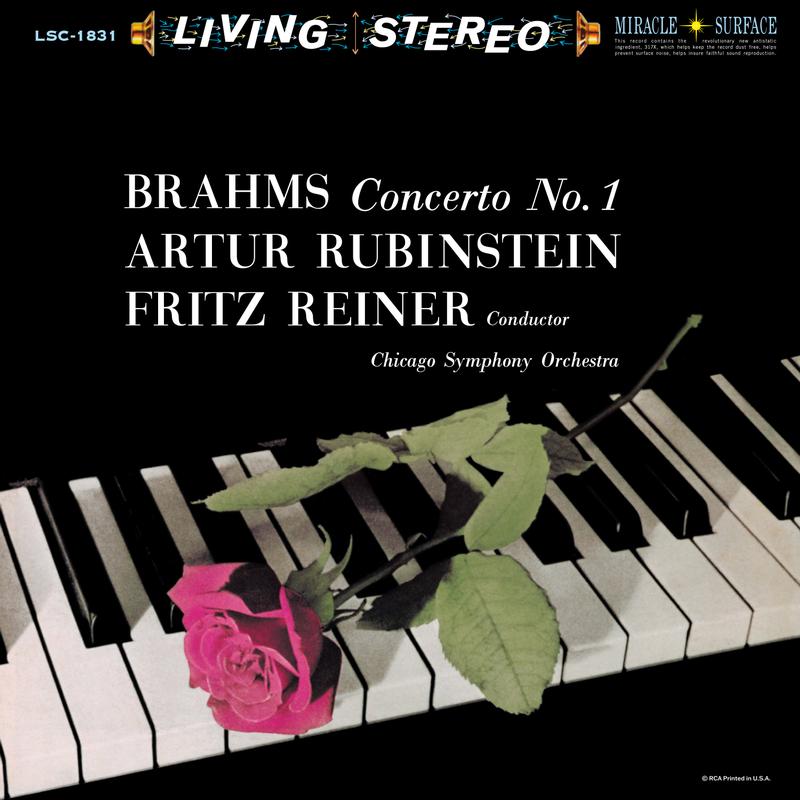
Arthur Rubinstein recorded Brahms’s First Piano Concerto with Fritz Reiner and the Chicago Symphony Orchestra on April 17, 1954, at Orchestra Hall in Chicago. Reiner had taken charge of the orchestra in 1953, placing the recording within his first season. Rubinstein was sixty-seven and brought a long career as a soloist to the occasion.
The meeting combines two distinct responsibilities: the pianist shapes his part while Reiner directs the large orchestral ensemble. Brahms’s D minor concerto provides a particular framework for that partnership. The piano belongs to a work of symphonic scale in which the orchestra has considerably more to do than supply accompaniment beneath the solo line.

A concerto that began as a sonata
The music passed through several forms during its development. In 1854 Brahms initially worked on a sonata for two pianos, then on a symphonic conception. Only afterwards did the material assume the shape of a piano concerto. The first movement retains the strongest connection to that earlier history. An extended “Maestoso” opens the work, followed by “Adagio” and “Rondo. Allegro non troppo.”
Brahms himself played the solo part at the 1859 premiere in Hanover. That long process of composition provides a useful listening perspective: notice when the piano stands apart as an individual voice and when it becomes part of a larger musical statement. Those responsibilities can change within a movement. The orchestral passages are part of the work’s argument, rather than merely intervals between the soloist’s appearances.

Rubinstein and Reiner in partnership
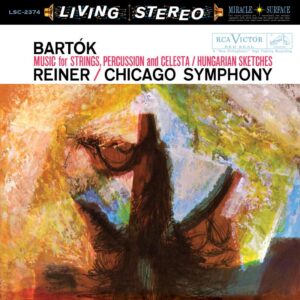
Reiner had studied piano with Béla Bartók in Budapest. His conducting career took him through European and American appointments before Chicago. Rubinstein’s life reached further back into the nineteenth century: he was born in Łódź in 1887. The recording therefore brings together two musicians whose training began in a different era from the emerging stereo recording techniques of the 1950s.
One rewarding focus is the handover between piano and orchestra. When does the ensemble take up a thought, and when does the soloist enter a movement already prepared by the other players? The “Adagio” lets you consider those relationships under different conditions from the expansive first movement, while the finale adds another formal setting. Following these connections offers a route through the performance that goes beyond isolating the technically demanding passages in the piano part.
Four sides, with a change during the first movement
AAPC 1831-45 presents the recording in stereo on two 180-gram LPs at 45 RPM, pressed at Quality Record Pressings. Matthew Lutthans made a new cut at The Mastering Lab, with Analogue Productions identifying the original analogue tape as the source. A two-panel insert is included. The first movement occupies both sides of the first LP, requiring you to turn the record over before the movement is complete. The “Adagio” and “Rondo” occupy the second LP. The original 1954 release was mono; this edition presents the later stereo version.
Michael 45 stores the records in Germany and dispatches them from Hilden, so buyers can order without arranging a personal import from the United States or waiting for customs processing.
More from the series: RCA Living Stereo Series
Artist page: All titles by Fritz Reiner
Customer question: Buying Analogue Productions records in Europe
Series: RCA Living Stereo – all 25 titles, conductors and soloists
Musicians
Documented selection of participating musicians. Personnel may vary by track; this list does not claim to be complete.
| Name | Instrument / role |
|---|---|
| Fritz Reiner | Conductor |
| Chicago Symphony Orchestra | Orchestra |

Reviews
There are no reviews yet.