

Four movements, one sustained idea
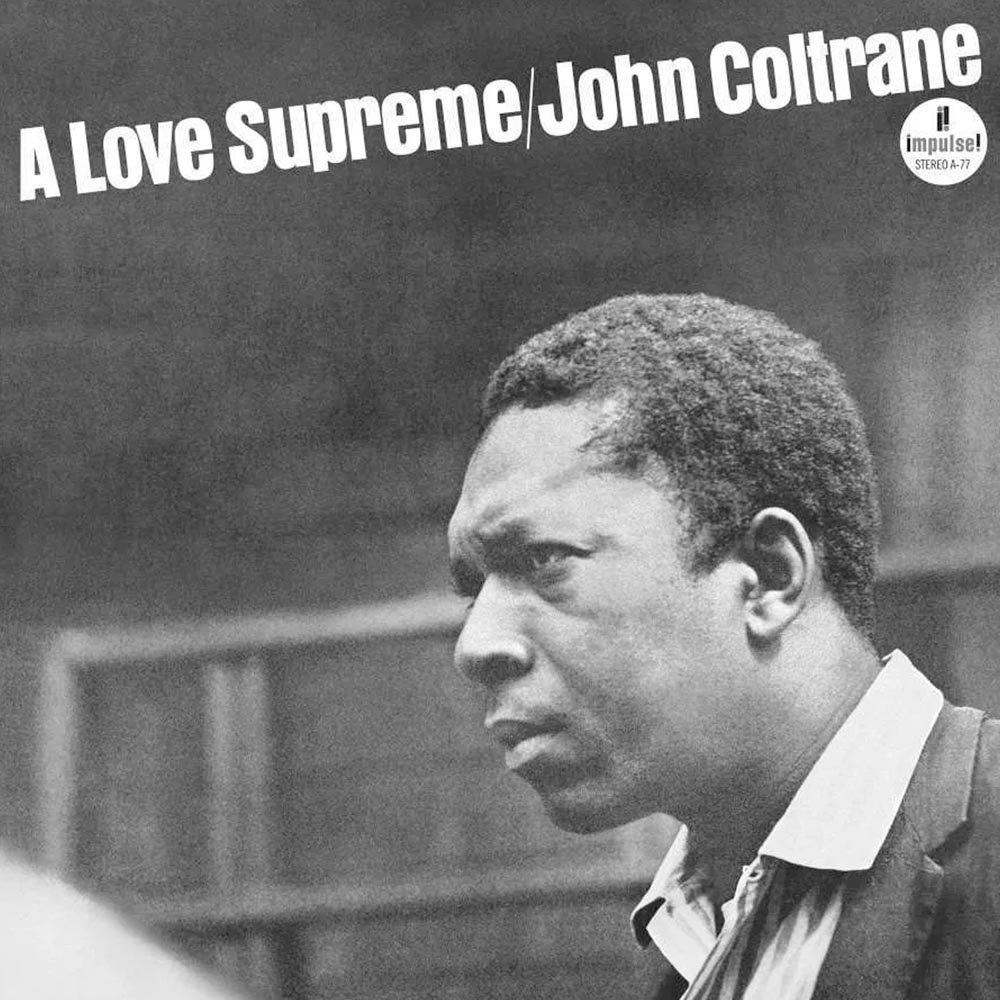
A four-note bass figure can hold an entire record side together in the memory. On A Love Supreme, it carries something more: a connection between musical shape and the four syllables of the title, opening a path into John Coltrane’s ideas of gratitude, devotion and personal renewal. The suite was recorded on December 9, 1964, at Rudy Van Gelder’s studio in Englewood Cliffs. Impulse! released it in January 1965. One studio date became an album whose coherence reaches far beyond the individual themes and solos it contains.
Coltrane set out his spiritual thoughts in his own accompanying statement and poem. Those writings provide an important point of entry. The religious dimension was not attached to the record retrospectively because it became a celebrated landmark; it belongs to the conception itself. Yet no particular belief is required to follow the journey through “Acknowledgement,” “Resolution,” “Pursuance” and “Psalm.” The movement titles suggest a direction. Four musicians with an extraordinary shared understanding determine how that direction becomes living music.
Coltrane plays tenor saxophone, McCoy Tyner piano, Jimmy Garrison double bass and Elvin Jones drums. That quartet identity matters. Archie Shepp and Art Davis are also familiar names in accounts of A Love Supreme, but they belong to the expanded alternative recordings made the next day, not to the original album presented on this LP. Here the suite remains the work of four players. Coltrane’s voice also appears: he sings the title’s chant in “Acknowledgement,” joining the instrumental statement to its words.
For a record collection, this is much more than an obligatory entry on a list of jazz classics. It demonstrates how an album can be tightly unified while remaining open to discovery in performance. Its overall direction is clear, while improvisation keeps the individual exchanges alive. Listeners approaching Coltrane through standards or the sharply defined harmonic challenges of Giant Steps encounter another kind of order here. Repetition, breath, accumulation and the persistence of a small musical idea become as important to the long argument as any sequence of chords.

The quartet behind the statement
Jimmy Garrison offers a natural starting point. His bass introduces the memorable figure in “Acknowledgement,” anchoring music that quickly exceeds the idea of a conventional accompaniment pattern. Following his part means noticing the architecture underneath the tenor’s movement. Garrison is not an incidental colour within the celebrated quartet: he is essential to its balance. The repeated figure gives the other musicians a point of reference around which very different degrees of intensity can gather without losing their connection.
McCoy Tyner contributes an equally individual sense of weight and harmonic space. His chords can create broad areas of sound while retaining rhythmic purpose. Beside Coltrane’s extended lines, the piano therefore does more than supply changes or offer decorative replies. One rewarding listening approach is to follow the alternation between passages in which Tyner gathers the harmony into focus and those in which the saxophone explores its edges. The two instruments work with different means, but their contributions belong to the same developing thought.
Elvin Jones does not treat metre as a fixed rail running alongside the music. His overlapping rhythmic layers, accents and transitions form part of the narrative itself. It is worth listening to the drums beyond the most obviously forceful moments, noticing how density builds and then opens again. That changing internal pressure helps explain the suite’s long breath. Hearing the album only as a monument to tenor saxophone misses an essential part of its expression: the other three musicians give the soloist’s freedom both shape and something to respond to.
Producer Bob Thiele and engineer Rudy Van Gelder belong to the recording’s history, but they are not additional instrumentalists in the quartet. This distinction becomes useful when an album has accumulated so many reissues and expanded editions. The original record documents these four musicians together on that December date. Later collections of alternative takes can add fascinating perspectives, but they do not alter the personnel or the musical sequence of the album that first reached listeners in 1965.

From acknowledgement to a wordless psalm
“Acknowledgement” introduces the central material and eventually brings instrumental sound together with the human voice. The title is spoken through song after its musical identity has already been established. It is an unusually direct gesture: the words do not explain every preceding note, but add another dimension to a figure the listener already recognises. That relationship can be followed without reducing the record to a single message. Theme, voice and improvisation remain distinct ways of expressing a connected idea.
“Resolution” completes side A. The progression from recognition towards resolve makes clear that these movement titles are intended to be read together. For close listening, consider how the energy is organised differently: what does the theme establish, how do improvised lines respond, and how do piano, bass and drums sustain the movement? Questions like these bring a listener into the performance more directly than the feeling that a canonical masterpiece must first be approached with reverence. Its reputation need not stand between the record and an attentive pair of ears.
Side B contains “Pursuance” and “Psalm.” The track listing for this edition combines them in a single entry, although the suite still has four movements. This second side particularly rewards uninterrupted listening. The pursuit and the concluding prayer form a relationship that extends beyond two separate titles. The original LP arrangement preserves that longer arc, allowing the listener to remain with the transition rather than requiring a separate side for every movement of the composition.
The printed poem offers a particularly illuminating approach to “Psalm.” Coltrane scholar Lewis Porter described the finale as a wordless recitation: the saxophone follows the verbal gesture of the text. Reading the poem alongside the music can reveal connections between phrasing and the rhythm of language that are easy to miss in casual listening. This does not mean that the piece can only be understood with the words in front of you. It offers a second route into a conclusion whose expressive force does not depend on a conventional sung vocal.
The Acoustic Sounds Series single LP
This edition carries the order number AIMP 7701 and belongs to the Verve/UMe Acoustic Sounds Series. It presents the stereo album on one 180-gram LP at 33⅓ RPM, pressed at Quality Record Pressings and housed in a Stoughton gatefold jacket. Ryan K. Smith at Sterling Sound handled the mastering. It is a distinct edition with its own production history; specifications for the 45 RPM UHQR double LP or the tape release should not be transferred to it merely because they contain the same album.
The tape source is especially interesting. The publisher explicitly describes a flat tape copy made by Rudy Van Gelder in April 1965 for a British cutting. Found at Abbey Road, it reportedly remained unused between 1965 and 2002. The original master was said to survive but to show greater wear. The precise description is therefore not “cut directly from the original master,” but a cut using the Van Gelder copy documented by the publisher. For collectors, that specific account of the source is more useful than a general claim about master tapes.
The format also suits the album’s construction. A single 33⅓ RPM LP keeps “Acknowledgement” and “Resolution” together on the first side and preserves the relationship between “Pursuance” and “Psalm” on the second. There is only one side change, allowing the suite to retain the compact shape of an album-length statement. The brief pause between the two sides belongs to the familiar shape of the original album. The gatefold presentation also gives Coltrane’s own words their place, allowing the music, poem and accompanying statement to be considered as connected parts of the release.
An early label error is documented for the reissue: side II named “Resolution” where it should have named “Psalm.” Later pressings corrected it. Without inspecting an individual copy, that history cannot establish either an error or a special collectible feature in the supplied record. What matters is the correct edition, its documented tape history and the complete original album. You order from Michael 45 in Germany. We arrange the US import and dispatch from Hilden.
Also on SACD: A Love Supreme
More by John Coltrane: Ballads · Crescent
Artist page: All titles by John Coltrane
Series: Impulse! – all 19 records: the house that Trane built
Musicians
Participants and documented credit status. Track references correspond to the tracklist.
- John ColtranePortrait: 1950stenor saxophone, vocals (chant, Part I)Participation: All tracks
- McCoy TynerPortrait: 1965pianoParticipation: All tracks
- Jimmy GarrisonPortrait: existing portraitdouble bassParticipation: All tracks
- Elvin JonesPortrait: 1964drumsParticipation: All tracks


Original quartet recorded December 9, 1964. Archie Shepp and Art Davis belong to the following day’s alternative recordings. Pursuance and Psalm share side B.
How Michael hears this edition
Listening impression · paraphrased from the video
Michael describes the Acoustic Sounds mastering as warm, highlighting clear instrument separation and a beautiful soundstage. This assessment comes from his 2020 retrospective and applies to this 33⅓ RPM edition, not the later UHQR.
🎧 Review video: 21 Albums to start an Audiophile Collection in 2021
This video is hosted by YouTube (Google). It only loads once you switch on “Functional” in the cookie settings.

Reviews
There are no reviews yet.