

A quartet that gives Kenny Dorham room to be himself
The title Quiet Kenny might at first sound like a limitation. In practice, it offers a direct approach to a trumpeter whose personality did not depend on volume or conspicuous display. On 13 November 1959, Kenny Dorham entered Rudy Van Gelder’s Englewood Cliffs studio with Tommy Flanagan, Paul Chambers and Art Taylor. There is no second horn sharing the front line. The quartet provides a clear setting for the trumpet while leaving space for three musicians who amount to considerably more than an anonymous backing group.
Dorham had already passed through important chapters of modern jazz. He had played with Charlie Parker, belonged to the early Jazz Messengers and joined Max Roach’s quintet after Clifford Brown’s death. Those experiences do not mechanically explain every phrase in this recording, but they help locate the musician behind its understated title. This was an experienced trumpeter familiar with contrasting band situations and the demands of major soloists through direct musical collaboration.
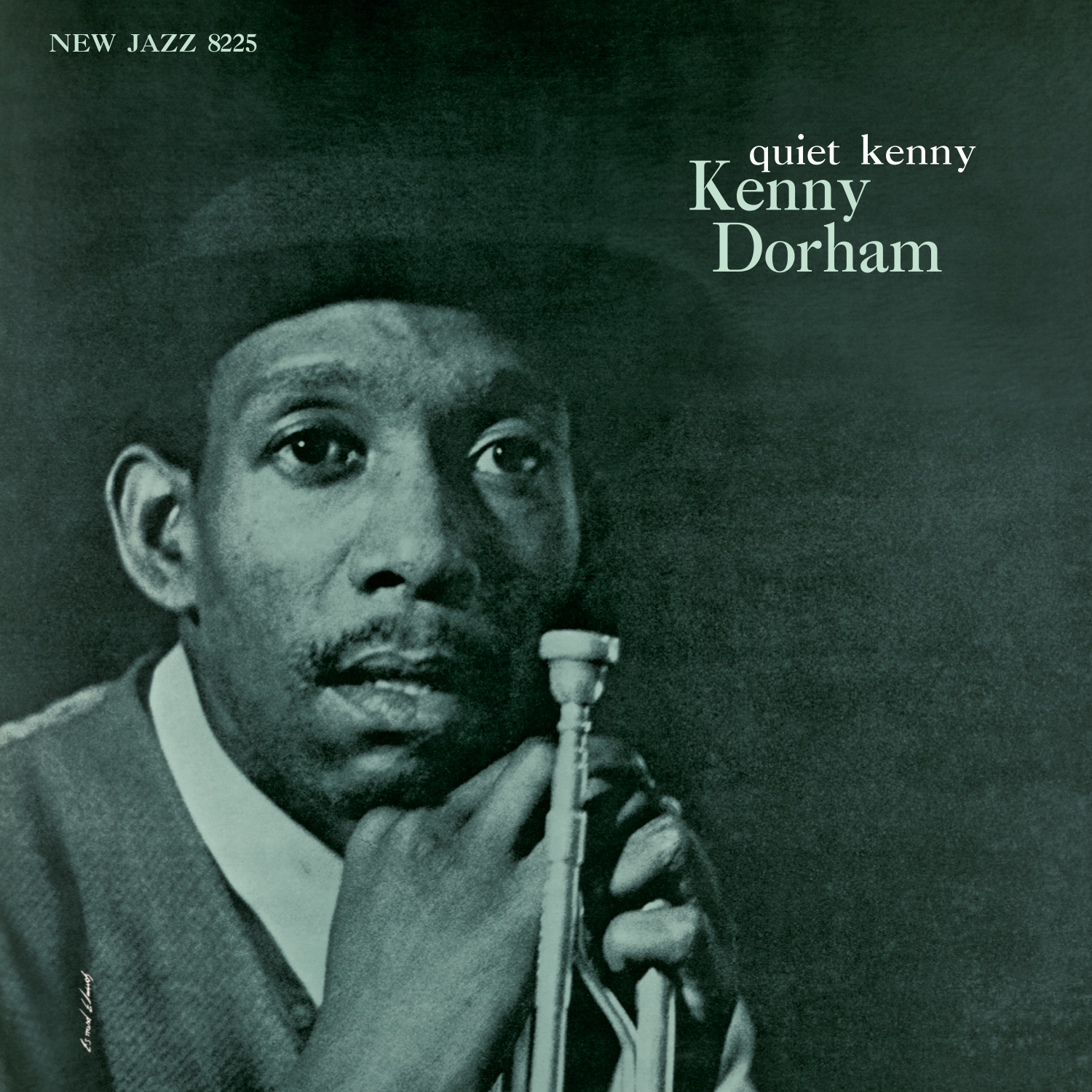
Esmond Edwards produced the session and also took the cover photograph. Rudy Van Gelder recorded it and is additionally credited with lacquer cutting on the original New Jazz issue. Jack Maher supplied the liner notes. The album appeared in 1960 as NJLP 8225 on New Jazz, a Prestige subsidiary. The Analogue Productions edition offered here returns to that album history as a stereo single LP at 33⅓ RPM, with a programme expanded beyond that of the original New Jazz record.
That final distinction deserves attention. This edition contains eight tracks, including “Mack the Knife”. The performance comes from the same recording session but was absent from the original LP programme. Even listeners who already know the album therefore have a concrete reason to examine this edition’s tracklist. Its identity concerns the music included on the record as well as the pressing specification and packaging.

Original themes, familiar songs and an additional performance
“Lotus Blossom”, the opening selection, is Dorham’s own composition. It also appears under the title “Asiatic Raes”, used for Sonny Rollins’s recording of the piece. It should not be confused with Billy Strayhorn’s composition of the same “Lotus Blossom” title. Such histories are part of the pleasure of a jazz collection: a familiar musical idea can reappear under another name, creating a connection between records that would not be apparent from their covers alone.
“Blue Friday” and “Blue Spring Shuffle” provide two further Dorham compositions. Alongside them are “My Ideal”, “Alone Together”, “I Had the Craziest Dream” and “Old Folks”. The programme places personal material beside established songs. For a listener, the mixture offers different starting points. How does a musician approach a theme he has written himself, and how does he make a melody his own when its history began well before this recording? The album allows those questions to remain musical rather than merely biographical.
“Mack the Knife” closes side B of this stereo 33⅓ RPM edition. The session discography places it at the 13 November 1959 date, but identifies later releases including the 1970 Prestige album Kenny Dorham/1959. The original LP and the subsequently available body of music from the session are therefore not identical. On the edition offered here, the piece is explicitly part of the programme. It is a small but meaningful distinction between an album’s history and the history of a particular release.
The sequence offers several routes into Dorham’s music. Follow the original compositions, use the familiar standards as landmarks, or attend to the quartet’s interaction across the entire record. Quiet Kenny need not be read as a promise of one unchanging mood. The opportunity lies in noticing phrasing, melodic choices and the conversation with the rhythm section. With a single horn, those relationships are especially easy to follow without becoming musically simple.

Flanagan, Chambers and Taylor: three individual voices
Tommy Flanagan’s piano is central to this configuration. In a quartet, the instrument can do more than establish the harmonic foundation: it can answer a trumpet phrase and begin developments of its own. Listen for the places where a short piano figure comments on a line or carries the music through a pause from the soloist. The useful question is not how much an accompanist plays, but how a contribution relates to everything around it.
Paul Chambers plays double bass and Art Taylor is the drummer. Both names recur across many significant sessions of the period. In this small ensemble, their responsibilities are particularly clear to follow. The bass combines harmonic orientation with movement, while the drums can establish time and react to local detail. One simple listening approach is to return to a passage twice: first following Dorham’s melody, then listening from the rhythm section’s perspective. The same music can reveal different outlines as attention changes.
These players also create rewarding connections elsewhere in a record collection. Dorham and Taylor both appear on Hank Mobley’s Mobley’s 2nd Message, recorded in 1956 with a different ensemble. Quiet Kenny moves three years forward and places Dorham himself at the centre. Following musicians from one record to another makes such differences discoverable without reducing the albums to a supposedly uniform style. Changes of personnel and group size are part of what makes a jazz discography worth exploring.
The physical format suits that process of discovery. Eight tracks occupy two sides at 33⅓ RPM, with four selections per side providing substantial stretches in which to become acquainted with the quartet. The separate 45 RPM double LP of the album is another edition. This single LP offers its own practical appeal: fewer side changes, the expanded eight-track programme and a clearly identified stereo presentation. There is no need to turn those differences into an automatic contest between rotational speeds.
Analogue Productions’ Prestige Stereo edition APRJ 8225
Analogue Productions lists this record as APRJ 8225 within its Prestige Stereo series. Kevin Gray undertook the mastering at Cohearent Audio, and the record is pressed at Quality Record Pressings. It is a single LP running at 33⅓ RPM. That identification matters because Quiet Kenny has appeared in several analogue and digital editions, making it easy to transfer a specification from one release to another. For this product, Kevin Gray, stereo and the single-LP format belong together.
The original New Jazz LP was mono. A later stereo issue appeared in 1970 as Prestige PRST 7754, with the title Kenny Dorham/1959. For collectors, this demonstrates how the same session became available in different forms over time: another title, another catalogue number and a different programme extent. The present AP edition restores the familiar album title, but should still be identified through its own catalogue number and tracklist rather than through familiar artwork alone.
Earlier 200-gram pressings and a later 180-gram edition are documented; the publisher currently specifies 180 grams. Printed identifiers also differ between some pressing variants. Such details can interest specialist collectors, but they do not establish the characteristics of an individual copy that has not been examined. The firm foundation is the product described here, with eight tracks and Kevin Gray’s mastering. A particular historical printing error or numbered edition is not being promised.
The musical reason to play the record is more straightforward than its release history. A trumpeter works with three partners worth following in their own right, within the span of a single session. Original themes and established songs provide contrasting starting points, while the additional “Mack the Knife” broadens the view of that day. Quiet Kenny can consequently serve either as an introduction to Dorham or as a deliberate step further into his recorded work.
That flexibility is part of its lasting collecting value. The album can sit comfortably within a Prestige shelf, a collection built around pianists and rhythm sections, or a more personal sequence of favourite trumpet records. What holds those approaches together is the same identifiable meeting of four musicians, rather than a generic promise attached to an audiophile label.
You order from Michael 45 in Germany. We arrange the US import and dispatch from Hilden.
Also in another edition: Quiet Kenny
Customer question: Buying Analogue Productions records in Europe
Series: Analogue Productions Prestige – all 50 records, musicians and session paths
Musicians
Participants and documented credit status. Track references correspond to the tracklist.
- Kenny DorhamtrumpetParticipation: all eight tracks
- Tommy FlanaganpianoParticipation: all eight tracks
- Paul Chambersdouble bassParticipation: all eight tracks
- Art TaylordrumsParticipation: all eight tracks


Recorded 13 November 1959, Rudy Van Gelder Studio, Englewood Cliffs. Producer and cover photographer: Esmond Edwards; engineer: Rudy Van Gelder. Liner notes: Jack Maher. Mastering for this stereo 33⅓ RPM edition: Kevin Gray, Cohearent Audio; pressed at Quality Record Pressings. Eight tracks including Mack The Knife.

Reviews
There are no reviews yet.