

When three musicians become four
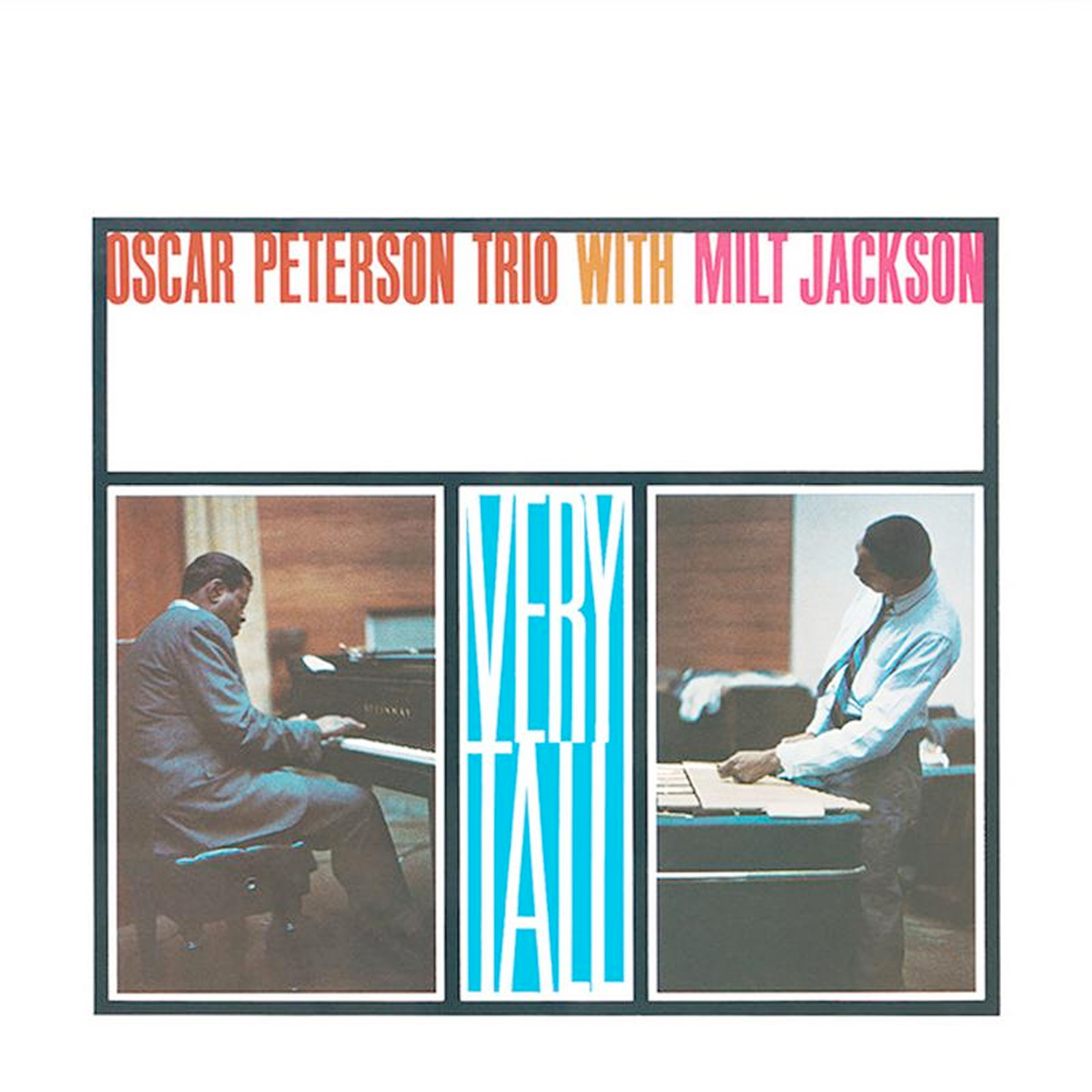
Very Tall brings Oscar Peterson’s trio and Milt Jackson together in a compact yet promising combination. Peterson plays piano and Jackson vibraphone, with Ray Brown on double bass and Ed Thigpen on drums completing the quartet. The recordings were made on 15 and 18 September 1961 at Fine Recording Studios in New York, produced by Norman Granz. Verve released the album in 1962. Behind the brief title lies a specific encounter: a pianist with his trio and an additional instrumentalist whose sound changes the relationships available within the group.
Piano and vibraphone share an important characteristic: their notes begin with a strike. The way those notes are produced and continue to sound differs considerably, however. Piano hammers strike strings; vibraphone mallets strike metal bars. Musically, the combination opens a field between definition and resonance, individual lines and harmonic textures. Jackson is therefore not simply an interchangeable fourth voice. His instrument changes the available colours and the possibilities of dialogue with Peterson, while Brown and Thigpen help sustain the shared musical setting. The interest begins in the different resources brought into the same small ensemble.
Six pieces make up the programme, three on the first side and three on the second. Their relatively small number and generous durations give the players room without turning the record into an extended suite or a formal concept work. It remains a collection of particular compositions, drawing on familiar songs as well as pieces from the participants’ immediate musical world. For music lovers, that offers a straightforward and durable attraction: familiar forms can be approached while attention remains on what these four personalities make of playing together. The additional colour of the vibraphone is an opening to the conversation, rather than its entire substance.

From Green Dolphin Street to Reunion Blues
The first side begins with “Green Dolphin Street”, the song by Bronisław Kaper and Ned Washington also known as “On Green Dolphin Street”. It is followed by Milt Jackson’s “Heartstrings” and Nat Adderley’s “The Work Song”. This sequence brings together different origins: a film song that entered the jazz repertoire, a composition by the participating vibraphonist and a piece from contemporary jazz. The musicians need not exchange their identities each time the material changes. Instead, the different starting points offer an opportunity to hear the same group working within other melodic and harmonic conditions.
Side two moves from “John Brown’s Body” to “A Wonderful Guy”, by Richard Rodgers and Oscar Hammerstein II, and closes with Jackson’s “Reunion Blues”. A traditional song, a stage song and another composition by the vibraphonist thus stand alongside one another. Jackson is not only a guest instrumentalist on the album; two of his own pieces make him part of its compositional identity as well. That adds a further dimension to his involvement. “Heartstrings” and “Reunion Blues” help determine the musical starting points from which the quartet develops its shared course, giving him a role beyond the particular sound of his instrument.
The performances range from just under five minutes to almost eight. Those proportions invite a listener to follow the shape of a rendition: how does a theme become a shared journey, and how does the music find its way back to a point of departure? Attentive listening need not be confined to waiting for rapid passages or prominent solo moments. Movement between a foreground line and accompanying activity also carries the form. The tracklist offers six different opportunities to follow that relationship. Three selections per side keep the programme clear, while the varied compositional sources prevent the encounter from revolving around only one musical idea.

Four identifiable personalities
Oscar Peterson, as pianist and leader of the trio, is the point of reference around which Milt Jackson joins the group. Ray Brown and Ed Thigpen, however, are more than the remaining names in a familiar formula. The double bass connects pitch, harmonic movement and rhythmic orientation; the drums can place accents, respond to movement and articulate the unfolding performance. With piano and vibraphone above them, different kinds of attack meet within one small ensemble. That makes it useful to avoid treating accompaniment and solo voice as a permanent hierarchy. The significance of a contribution is not determined solely by how prominently it stands out.
Jackson’s instrument is specifically a vibraphone. Its metal bars and resonators belong to a different instrument from the wooden bars of a marimba. The distinction matters in both illustration and description: this album places Peterson’s piano alongside Jackson’s particular instrumental voice. A generic percussion instrument would not adequately represent that meeting. Listening can focus on the relationship between the beginning and decay of a note, the space between two lines, or the way bass and drums carry the shared movement. These are concrete approaches to the ensemble without requiring an undocumented claim about a particular solo.
The two recording dates can also be assigned to the programme. “Green Dolphin Street” and “Reunion Blues” were recorded on 15 September, with the other four selections following on 18 September 1961. The personnel remain the same on both dates. The album therefore combines two sessions into a six-piece sequence, rather than grouping different quartets under one title. Fine Recording in New York identifies the venue and Norman Granz the producer. Those details give the encounter a historical framework that can support musical curiosity without being turned into an invented studio anecdote. The promise of the record is already persuasive in the particular company it brings together.
The Acoustic Sounds Series 33⅓-RPM LP
The reissue AVER 37801 presents Very Tall in the Acoustic Sounds Series as a 180-gram stereo LP at 33⅓ RPM. The publisher credits Ryan K. Smith at Sterling Sound with mastering from the original analogue tapes. Quality Record Pressings manufactures the record, and the package includes a Stoughton tip-on gatefold jacket. These are the principal characteristics of the edition being offered. They describe a particular reissue and should not be transferred indiscriminately to every Verve pressing of the album. For collectors, distinguishing the musical work from its individual releases is a useful part of making a considered choice.
The original album appeared in 1962, following recordings made in September of the previous year. Present-day LP manufacture represents another, later stage. All three levels can be valued together: the historical meeting of the musicians, the original organisation of the programme and the physical presentation of the reissue. Information about tape source, mastering and pressing plant makes the record identifiable without implying a personal listening comparison that has not been made. The music is neither newly composed nor retrospectively assigned to different players. Its core remains the quartet of Peterson, Jackson, Brown and Thigpen.
The single 33⅓-RPM LP offers three selections on each side and one side change. It is a clear, practical presentation: each side can develop as a connected stretch while the six pieces retain their individual identities. You order from Michael 45 in Germany. We arrange the US import and dispatch from Hilden. Very Tall offers an inviting opportunity to follow the relationship between two distinctive melodic and harmonic instruments within a small jazz group. The album title may announce scale; musical curiosity can settle on the details, on four people and on what becomes possible between their voices.
Series: Verve – all 34 records: voices, organ and bossa nova
Musicians
Participants and documented credit status. Track references correspond to the tracklist.
- Oscar Peterson1978 · later portrait referencepianoParticipation: All tracks
- Milt Jacksonearlier portrait reference 1946–48vibraphoneParticipation: All tracks
- Ray Brown1976 · later portrait referencedouble bassParticipation: All tracks
- Ed Thigpenlater undated portrait referencedrumsParticipation: All tracks


Four musicians on all six tracks. A1/B3 were recorded on 15 September; A2/A3/B1/B2 on 18 September 1961.

Reviews
There are no reviews yet.