

A day devoted to the blues
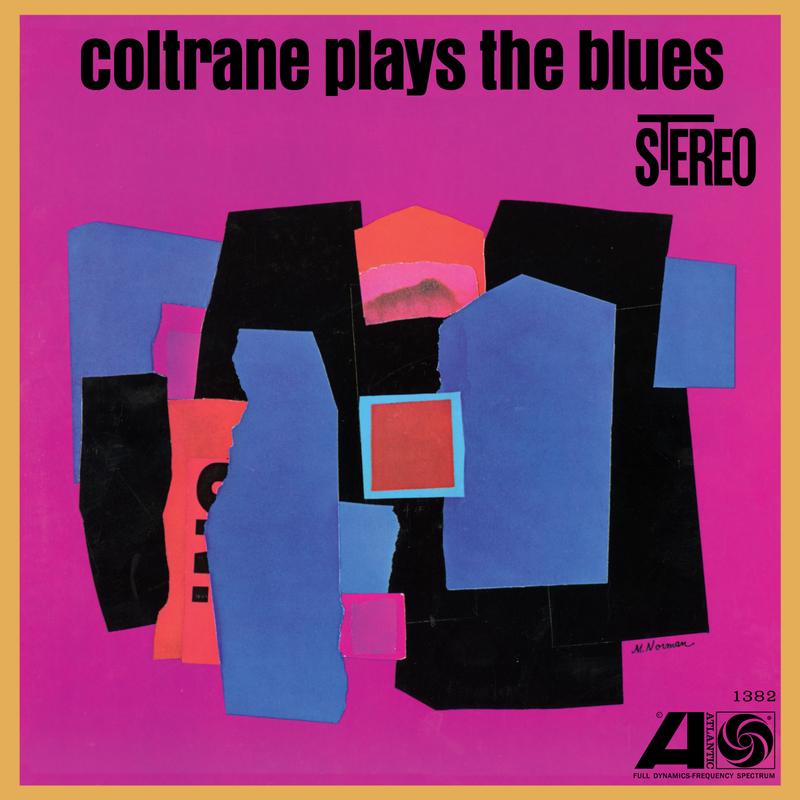
On 24 October 1960, John Coltrane recorded the six pieces that would become Coltrane Plays The Blues at Atlantic Studios in New York. These sessions belong to the same concentrated period of work as My Favorite Things. With McCoy Tyner, Steve Davis and Elvin Jones alongside him, a new rhythm section was taking shape. The blues provided a shared starting point: a familiar language capable of accommodating very different musical voices.
The album did not appear until 1962, by which time Coltrane had moved to Impulse! That gap makes it particularly rewarding to return to the music as a document of its recording moment. Here is a musician moving forward, exploring new possibilities inside a recognisable form. For listeners who mainly associate Coltrane with his later expansions, it offers a direct encounter with his curiosity.

Four musicians, sometimes three
Coltrane alternates between tenor and soprano saxophone. Soprano appears on “Blues To Bechet” and “Mr. Syms”; tenor features on the remaining pieces. Equally significant is a change in personnel within the session: McCoy Tyner sits out “Blues To Bechet” and “Blues To You”. Saxophone, double bass and drums carry those two performances alone.
That contrast invites attentive listening. What changes when the piano no longer supplies its harmonic presence? How do Steve Davis and Elvin Jones shape the spaces between saxophone phrases? These are more than details in a personnel list; they offer a way into the album. Jones also contributes as a composer: he wrote the opening “Blues To Elvin”, while the other five pieces are Coltrane compositions.

Six pieces, an open conversation
The three blues titles are followed by “Mr. Day”, “Mr. Syms” and “Mr. Knight”. The compact programme gives the musicians room to develop their ideas. Rather than focusing only on spectacular passages, try following the smaller exchanges: a rhythmic figure, a bass response, a change in the shape of a saxophone phrase.
This is an album that welcomes a first encounter while giving returning listeners plenty to follow. For a collection that values jazz as a living exchange between musicians, Coltrane Plays The Blues offers an approachable and absorbing meeting with this early line-up. Its historical importance need not get in the way of the simple pleasure of spending time with the performances.
The Atlantic 75 edition at 45 RPM
This Analogue Productions stereo edition, AAPA 041-45, spreads the six original tracks across two 180-gram LPs playing at 45 RPM. Ryan K. Smith cut the lacquers at Sterling Sound; the publisher identifies the original master tape as the source. Stoughton supplies the laminated tip-on gatefold jacket.
The series distinguishes numbered first copies from later unnumbered pressings, so numbering or a particular pressing plant should not be assumed for every copy. This edition presents the six album tracks without bonus material. Four record sides give the programme a deliberate pace and provide a welcome reason to set aside time for Coltrane’s day with the blues.
You order from Michael 45 in Germany. We arrange the US import and dispatch from Hilden.
More from the series: Atlantic 75 Series
Also on SACD: Coltrane Plays The Blues
More by John Coltrane: Coltrane’s Sound · Giant Steps
Artist page: All titles by John Coltrane
Customer questions: Atlantic 75: which titles are worth buying? · Buying Analogue Productions records in Europe
Series: Atlantic 75 Series – all 75 albums, time journey and the people behind Atlantic
Musicians
Participants and documented credit status. Track references correspond to the tracklist.
- John Coltranesoprano saxophone, tenor saxophoneParticipation: Soprano: B1, D1 · tenor: remaining tracks
- McCoy TynerpianoParticipation: A1, C1, D1, D2 · absent B1/B2
- Steve Davisdouble bassParticipation: Album personnel
- Elvin Jonesdrums, composition A1Participation: Album personnel


Coltrane: soprano on B1 and D1, tenor on the remaining tracks. Tyner does not play on B1 or B2. Producer: Nesuhi Ertegun; engineer: Tom Dowd. Mastering of this edition: Ryan K. Smith.
How Michael hears this edition
Listening impression · paraphrased from the video
Michael highlights the detail, musical information and spatial presentation, which bring the band's interplay across particularly well. His additional references to first-pressing comparisons concern My Favorite Things and Giant Steps, not this album.
🎧 Review video: YES 90125 - Coltrane Plays The Blues - Joe Walsh
This video is hosted by YouTube (Google). It only loads once you switch on “Functional” in the cookie settings.

Ralf Doerner –
Eine tolle Platte eines absoluten Perfektionisten 😍