A return with something to say
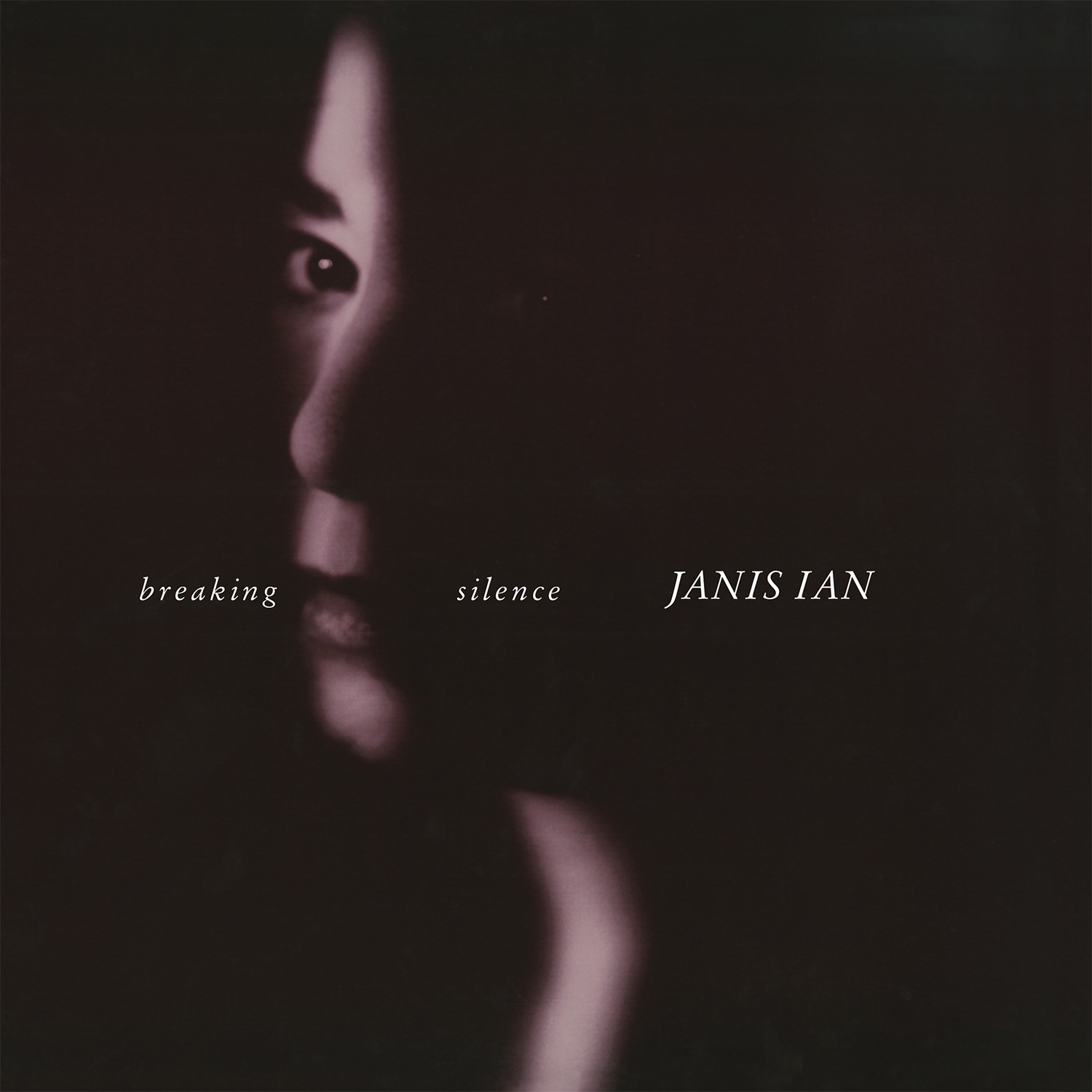
In 1992, Breaking Silence brought Janis Ian back with her first studio album in seven years. Its title describes a position extending beyond a return to the record shelves. These songs also address experiences that people do not easily discuss: violence within relationships, memory of the Holocaust and abuse. The album consequently asks for attention to its words. Yet difficult subjects are not its only content. Across twelve pieces it moves between personal closeness, persistence and the effort to find an individual language for difficult experiences. The recording gap ends with a programme that has a real reason to communicate.
Ian recorded the album in 1992 at Nightingale Studio in Nashville. She produced it with Jeff Balding, who also handled recording; mixing took place at Bill Schnee Studio. The personnel is compact, with Dann Huff, Chad Watson, Jim Brock and Jim Hoke credited alongside Ian. That gives the project a clearly defined group of contributors. It is an author and singer’s album, supported by a small ensemble. Listeners who know her primarily through earlier releases encounter a new, deliberately shaped chapter here. It is neither merely retrospective nor an incidental collection of extra songs appended to an already established reputation.
The project also carried a personal financial commitment: Ian helped finance it by taking out a mortgage on her home. That decision does not automatically make the songs better, but it illustrates the responsibility she assumed for the record. Breaking Silence received a Grammy nomination and also attracted attention for its recording quality. Those are different aspects of its history. Technical care deserves consideration without obscuring the songwriting. The title recalls the album’s most important movement: from an experience towards an articulated form, from something left unspoken towards a song that can be heard. The production supports that movement rather than supplying a substitute for it.

Five musicians and a deliberately direct recording path
Ian is credited with vocals, acoustic and electric guitar, and piano. Dann Huff plays electric guitar, Chad Watson bass and slide bass, and Jim Brock drums and percussion. Jim Hoke is documented for a harmonica solo, though its precise track assignment is not securely established in the available sources. The personnel section therefore includes him without attaching that solo to a guessed song. Multiple instruments belonging to the same person remain together in one row. This keeps the ensemble’s actual size visible even where its instrumental resources are more extensive than five simple role descriptions might initially suggest.
The analogue recording process is described in unusual detail. A Studer A820 was used as a 16-track machine running at 30 inches per second on Ampex 499 tape, without Dolby noise reduction. Ian’s voice was recorded through a Telefunken U47, without equalisation or limiting in that documented vocal path. Synthesizers and samples were excluded from the stated recording approach. Those details explain production decisions. They do not provide a shortcut to predicting how every subsequent release will sound on every system. Their value lies in their specificity: the participants chose a particular working method and left enough information for that choice to be understood.
Some People’s Lives is a special case. It was recorded directly to two tracks during the mixing stage, with the second take selected. One documented recording method therefore sits beside the multitrack process within the same album. The distinction matters because it prevents an appealing story about one performance from being applied indiscriminately to all twelve songs. It also shows the flexibility possible inside a carefully planned production. Every piece need not follow an identical route to belong to the same record. As a listening invitation, the information directs attention towards the presence of the voice, its relationship with the instruments and differences between individual songs.

Twelve songs with different forms of closeness
All Roads To The River, co-written with Jon Vezner, opens the record. Ride Me Like A Wave and Tattoo follow. The latter addresses the Holocaust, establishing early that historical memory will stand beside personal experience in this programme. The second side contains Guess You Had To Be There, What About The Love and His Hands. Buddy Mondlock and Kye Fleming are the respective co-writers of the first two. His Hands concerns violence within a relationship. Those subjects do not require embellished retellings to communicate their importance. Encountering the lyrics themselves remains central to the experience of the songs.
The second LP opens with Walking On Sacred Ground and This Train Still Runs, both written with Jess Leary, followed by Through The Years. Its final side combines This House, Some People’s Lives and the title track. Kye Fleming again shares the writing credit for Some People’s Lives. Six of the twelve songs are therefore collaborations, while six were written by Ian alone. That distribution describes the album more accurately than an image of a wholly solitary confession. A personal voice can emerge through work with other writers without becoming any less individual. Authorship is one of the record’s relationships, rather than an exception to its character.
Breaking Silence ends with a song addressing abuse, giving the meaning of its title particular gravity. The complete album should nevertheless not be reduced to a list of subjects. Its sequence moves through different relationships with the past, the present and other people. Some titles suggest movement, others a place or a memory. Together they form a record whose personal quality need not be confused with an unedited diary. Ian works through songs as shaped forms. Listeners attentive both to language and to musical realisation have a clear reason to follow all four sides and allow the relationships between the pieces to develop.
Kevin Gray’s cut for the 45 RPM double LP
The edition described here, AAPP 027-45, was released by Analogue Productions on March 22, 2017. It contains two 180-gram LPs playing at 45 RPM, housed in a tip-on gatefold jacket. Kevin Gray mastered it at Cohearent Audio from the original analogue tapes, and Quality Record Pressings manufactured the records. That credit belongs to this reissue. Doug Sax is associated with the original album mastering instead. The two names identify different stages in the release history and should not be merged into an imprecise joint mastering claim. The distinction is useful when identifying or comparing versions of this frequently discussed recording.
Each side contains three songs. The complete twelve-track programme is therefore distributed evenly across four sections, without later bonus material added to the sequence. In practical terms that means more side changes than a single LP. The 45 RPM format provides different conditions for cutting, but does not by itself guarantee superiority. The traceable combination of a documented analogue recording, original tapes, a named mastering engineer and a specified pressing plant is more informative than an unsupported sonic promise. It identifies the edition concretely while leaving the musical judgement where it belongs: in the encounter with Ian’s songs and their performances.
You order from Michael 45 in Germany. We arrange the US import and dispatch from Hilden.
For anyone looking to buy this album on vinyl, these details identify the edition described here. Breaking Silence connects a deliberately conceived recording with lyrics that ask for more than passing attention. That relationship makes it particularly interesting in a collection of substantial singer-songwriter albums. The production offers a well-documented setting; the songs give that setting its purpose. This 45 RPM double LP presents the full album in a clearly identified edition. For anyone approaching or returning to Janis Ian as a storyteller, singer and instrumental participant, it offers twelve distinct points of entry. The significance of its title emerges gradually across the journey between them, rather than being exhausted by one performance or one celebrated recording detail.
Customer question: Buying Analogue Productions records in Europe
Musicians
Participants and documented credit status. Track references correspond to the tracklist.
- Janis IanEarlier portrait: 1981vocals, acoustic guitar, electric guitar, pianoParticipation: Album credits · track assignment unconfirmed
- Dann Huffelectric guitarParticipation: Album credits · track assignment unconfirmed
- Chad Watsonelectric bass, slide bassParticipation: Album credits · track assignment unconfirmed
- Jim Brockdrums, percussionParticipation: Album credits · track assignment unconfirmed
- Jim HokeharmonicaParticipation: Solo · track assignment unconfirmed

Produced by Janis Ian and Jeff Balding. Recording and mixing: Jeff Balding; assistants: Steve Bishir, Patrick Kelly, Greg Parker, John David Parker, Christopher Rich, Toby Seay and Carry Summers. Original mastering: Doug Sax. This edition mastered by Kevin Gray (2017). Photography and image concept: Lisa Powers; design: Jerry Joyner; art direction: Virginia Team.

Reviews
There are no reviews yet.