
Duke Ellington & John Coltrane: a meeting with room for both
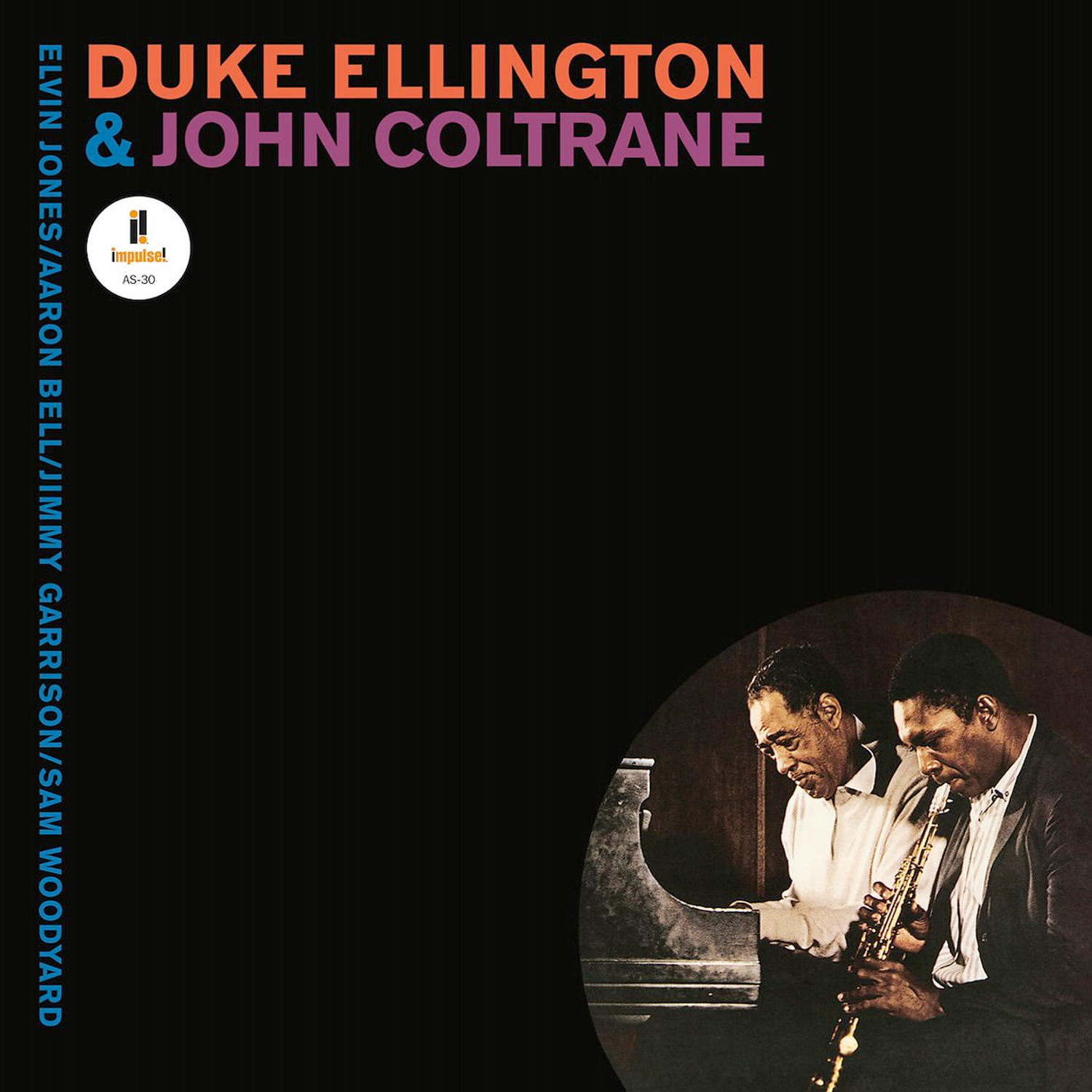
Two names on a cover can suggest a contest. This album offers a more rewarding starting point: Duke Ellington at the piano and John Coltrane on saxophone meet within a small group where both can retain their musical identities. The interesting question is how two such recognisable voices establish a shared relationship with melody, accompaniment and time. Seven selections give that encounter different shapes, from the familiar opening of In a Sentimental Mood to the closing The Feeling of Jazz. The record invites attention to their communication rather than asking the listener to decide which of its two leading figures is more important.
The session took place on September 26, 1962, at Van Gelder Studio in Englewood Cliffs, New Jersey. Ellington was 63 and Coltrane 36. The difference in age belongs to the historical background, but cannot explain the music by itself. These are individual musicians with practical musical tasks, rather than abstract representatives of generations. A piano can support a line or offer something against it; a saxophone can carry a melody while responding to what happens underneath. The small ensemble makes those relationships immediate, leaving plenty of room to notice the shape and placement of a single phrase.
Four other musicians share the bass and drum positions: Aaron Bell and Jimmy Garrison, Elvin Jones and Sam Woodyard. They do not all perform simultaneously as one enlarged rhythm section. The credits assign them to particular tracks, and that distribution is a useful key to the record. Even on the best-known piece, it is worth looking beyond the two names on the cover. This is not a duo with an invisible background, but a series of quartet settings in which the other players help determine the space available to the central musical conversation.

Seven pieces between a familiar melody and an open exchange
In a Sentimental Mood opens side A, offering an immediate point of entry through its melody. Take the Coltrane, Big Nick and Stevie follow. These four selections already suggest a programme with more than one mood or purpose. Their lengths, ranging from a little over four minutes to just under five, keep the individual performances compact. Rather than an extended concert document, the LP presents a sequence of separate encounters. Each has its own beginning and conclusion, while the continuing presence of piano and saxophone establishes connections across the different numbers and changing supporting personnel.
Side B begins with My Little Brown Book, moves to Angelica and ends with The Feeling of Jazz. Three slightly longer performances form the second half. At 5:56, Angelica receives the largest span on that side, while My Little Brown Book and The Feeling of Jazz are similarly weighted at 5:20 and 5:30. Those proportions make the album approachable without restricting its musical possibilities. A concentrated form can invite closer attention to particular decisions: remembering the overall course of a piece makes it easier to choose a different point of focus when returning to it.
One way into the music is to follow the relationship between melody and accompaniment. When does the piano sound like an independent storyteller, and when do you hear it more directly as a partner to the saxophone line? How does your impression change when you then give the bass greater attention? These questions need no predetermined answer. They help turn a celebrated historical meeting back into an immediate listening experience. The LP sequence supports that approach: four selections on side A, three on side B, with a physical pause that allows the first group of performances to settle before the next begins.

Looking closely at the rhythm-section assignments
Aaron Bell plays on A1, A4, B1 and B3; Jimmy Garrison on A2, A3 and B2. The drum credits place Elvin Jones on A1 through A3 and B2, and Sam Woodyard on A4, B1 and B3. The opening track is particularly important: In a Sentimental Mood combines Bell with Jones. The album therefore cannot be divided neatly into two rhythm sections transferred intact from their usual settings. This mixed pairing is part of its character as well. Track-specific credits preserve that distinction and prevent a convenient general description from simplifying the actual personnel.
Ellington and Coltrane remain the constant leading voices. Coltrane is credited with tenor and soprano saxophones, but the edition source used here does not clearly assign each instrument to individual tracks. The musician panel therefore retains the documented overall credit rather than inventing precision. The bass and drum assignments, by contrast, are available at track level. Different degrees of detail are perfectly workable when they remain transparent. They provide useful listening references without directing attention towards an unsupported claim, while still allowing the full musical experience to take precedence over the information printed alongside it.
Bob Thiele produced the recording, and Rudy Van Gelder engineered it. Stanley Dance wrote the sleeve notes. These figures belong to the album’s history, but are not additional players within the quartet. The musical structure remains clear: two continuing voices with changing partners on bass and drums. If you know the record mainly through its opening performance, those personnel changes offer a route into the rest of the programme. The remaining six selections are not merely additions to one famous moment. They form part of the same concentrated encounter and deserve to be heard within that complete shape.
The Acoustic Sounds edition: one LP, seven concentrated encounters
This Acoustic Sounds Series reissue presents the album on one 180-gram stereo LP at 33⅓ RPM. Ryan K. Smith at Sterling Sound handled the mastering from the original analogue tapes. It was pressed at Quality Record Pressings, with a gatefold jacket from Stoughton Printing. The edition number is B0033799-01, and the shop reference is AIMP 79901. These details identify this specific reissue among the many versions of the album. They are useful for collectors without becoming an unsupported comparison of the sound of every other pressing carrying the same title.
A single LP suits the programme’s concise structure. It preserves the seven selections and their clear division into two sides. Ellington listeners may particularly enjoy hearing his piano within a small group, where its relationship with the other instruments is easy to follow. Those approaching through Coltrane encounter a different partnership without needing to construct an opposition to his other recordings. Listeners discovering both artists receive a readily approachable setting: a clear ensemble, manageable piece lengths and enough contrasting situations to reward returning to the record with a different focus each time.
The album’s value extends beyond having two major artists on the same release. Bell, Garrison, Jones and Woodyard also help shape the exchange, giving each quartet configuration its own possibilities. Michael 45 dispatches orders from Hilden in Germany, allowing customers in Germany and the EU to order without importing it themselves from the United States or waiting for customs clearance. If you want to buy Duke Ellington & John Coltrane on vinyl, this Acoustic Sounds edition is presented with the complete running order, carefully differentiated musician credits and the production details that identify this particular pressing.
Current availability and delivery information appear beside the purchase controls; this edition description is not a statement of stock availability.
Artist page: All titles by John Coltrane
Series: Impulse! – all 19 records: the house that Trane built
Musicians
Participants and documented credit status. Track references correspond to the tracklist.
- Duke EllingtonExisting portrait; not a session depictionpianoParticipation: all seven tracks
- John ColtraneExisting portrait; not a session depictionsoprano saxophone, tenor saxophoneParticipation: All seven tracks; instrument assignment per track not established by this source
- Aaron Belldouble bassParticipation: only A1, A4, B1 and B3
- Jimmy GarrisonExisting portrait; not a session depictiondouble bassParticipation: only A2, A3 and B2
- Elvin JonesExisting portrait; not a session depictiondrumsParticipation: only A1–A3 and B2
- Sam WoodyardExisting portrait; not a session depictiondrumsParticipation: only A4, B1 and B3


Production: Bob Thiele. Recording: Rudy Van Gelder. Liner notes: Stanley Dance. Design: Robert Flynn and Viceroy. Photography: Bob Ghiraldini. Series supervision: Chad Kassem. Mastering: Ryan K. Smith, Sterling Sound. A1 pairs Aaron Bell with Elvin Jones.
How Michael hears this edition
Listening impression · paraphrased from the video
Compared with the older AP 45 RPM edition, Michael prefers the newer Acoustic Sounds 33⅓ RPM edition. His copy has noticeably quieter vinyl, while he describes the sound as more direct with excellent instrument separation.
🎧 Review video: Duke Ellington & John Coltrane Acoustic Sound Series vs. 45 RPM Analogue Production
This video is hosted by YouTube (Google). It only loads once you switch on “Functional” in the cookie settings.

Reviews
There are no reviews yet.