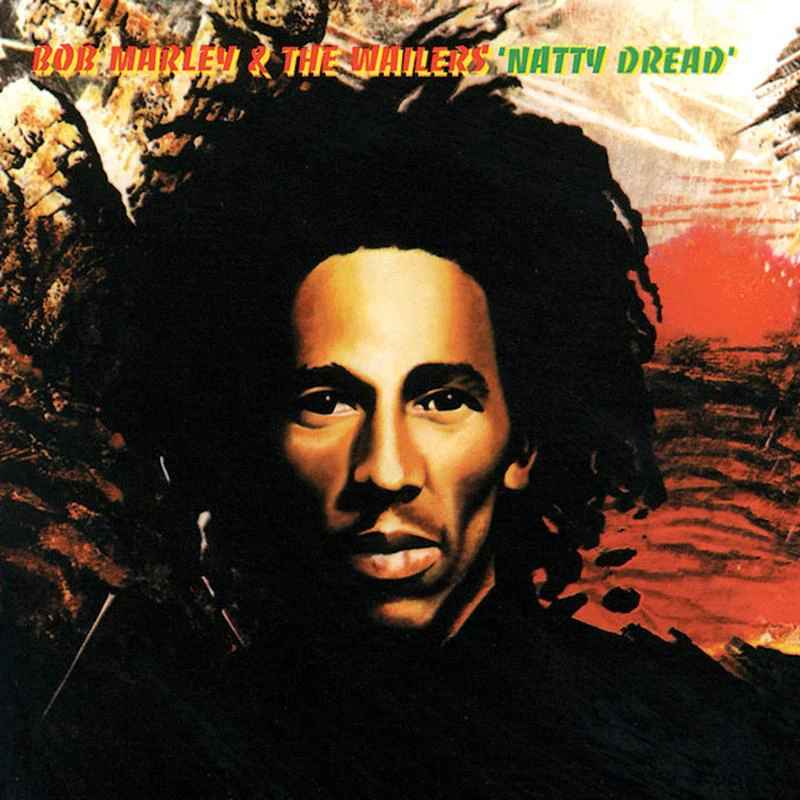
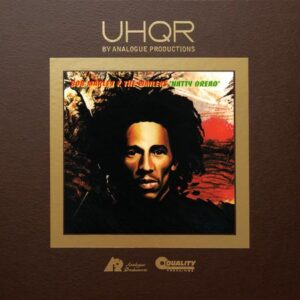
Natty Dread as a hybrid stereo SACD from Analogue Productions: Frank Arkwright and Ryan K. Smith mastered it direct to DSD at Abbey Road Studios in London from the original master tape. All nine songs play in one sequence – from “Lively Up Yourself” and the 1974 studio recording of “No Woman, No Cry” to “Revolution”.
The studio version of a famous song
A familiar title can set up the wrong expectation. Mention “No Woman, No Cry” and many listeners immediately hear a whole room singing along. Natty Dread takes you back to the 1974 studio recording instead. Set the celebrated live moment aside and the song becomes a more intimate encounter: a memory of people finding ways to hold each other up when life leaves them little room. That movement between personal experience and the world outside runs through the whole album.

New voices around Marley
This is a turning point, not a clean break. Peter Tosh and Bunny Wailer are no longer part of the line-up, and Marley steps forward as the central voice. Rita Marley, Marcia Griffiths and Judy Mowatt join him as the I-Threes – and their part is worth following on its own. Sometimes an answer confirms the lead vocal; elsewhere the background voices shift the emotional weight of a phrase without taking over the song.
Aston “Family Man” Barrett and Carlton Barrett keep the rhythmic centre steady, so the new vocal architecture rests on an established musical bond. Session credits add keyboard players Bernard “Touter” Harvey and Jean Roussel. Marley takes on a different role, but the music still lives from people working together rather than simply accompanying a star.

An older song in a new beginning
“Bend Down Low” links the album to an earlier chapter of Wailers independence: it had already belonged to the repertoire of their own Wail’N Soul’M label in the sixties, a name that joined the Wailers with the Soulettes, Rita Marley’s vocal trio. “No Woman, No Cry” also looks back, towards Trench Town and the experience of community under hard conditions, while “Them Belly Full (But We Hungry)” widens personal memory into social criticism and “Rebel Music (3 O’Clock Roadblock)” addresses control and freedom of movement.
The second half leads from “So Jah Seh” into the title song and on to “Revolution”. Rastafari is part of the record’s language and outlook, not a decorative shorthand – the title points to identity: how a person sees himself, and how the world chooses to see him. “Bend Down Low” and “Talkin’ Blues” keep the album human in scale: firm conviction and affection, wit and vulnerability belong together here.
The hybrid stereo SACD from Analogue Productions
CAPP 178 SA is a hybrid stereo SACD from Analogue Productions. According to the publisher, Frank Arkwright and Ryan K. Smith mastered it direct to DSD at Abbey Road Studios in London from the original master tape. The SACD layer plays on SACD-capable players, the CD layer on any conventional CD player. The disc contains the nine songs of the original album.
You order from Michael 45 in Germany. We arrange the US import and ship from Hilden.
Also in other editions: UHQR LP (33⅓ RPM) · UHQR double LP (45 RPM)
More SACDs by Bob Marley and The Wailers: Burnin’ · Kaya · Rastaman Vibration · Exodus · Uprising
Artist page: All titles by Bob Marley & The Wailers
Customer question: Buying Analogue Productions records in Europe
Musicians
Documented selection of participating musicians. Personnel may vary by track; this list does not claim to be complete. Album credits for the 1974 studio recording. Backing vocals are by The I-Threes; this does not imply that every musician plays on every track.
- Bob MarleyLead vocals, Guitar
- Aston „Family Man“ BarrettBass
- Carlton BarrettDrums, Percussion
- Bernard „Touter“ HarveyPiano, Organ
- Al AndersonGuitar
- Rita MarleyBacking vocals
- Marcia GriffithsBacking vocals
- Judy MowattBacking vocals
- Jean RousselOrgan, Keyboards
- Lee JaffeHarmonica



Reviews
There are no reviews yet.