

One voice within the space of an orchestra
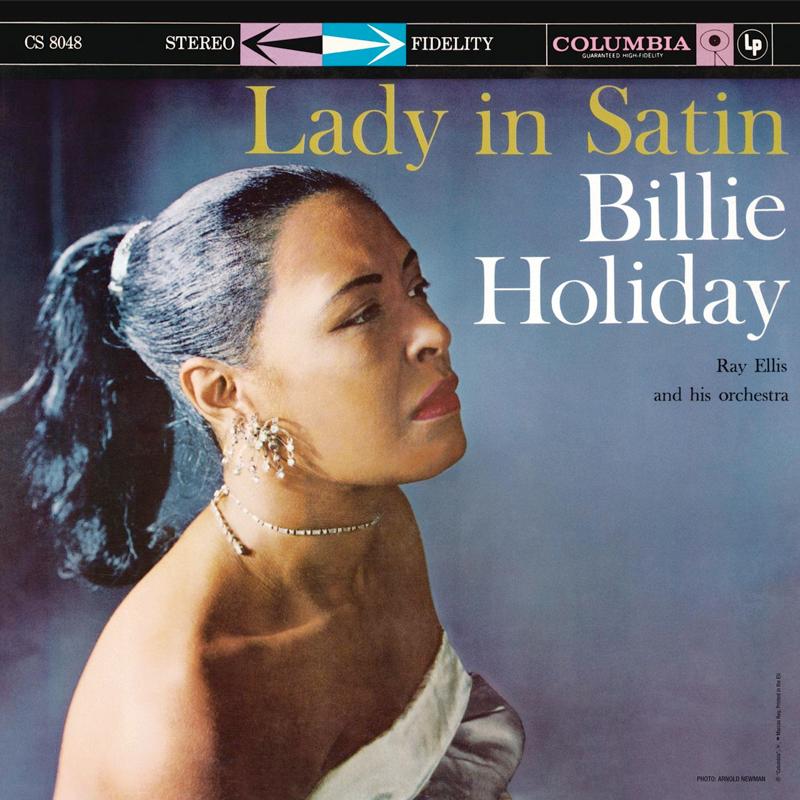
Lady in Satin is an album whose pairing of singer and accompaniment carries a distinctive story of its own. Billie Holiday recorded it in February 1958 at Columbia’s 30th Street studio in New York. Ray Ellis arranged and conducted the orchestra, Irving Townsend produced, and Fred Plaut handled the engineering. Columbia released the album that same year. The large ensemble creates an expansive setting for a singer whose artistic identity can be recognised in the smallest adjustment of a phrase.
Holiday’s voice had changed considerably since her early recordings. An account that simply measures the distance from her former vocal resources would miss the musical substance of this album. What matters is how she organises a lyric, weights a melodic thought and shapes the passage of time within a song. A delayed entry, a restrained syllable or a short interruption can carry as much significance as a sustained note. These performances encourage attention to expression as the result of many particular decisions.
The orchestra offers a striking counterpart. Strings, woodwinds, brass and rhythm instruments extend the setting far beyond that of a small jazz group. The relationship between a substantial instrumental ensemble and a single singer can be reconsidered with every selection. Where does the accompaniment continue a thought? Where does it create distance, and where does it establish a frame? The scale of the ensemble belongs to the musical account, while Holiday remains its central presence.
It is worth approaching Lady in Satin first as an album of carefully chosen songs. The singer’s life forms part of its historical background, but it does not dictate the meaning of every line she sings. An interpreter encounters work by other writers and turns it into a sequence of individual musical choices. Taking that craft seriously also preserves the dignity of the recording. Its emotional force can be explored without reducing the artist to an illustration of biographical hardship or treating every lyric as an uncomplicated personal confession.

Ray Ellis and the musicians within the ensemble
Ray Ellis is central to the album’s orchestral design. Holiday’s official album documentation identifies him as both arranger and conductor. Both responsibilities matter: instrumental voices are assigned and organised in advance, then brought together into a shared performance. A singer who retains an individual relationship with the beat needs accompaniment that provides continuity while leaving space. Listening for that relationship gives the orchestra a more meaningful role than simply supplying an attractive background.
The documented personnel include Mal Waldron on piano, Barry Galbraith on guitar, Milt Hinton on double bass and Osie Johnson on drums. These names reveal the specific rhythm section working within the larger texture. Waldron also has a close connection with Holiday’s musical world. The piano offers a route into small responses and harmonic transitions, while bass and drums provide another route through the sense of time that continues beneath an extended orchestral phrase.
The larger personnel list includes other musicians familiar from jazz recordings, among them trombonists J. J. Johnson and Urbie Green. Their presence is a reminder that an orchestra consists of individual players with careers and musical identities of their own. The musician section below therefore preserves the extensive documented list. It is an album-level overview, not a claim that every person appears on every selection. Where track-specific participation cannot be established reliably, that limit remains explicit.
For a collection centred on Holiday’s smaller ensembles, this record opens another perspective. The question of her phrasing remains, but the background against which it operates changes substantially. Orchestral scale affects the listener’s sense of intimacy and distance. One useful approach is to follow a song as a whole before returning to the transitions between a sung sentence and an instrumental continuation. In those moments, individual storytelling and carefully organised accompaniment come into particularly clear relationship with one another.

Eleven songs about attachment, memory and distance
The first side of this double LP opens with “I’m a Fool to Want You,” written by Frank Sinatra, Jack Wolf and Joel Herron. “For Heaven’s Sake” and Don Raye and Gene de Paul’s “You Don’t Know What Love Is” follow. These three selections already explore different shades of longing and vulnerability. Interpretation depends on more than the broad subject of a lyric: the movement of a thought between its first appearance and a later return can be just as revealing.
Side B contains Hoagy Carmichael’s “I Get Along Without You Very Well,” “For All We Know” and “Violets for Your Furs.” The programme places familiar songwriters and distinct melodic approaches alongside one another. A lyric may express apparent composure while allowing another emotional implication to emerge beneath it. Holiday’s handling of such tensions is a compelling reason to spend time with this repertoire. Contradictions within a song need not be made emphatic to become significant.
Side C pairs “You’ve Changed” with Richard Rodgers and Lorenz Hart’s “It’s Easy to Remember.” Side D brings together “But Beautiful,” “Glad to Be Unhappy” and Alec Wilder’s “I’ll Be Around.” The final side thus offers three separate perspectives on closeness and separation. The sequence invites attention to the complete album beyond its best-known individual performances. Each song retains its own narrative, while the selection as a whole establishes a deliberately limited and coherent programme.
This edition contains the eleven selections of the stereo programme. “The End of a Love Affair,” associated with the original mono album and expanded editions, is not included on this double LP. For collectors, that is a useful distinction between an album title in the broad sense and the specific release being purchased. Alternate takes and later additions are likewise not presented as parts of the original stereo sequence. The four record sides give this particular programme its physical shape.
Bernie Grundman mastering across two 45 RPM records
The Analogue Productions edition AAPJ 144-45 presents Lady in Satin on two 180-gram stereo LPs at 45 RPM. Bernie Grundman mastered the release from the original analogue tapes. Quality Record Pressings is credited for plating and pressing, and the traditional tip-on gatefold jacket is by Stoughton Printing. These details belong to this particular edition. They should be considered together with the catalogue number and format when comparing it with other releases carrying the same album title.
Dividing the programme across four sides creates shorter sequences between side changes. The practical experience differs from that of a single 33⅓ RPM record: the album is encountered in four groups of songs, with the boundaries described in the sequence above. Rotational speed alone cannot replace an individual assessment of a pressing played on a particular system. The documented mastering and manufacture, together with the preferred way of listening to the programme, provide the concrete points of reference for choosing this edition.
That attention to the edition also supports a more focused relationship with the historical recording. Knowing exactly which programme is present prevents the expanded contents of a different issue from obscuring the musical proportions of this one. The orchestra’s scale, the singer’s phrasing and the order of the songs remain the central subjects. The production specifications describe how this release brings that recorded work into a contemporary collection; they do not need to stand in for the work’s artistic character.
Lady in Satin joins an unmistakable singer with a large, carefully organised ensemble and a particularly rich selection of songs. Time spent with the lyrics, phrasing and instrumental responses offers several paths towards the same individual artistic presence. You order from Michael 45 in Germany. We handle the US import and ship from Hilden. For listeners exploring Holiday’s work through its different musical settings, this album occupies a distinct and deeply individual place.
More by Billie Holiday: Body And Soul · Songs For Distingue Lovers
Customer question: Buying Analogue Productions records in Europe
Musicians
Participants and documented credit status. Track references correspond to the tracklist.
- Billie Holidayportrait reference 1957vocalsParticipation: All tracks
- Ray Ellisarrangements, conductingParticipation: Album credits
- Claus OgermanAdditional arrangement credit — disputedParticipation: Supplementary encyclopedia only; official album page credits Ray Ellis. No verified track assignment.
- George Ocknerviolin; concertmasterParticipation: Album credits; no complete track assignment
- Emmanuel GreenviolinParticipation: Album credits; no complete track assignment
- Harry HoffmanviolinParticipation: Album credits; no complete track assignment
- Harry KatzmannviolinParticipation: Album credits; no complete track assignment
- Leo KruczekviolinParticipation: Album credits; no complete track assignment
- Milton LomaskviolinParticipation: Album credits; no complete track assignment
- Harry MeinikoffviolinParticipation: Album credits; no complete track assignment
- David NewmanviolinParticipation: Album credits; no complete track assignment
- Samuel RandviolinParticipation: Album credits; no complete track assignment
- David SarcerviolinParticipation: Album credits; no complete track assignment
- Sid BrecherviolaParticipation: Album credits; no complete track assignment
- Richard DichlerviolaParticipation: Album credits; no complete track assignment
- David SoyercelloParticipation: Album credits; no complete track assignment
- Maurice BrowncelloParticipation: Album credits; no complete track assignment
- Janet PutnamharpParticipation: Album credits; no complete track assignment
- Danny BankfluteParticipation: Album credits; no complete track assignment
- Phil BodnerfluteParticipation: Album credits; no complete track assignment
- Romeo PenquefluteParticipation: Album credits; no complete track assignment
- Tom ParshleyfluteParticipation: Album credits; no complete track assignment
- Mel DavistrumpetParticipation: Album credits; no complete track assignment
- Billy ButterfieldtrumpetParticipation: Album credits; no complete track assignment
- Jimmy OchnertrumpetParticipation: Album credits; no complete track assignment
- Bernie GlowtrumpetParticipation: Album credits; no complete track assignment
- J. J. Johnsonportrait reference 1973tromboneParticipation: Album credits; no complete track assignment
- Urbie GreentromboneParticipation: Album credits; no complete track assignment
- Jack GreentromboneParticipation: Album credits; no complete track assignment
- Tommy Mitchellbass tromboneParticipation: Album credits; no complete track assignment
- Mal WaldronpianoParticipation: Album credits; no complete track assignment
- Barry Galbraithportrait reference 1947guitarParticipation: Album credits; no complete track assignment
- Milt Hintonportrait reference 1965double bassParticipation: Album credits; no complete track assignment
- Osie JohnsondrumsParticipation: Album credits; no complete track assignment
- Elise Brettonbacking vocalsParticipation: Album credits; no complete track assignment
- Miriam Workmanbacking vocalsParticipation: Album credits; no complete track assignment


Eleven tracks from the stereo LP; The End of a Love Affair is not part of this edition. Official Holiday album page credits arranger/conductor Ray Ellis. Additional Ogerman credit in supplementary sources is disputed and retained as unresolved. Orchestra list does not claim every player on every track. Produced by Irving Townsend; engineered by Fred Plaut.
How Michael hears this edition
Listening impression · paraphrased from the video
Michael hears Billie Holiday’s voice immediately in front of him, with the band behind her. Compared with the Classic Records 33⅓ RPM edition heard just before it, he hears still more detail and musical information in the Analogue Productions 45 RPM edition.
🎧 Review video: Billie Holiday - Lady In Satin + Duke Ellington - Blues In Orbit: new Analogue Production Titles!
This video is hosted by YouTube (Google). It only loads once you switch on “Functional” in the cookie settings.

Reviews
There are no reviews yet.