
A ballad album opens out to four sides
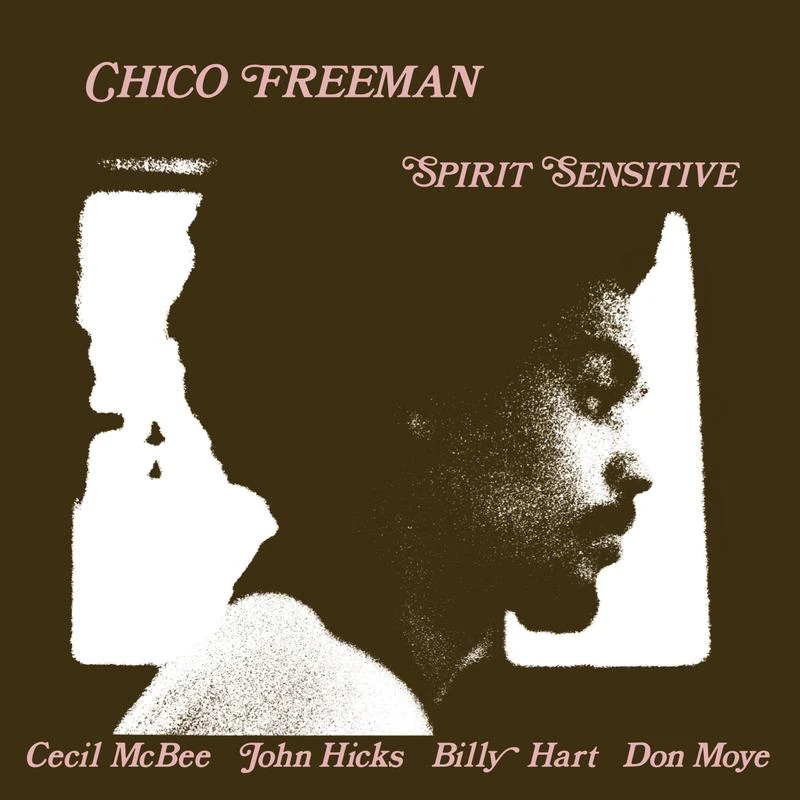
By the late 1970s Chico Freeman was one of the defining young tenor saxophonists in New York, where he had moved from Chicago; in 1979 he won the New York Jazz Award. His label, India Navigation, stood for avant-garde jazz. It was founded by Bob Cummins, a corporate lawyer who helped jazz musicians with legal matters. That makes Spirit Sensitive (1979) all the more intriguing: here Freeman devotes himself to standards and ballads – an unexpected turn for a musician from that circle.
Analogue Productions’ 45 RPM edition presents the album in expanded form: instead of the six pieces on the original LP you get ten, spread across two records and four sides. Matthew Lutthans mastered it at The Mastering Lab from the original analog master tapes.

Four more pieces, two of them by Coltrane
The additional tracks were added on India Navigation’s 1988 CD edition; the 33⅓ RPM LP does not include them. Two are by John Coltrane: “Lonnie’s Lament” and “Wise One”, both released in 1964 on his album Crescent. On Coltrane’s own recording, “Lonnie’s Lament” is a ballad shaped by a long bass solo from Jimmy Garrison. The choice suits Freeman, whose albums combine standards with pieces by modernists such as Coltrane and new music by contemporaries like Cecil McBee.
They are joined by “You Don’t Have To Say You’re Sorry” and “Carnival”. On “Carnival” the group grows: according to the credits of the 1988 CD, Jay Hoggard plays vibraphone and Famoudou Don Moye is on drums. Hoggard, born in 1954, had moved to New York in 1977 and worked there with Freeman, among others; under his own name he also recorded for India Navigation.
A band of distinctive voices
Freeman opens with “Autumn In New York” as a duo with bassist Cecil McBee, born in Tulsa in 1935, who also wrote “Close To You Alone”. John Hicks is at the piano; in those years he was a full-time member of Betty Carter’s band, and in 1978/79 he also recorded with Freeman.
Billy Hart had played in Herbie Hancock’s Mwandishi sextet and with Stan Getz; many listeners know Famoudou Don Moye from the Art Ensemble of Chicago. In 1981 The New York Times called the record “a lyrical, utterly traditional album of ballads and jazz standards”.

The Analogue Productions 45 RPM edition
This edition carries catalogue number AAPJ 151-45: two 180-gram LPs at 45 RPM, pressed at Quality Record Pressings and housed in a Stoughton Printing tip-on gatefold jacket. At 45 RPM more groove passes under the stylus every second, and each side holds less playing time – which is why the ten pieces are spread across four sides.
If you prefer the compact version with the six original tracks, it remains available as the 33⅓ RPM LP (AAPJ 151). That edition is pressed from metal parts derived from Gavin Lurssen and Ron Lewter’s mastering with tube electronics at The Mastering Lab. The 45 RPM set is based on Matthew Lutthans’ new mastering.
You order from Michael 45 in Germany. We arrange the US import and dispatch from Hilden. Editions not currently in stock are dispatched after the goods arrive.
Customer question: Buying Analogue Productions records in Europe
Musicians
Musicians as credited on the original 1979 LP and the 1988 CD edition.
- Chico FreemanTenor and soprano saxophone, leaderParticipation: Album line-up
- Cecil McBeeBassParticipation: Album line-up
- John HicksPianoParticipation: “Peace”, “A Child Is Born”, “It Never Entered My Mind”, “Close To You Alone”, “Don’t Get Around Much Anymore”; bonus tracks not individually documented
- Billy HartDrumsParticipation: “Peace”, “A Child Is Born”, “It Never Entered My Mind”, “Close To You Alone”; bonus tracks not individually documented
- Famoudou Don MoyeDrumsParticipation: “Don’t Get Around Much Anymore”, “Carnival”
- Jay HoggardVibraphoneParticipation: “Carnival”


“Autumn In New York” is a duo of Freeman and McBee. Drums on the original tracks: Billy Hart, on “Don’t Get Around Much Anymore” Famoudou Don Moye. For “Carnival” the CD credits list Famoudou Don Moye (drums) and Jay Hoggard (vibraphone); they do not assign the other bonus tracks to a drummer individually. The six original tracks were recorded between October 1978 and January 1979; we have no individual recording dates for the bonus tracks. Mastering of this edition: Matthew Lutthans, The Mastering Lab, from the original analog master tapes. Pressing: Quality Record Pressings. Gatefold jacket: Stoughton Printing.

Reviews
There are no reviews yet.