Kingston before the next departure
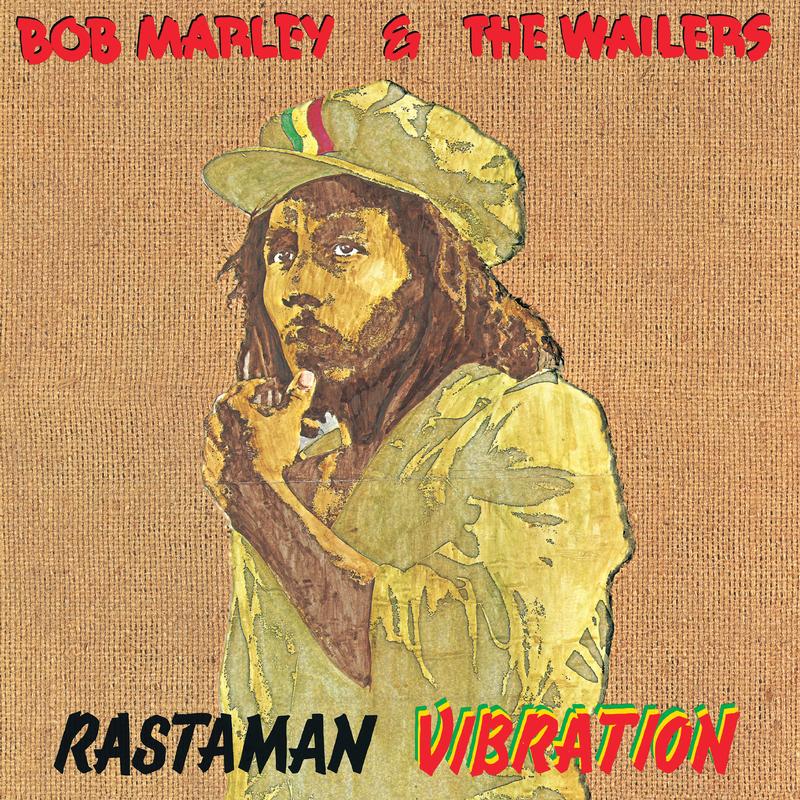
In 1976, Rastaman Vibration reached number eight on the American Billboard album chart, taking Bob Marley into the US Top Ten for the first time. Its programme includes “Positive Vibration” and “Roots, Rock, Reggae”, but also “War” and “Rat Race”. International success and political subject matter occupy the same record.
The sessions took place in Kingston at Harry J. and Joe Gibbs studios in late 1975 and early 1976. Bob Marley and the Wailers produced the album themselves. In the discography, it follows the live breakthrough of 1975 and precedes the London period associated with Exodus. Hearing it in that position provides useful context without turning every song into a prediction of what happened next.

Two brothers at the centre
Aston “Family Man” Barrett plays bass and Carlton Barrett drums. Their work offers a clear starting point for listening. Follow the bass first, then notice how the drums frame the recurring figure. A repeating pattern leaves the other voices opportunities to enter differently: a guitar phrase or a vocal response can find a fresh place within an established movement.
Guitarists associated with the recording include Earl “Chinna” Smith and Al Anderson, with Tyrone Downie among the keyboard players. Rita Marley, Marcia Griffiths and Judy Mowatt provide the I Threes’ backing vocals. Try following only their entrances for a song. Notice when they answer as a group, extend a phrase or help give the next section its emphasis. The arrangement becomes easier to hear as a set of relationships rather than a background behind the lead singer.

A speech becomes a song
“War” draws on Haile Selassie’s 1963 address to the United Nations. That source connects the recording to a public document and an existing argument about equality. Its political subject is part of the song’s origin, rather than something that has to be inferred entirely from Marley’s biography.
“Roots, Rock, Reggae”, meanwhile, was the single that entered the US Hot 100. Hearing it within the same programme as “War” gives a fuller account of the album than the chart position alone. Musical invitation and political address sit alongside each other. Let the ten tracks run in sequence and follow the changing tasks they ask of the singer and band; familiar individual songs take on a different place within that progression.
Stereo SACD and CD playback
This Analogue Productions release is a Hybrid Stereo SACD, catalogue number CAPP 179 SA. Ryan K. Smith is credited with mastering from the original master tape. The disc contains the ten-track album programme. Its CD layer works in a conventional CD player, while the high-resolution SACD layer requires SACD-compatible equipment. Both provide stereo playback; this release does not offer a multichannel mix.
Michael 45 has the item in Germany and sends it from Hilden, so customers can avoid arranging a personal US import and waiting for customs handling.
In the magazine: Bob Marley: Burnin’ and Natty Dread on UHQR
Also on 45 RPM vinyl: Rastaman Vibration
More by Bob Marley and The Wailers: Uprising
Artist page: All titles by Bob Marley & The Wailers
Customer question: Buying Analogue Productions records in Europe
Musicians
Documented selection of participating musicians. Personnel may vary by track; this list does not claim to be complete.
| Name | Instrument / role |
|---|---|
| Bob Marley | Vocals |
| Earl "Chinna" Smith | Percussion, Guitar |
| Al Anderson | Guitar |
| Carlton Barrett | Drums |
| Jean Alain Roussel | Organ |
| Tyrone Downie | Keyboards |
| The I-Threes | Backing vocals |
| Tommy McCook | Saxophone |
| Donald Kinsey | Guitar |
Personnel vary. “No Woman, No Cry” is not included in this edition and is not retained as a track credit.
🎧 Review video: Inside Abbey Road: Re-Mastering Bob Marley with Chad Kassem & Michael Ludwigs
This video is hosted by YouTube (Google). It only loads once you switch on “Functional” in the cookie settings.

Reviews
There are no reviews yet.