


Kingston, 1980
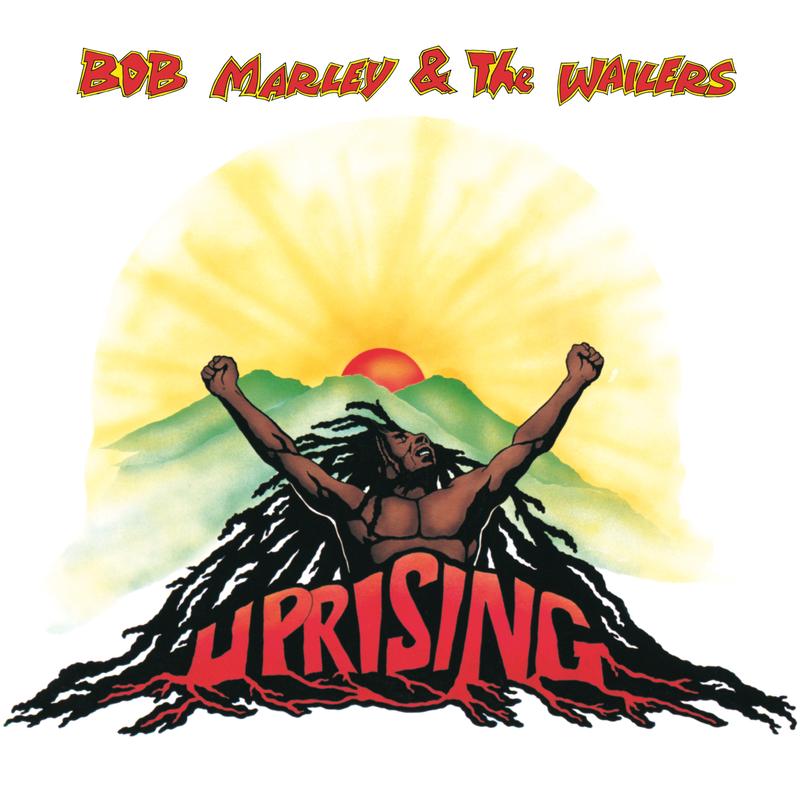
By the time Uprising appeared in June 1980, Bob Marley and the Wailers were an internationally touring band. They returned to Kingston and Tuff Gong for the recording. The album brings those worlds together: the precision of an experienced ensemble and songs whose political and spiritual language grows from Jamaica. Its ten tracks move through everyday resilience, social division and the question of what freedom means for an individual.
It became Marley's final studio album released during his lifetime. That knowledge accompanies a present-day listen, but it does not explain every line or musical decision. Uprising is also full of forward motion. “Coming in from the Cold” opens the door, “Work” insists on activity, and “Could You Be Loved” reaches for the dance floor. Their energy matters as much as the famous, very differently arranged closing song.

An ensemble that leaves space
Bassist Aston “Family Man” Barrett and drummer Carlton Barrett are central to the Wailers' rhythmic identity. Guitars mark out the pulse while keyboards answer between vocal phrases. The I Threes — Rita Marley, Marcia Griffiths and Judy Mowatt — give the lead voice a vocal counterpart. Their entrances provide a useful way into the arrangements: follow them to hear how tension can develop without every available space being filled.
“Could You Be Loved” offers an especially direct example of this interplay. Its movement depends on interlocking short figures rather than a single melody dominating everything around it. Elsewhere the emphasis shifts. “We and Dem” addresses social divisions, while “Zion Train” and “Forever Loving Jah” place Marley's Rastafari faith at the centre. The songs share a musical vocabulary while performing different roles within the sequence.

The final voice in the room
“Pimper's Paradise” comes just before “Could You Be Loved”, taking the listener from a vulnerable individual's story into one of the Wailers' most familiar grooves. Transitions like this give Uprising its shape. Personal experience, public address and religious assurance are allowed to coexist. Hearing the less frequently isolated songs in their original order makes that range easier to follow.
At the end, “Redemption Song” leaves Marley's voice accompanied by acoustic guitar. The album version is a solo performance, changing the scale after nine ensemble tracks. A central idea draws on Marcus Garvey's call for mental emancipation. That connection reaches beyond Marley's own biography. It gives the closing song a public and historical dimension that remains intelligible without reading every phrase through the circumstances of his final year.
This SACD edition
This Analogue Productions hybrid stereo SACD is CAPP 182 SA. The publisher specifies a direct DSD transfer from the original master tapes. The ten-song album is presented on one disc with two playback layers. Its CD layer works in ordinary CD players; the SACD layer requires SACD-compatible equipment. Both offer stereo playback.
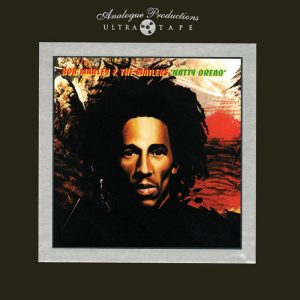
In the magazine: Bob Marley: Burnin’ and Natty Dread on UHQR
Also in another edition: Uprising
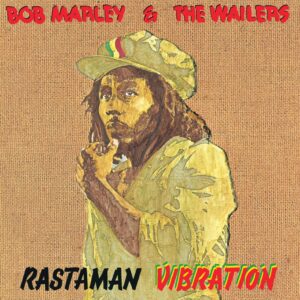
More by Bob Marley and The Wailers: Burnin’ · Catch A Fire
Artist page: All titles by Bob Marley & The Wailers
Customer question: Buying Analogue Productions records in Europe
Musicians
Documented selection of participating musicians. Personnel may vary by track; this list does not claim to be complete.
| Name | Instrument / role |
|---|---|
| Bob Marley | Acoustic guitar, Lead vocals, Guitar |
| Aston "Family Man" Barrett | Percussion, Guitar, Piano, Bass |
| Carlton Barrett | Percussion, Drums |
| Carlton "Santa" Davis | Drums |
| Tyrone Downie | Backing vocals, Keyboards |
| Junior Marvin | Backing vocals, Guitar |
| Al Anderson | Guitar |
🎧 Review video: Inside Abbey Road: Re-Mastering Bob Marley with Chad Kassem & Michael Ludwigs
This video is hosted by YouTube (Google). It only loads once you switch on “Functional” in the cookie settings.

Reviews
There are no reviews yet.