

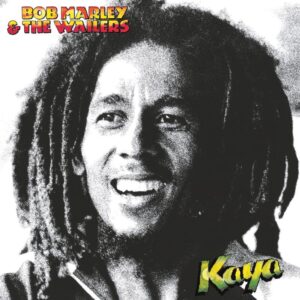
The Wailers find a new configuration
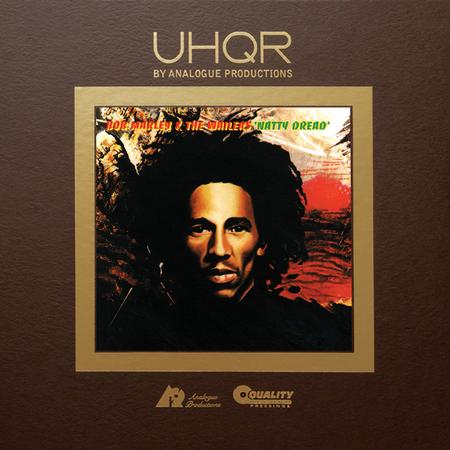
Natty Dread opened a different chapter in 1974. Peter Tosh and Bunny Wailer were no longer members of the group, and Bob Marley continued with a changed line-up. The shift was particularly significant in the vocals. Rita Marley, Marcia Griffiths and Judy Mowatt formed the I Threes, bringing their individual experience into a collective voice alongside his lead singing. They would become central to the following Wailers years. This nine-track album captures that transition as working music.
The Barrett brothers remained the rhythmic centre: Aston “Family Man” Barrett on bass and Carlton Barrett on drums. American guitarist Al Anderson and keyboard player Bernard “Touter” Harvey were among the musicians contributing to the new configuration. Continuity and change existed together. That makes Natty Dread more than a connecting point between better-known records: it documents a band discovering what its revised membership could do.

“No Woman, No Cry” before the concert recording
Listeners who know “No Woman, No Cry” primarily through the London concert album encounter its earlier studio recording here. The song was part of Natty Dread in 1974; the internationally familiar live performance followed the next year. The writing credit names Vincent Ford, who ran a soup kitchen in Trenchtown. That connection returns the song to a particular community before concert audiences and subsequent fame changed the way many people encountered it.
Other tracks also carry an earlier history. “Lively Up Yourself” had appeared as a single in 1971, while “Bend Down Low” already belonged to the Wailers' repertoire in the sixties. The album combines returning material with the possibilities of a revised ensemble. It is worth keeping both aspects in mind as the sequence unfolds: the personnel changes mark a new beginning, but older songs and experiences travel with the group. Renewal includes finding another way to bring those elements together.

Voices, guitars and the surrounding world
“Them Belly Full (But We Hungry)”, “Rebel Music” and “Revolution” place social tension alongside personal memory and religious conviction. Their subjects belong to the structure of the album, whose singing moves between an individual voice and collective responses. The I Threes are essential to those exchanges, as are the Barrett brothers to the instrumental foundation. Al Anderson's lead guitar adds another melodic presence within the arrangements.
The credits connect the recording to Kingston and London, naming Harry J, Island and Basing Street studios. Chris Blackwell and the Wailers produced the album. Jean Roussel's keyboard contributions on several tracks and Lee Jaffe's harmonica extend the ensemble further. Following the smaller answering phrases and accompanying lines offers a way to hear how this new band works. It also opens the record beyond its most celebrated song and beyond a generalised idea of what reggae should sound like.
This edition: the announced 45 RPM UHQR
AUHQR 0026-45 is announced as a two-LP, 45 RPM release on 200-gram Clarity Vinyl, pressed at Quality Record Pressings. As of 10 September 2026, the publisher lists it for preorder without a confirmed arrival date. The mastering credit names Frank Arkwright and Ryan K. Smith at Abbey Road, working from the original master tape. Earlier Sterling Sound information is therefore not the basis of this description.
The announced edition is limited to 4,500 copies. “Lively Up Yourself” and “No Woman, No Cry” share the first side, while the original second half occupies sides three and four. This description concerns the 45 RPM edition specifically. Reviews of the 33⅓ RPM UHQR do not establish the sound of this forthcoming version, and they do not provide a delivery date for it.
You order from Michael 45 in Germany. We arrange the US import and dispatch from Hilden. Editions not currently in stock are dispatched after the goods arrive.
Also on SACD: Natty Dread
In the magazine: Bob Marley: Burnin’ and Natty Dread on UHQR
Also on 33 RPM vinyl: Natty Dread
More by Bob Marley and The Wailers: Rastaman Vibration
Artist page: All titles by Bob Marley & The Wailers
Customer question: Collecting UHQR records: limited editions of great albums
Series: UHQR – all 31 editions with pressing run and mastering
Musicians
Documented selection of participating musicians. Personnel may vary by track; this list does not claim to be complete.
| Name | Instrument / role |
|---|---|
| Bob Marley | Lead vocals, Guitar |
| Aston „Family Man“ Barrett | Bass |
| Carlton Barrett | Drums, Percussion |
| Bernard „Touter“ Harvey | Piano, Organ |
| Al Anderson | Guitar |
| Rita Marley | Backing vocals |
| Marcia Griffiths | Backing vocals |
| Judy Mowatt | Backing vocals |
| Jean Roussel | Organ, Keyboards |
| Lee Jaffe | Harmonica |
Album credits for the 1974 studio recording. Backing vocals are by The I-Threes; this does not imply that every musician plays on every track.
🎧 Review video: Inside Abbey Road: Re-Mastering Bob Marley with Chad Kassem & Michael Ludwigs
This video is hosted by YouTube (Google). It only loads once you switch on “Functional” in the cookie settings.

Reviews
There are no reviews yet.