Two generations finding common ground
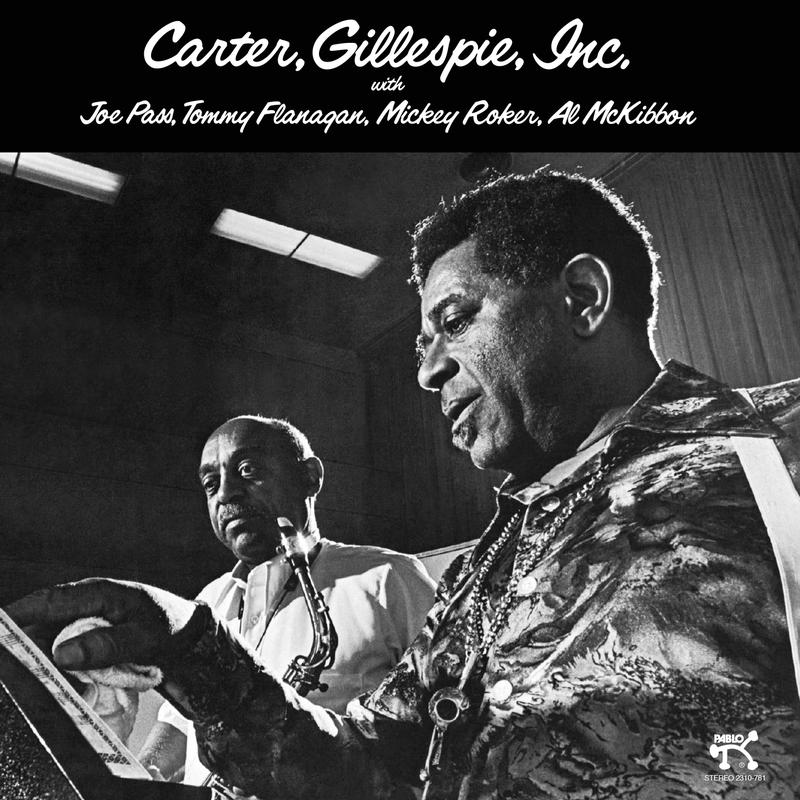
Benny Carter and Dizzy Gillespie do not have to conceal their differences to make music together. Carter’s alto saxophone and Gillespie’s trumpet bring individual ways of articulating a line, along with different historical experiences. One helped shape the swing era; the other became a defining figure in bebop. On Carter, Gillespie, Inc., they meet not as representatives of competing textbooks, but as musicians with shared repertoire and an appetite for exchange.
The session took place on a single day, 27 April 1976, at RCA Studios in Los Angeles. Norman Granz produced for Pablo. Tommy Flanagan on piano, Joe Pass on guitar, Al McKibbon on bass and Mickey Roker on drums complete the sextet. The musicians behind the two names on the cover are anything but an anonymous supporting cast.

“A Night in Tunisia” completes a circle
The album’s final piece carries an especially meaningful connection. Gillespie wrote “A Night in Tunisia” in 1942 while playing in Benny Carter’s band. More than three decades later, the two revisit the composition together. This is not simply another performance of a familiar jazz standard: it reconnects the musicians with a shared point in the song’s history.
McKibbon also belongs to that longer story. He had played bass in Gillespie’s big band in 1947 and 1948. Connections like these give the sextet depth without requiring the music to be heard as a nostalgic reunion. Experience can make communication easier while leaving room to rebalance a long-familiar piece in the present encounter.

More than the famous standards
“Sweet and Lovely” and “Broadway” open the album. Carter’s “The Courtship” and Gillespie’s “Constantinople” provide less frequently spotlighted material alongside “A Night in Tunisia”. Their presence is important: both featured musicians contribute compositions as well as instrumental voices. The record acknowledges their writing personalities, not only their approaches to improvisation.
The traditional “Nobody Knows the Trouble I’ve Seen” adds another perspective. Continuity across these varied sources comes from the performers rather than a uniform origin for the songs. Extended treatments allow the listener to absorb a melody and then follow the changing distribution of attention. A soloist can step forward while another player is already preparing a new colour in the accompaniment.
Four colleagues who do more than support
Flanagan and Pass make an especially inviting combination. Piano and guitar can perform similar harmonic functions, but their attacks, registers and decays differ. Listening for the moments when one leaves space or introduces an independent line brings the ensemble into sharper focus. McKibbon and Roker sustain the movement beneath them without forcing every individual voice into the same expressive mould.
Under Norman Granz, Pablo made room for encounters between experienced musicians even as other developments attracted the headlines. Carter, Gillespie, Inc. is neither a retrospective monument nor a collection of older recordings. It documents new studio work made in 1976. Its appeal lies in the active relationship between familiarity and response: recognisable musical personalities are present, but none is heard in isolation. They change the situation for one another, and that continuing exchange supplies the record’s pleasure.
Customer question: Buying Analogue Productions records in Europe
Series: Pablo – all 30 records, musicians and the session book
Musicians
Personnel checked against album sources.
- Dizzy GillespieTrumpet
- Benny CarterAlto saxophone
- Tommy FlanaganPiano
- Joe PassGuitar
- Al McKibbonBass
- Mickey RokerDrums



Reviews
There are no reviews yet.