
A second album with its feelings exposed
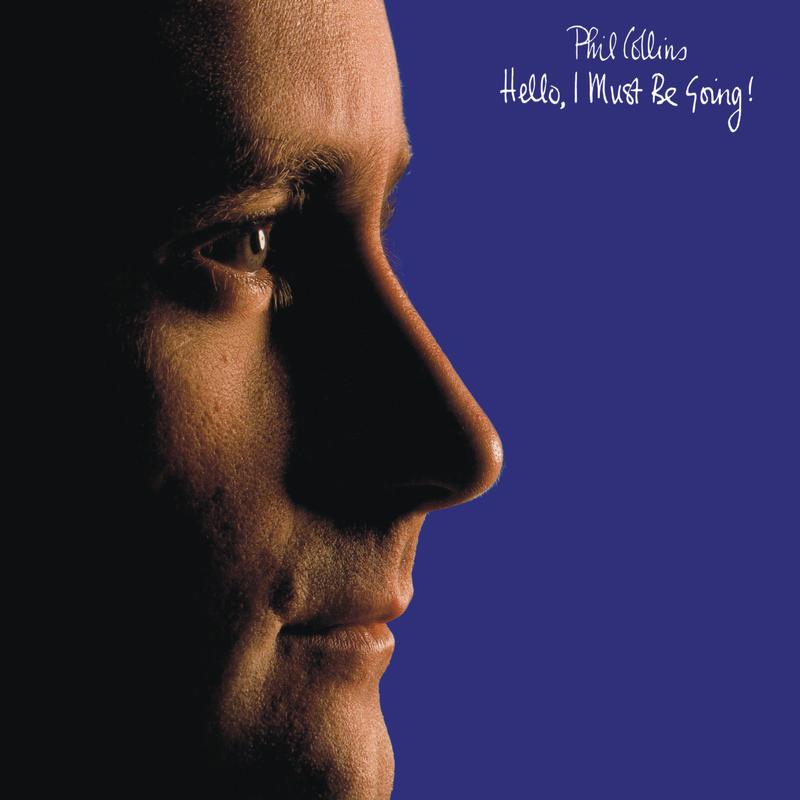
The friendly title is slightly deceptive. Hello, I Must Be Going! contains music that seeks closeness, retreats from it and sometimes insists on keeping its distance. Phil Collins released his second solo album in November 1982, following the success of Face Value. It continues that record’s personal perspective while widening the range between angular rhythms, an enthusiasm for soul and orchestral ballads. Anyone who associates it solely with You Can’t Hurry Love has found an important entrance, but has yet to explore much of the album beyond it.
Collins remained a member of Genesis throughout the development of his solo career. His own records nevertheless offered more than an extension of the group’s work. They allowed him to bring vocals, drumming and arrangements together from a different perspective. On Hello, I Must Be Going!, the singer is also a multi-instrumentalist and the producer responsible for the project. Hugh Padgham assisted with production and engineered the recordings. That proximity between a musical idea and the process of shaping it in the studio is central to the record’s character.
The title refers to a Marx Brothers song, placing a light touch above a programme that is far from consistently light-hearted. Its songs move between anger, uncertainty, longing and a desire for an uncomplicated moment. Their connection comes partly from those contrasts. The album does not explain every feeling from one fixed point of view, but allows different reactions to sit beside one another. That is a good reason to follow the complete sequence of ten selections rather than restricting attention to the successful singles.

From a home studio to horns and orchestra
Recording took place in May and June 1982. Old Croft in Surrey provided an important starting point, with Collins working on a one-inch eight-track system. Further recording was carried out at Fisher Lane Farm, the Genesis facility known as The Farm, and at London’s Town House. Strings were recorded at CBS Studios in London. The album thus connects a relatively personal working environment with the resources of larger studios. Howard Gray assisted Padgham, while Mike Ross, also credited as Mike Ross-Trevor, was involved with the string recordings.
Daryl Stuermer is one of its most consistent musical partners. He plays guitar on the first nine selections, contributing both precise rhythmic support and more prominent accents. John Giblin and Mo Foster divide the bass parts between specifically credited songs. Giblin appears on I Cannot Believe It’s True, Like China and You Can’t Hurry Love, among others; Foster plays on It Don’t Matter To Me and Thru These Walls. These changes are worth recognising because they give the individual arrangements different balances, rather than simply reproducing one backing line-up throughout.
The Phenix Horns add another distinctive colour. Don Myrick, Louis Satterfield, Michael Harris and Rahmlee Michael Davis perform on I Cannot Believe It’s True, It Don’t Matter To Me and The West Side, with horn arrangements by Tom-Tom 84. Elsewhere, the strings and woodwinds of the Mountain Fjord Orchestra serve a different purpose. Martyn Ford arranges and conducts, with Gavyn Wright credited as orchestra leader. Both ensembles are used selectively. Neither should be imagined as a continuous orchestral or brass backdrop beneath every song on the record.

Rhythmic force, Motown and a quiet ending
I Don’t Care Anymore opens with an attitude that runs directly against the politeness of the album title. Drums and voice establish its essential gestures, making the narrator’s determination a musical event in its own right. I Cannot Believe It’s True and Like China then demonstrate different ways in which Collins can connect vocal delivery with rhythmic movement. On a return visit, those changes make useful points of attention: how much space does the voice occupy, when does a guitar answer it, and where do the horns shift the emphasis of a phrase?
As the album’s only outside composition, You Can’t Hurry Love occupies a special position. Written by Holland–Dozier–Holland and made famous by the Supremes, it gives Collins an opportunity to make his affection for that repertoire explicit. J. Peter Robinson contributes piano, vibraphone and glockenspiel to this particular recording. Its apparently effortless movement therefore has a specific instrumental foundation. The song became a British number-one hit, but on the album it sits beside considerably more unsettled material. Its cheerful surface represents one element of the record’s variety rather than a description of the whole.
Thru These Walls enters a more uncomfortable setting, while The West Side brings instrumental exchange and the horns into particular focus. Finally, Why Can’t It Wait ’Til Morning changes the scale once again. Collins’ voice and acoustic piano meet the orchestra on this closing selection, without Stuermer or either of the credited bass guitarists. After the programme’s rhythmic and emotional tensions, that reduced setting gives the ending a character of its own. The shift matters as much to the experience of the complete album as the forceful statement with which it began.
The specific cut prepared for Atlantic 75
Analogue Productions’ AAPA 012-45 edition spreads the album across two 180-gram stereo LPs running at 45 RPM. Chris Bellman at Bernie Grundman Mastering handled the mastering and lacquer cutting. The publisher explicitly identifies the source as an EQ’d quarter-inch Dolby tape copy of the original master. For collectors, that is more informative than a general reference to master tapes. The cut was prepared from the specified analogue copy, rather than directly from the original master itself.
Part of the Atlantic 75 series, the edition is presented in a film-laminated tip-on gatefold made by Stoughton Printing. QRP is named as the pressing plant, with RTI variants also documented among unnumbered copies. The original ten-song programme is retained. The sequence preserves the journey from its determined opening to its quieter conclusion, retaining the contrasts between band, horns and orchestra along the way. This keeps the edition’s description precise while leaving room for the music’s own story: a versatile singer, drummer and arranger bringing personal unease, studio discipline and a deep affection for soul together on his second solo album.
You order from Michael 45 in Germany. We arrange the US import and dispatch from Hilden.
Artist page: All titles by Genesis and Phil Collins
Customer questions: Atlantic 75: which titles are worth buying? · Buying Analogue Productions records in Europe
Series: Atlantic 75 Series – all 75 albums, time journey and the people behind Atlantic
Musicians
Participants and documented credit status. Track references correspond to the tracklist.
- Phil CollinsVocals (all); drums (1–9); keyboards (1–4, 6, 7, 9); bass pedals (1, 4, 9); percussion (2, 6, 9); handclaps (3); timpani/trumpet (4); tambourine (5); marimba (7); piano (8, 10)Participation: 1–10
- Daryl StuermerguitarsParticipation: 1–9
- John GiblinbassParticipation: 2, 3, 5, 8
- Mo FosterbassParticipation: 6, 7
- J. Peter Robinsonpiano, vibraphone, glockenspielParticipation: 5 · You Can’t Hurry Love
- The Phenix Hornshorn sectionParticipation: 2, 6, 9
- Don Myrickalto and tenor saxophones; alto saxophone solosParticipation: Horn section: 2, 6, 9; solos: 2, 9
- Louis SatterfieldtromboneParticipation: 2, 6, 9
- Michael HarristrumpetParticipation: 2, 6, 9
- Rahmlee Michael DavistrumpetParticipation: 2, 6, 9
- Peter Newtonadditional vocals in the Phenix ChoirParticipation: 2
- The Phenix Choiradditional vocalsParticipation: 2
- The Mountain Fjord Orchestrastrings and woodwindsParticipation: 5, 8, 10
- Martyn Fordstring and woodwind arrangements, conductorParticipation: 5, 8, 10
- Gavyn Wrightorchestra leaderParticipation: 5, 8, 10
- Tom-Tom 84horn arrangementsParticipation: 2, 6, 9


Produced by Phil Collins, assisted by Hugh Padgham. Engineer: Hugh Padgham; assistant: Howard Gray. Strings recorded by Mike Ross-Trevor. Additional orchestral mixing assistance: Martyn Ford. Original mastering: Ian Cooper. Cover photograph: Trevor Key; inside photographs: Hugh Padgham, Jill Tavelman, Margaret Maxwell. Phenix Choir: Collins, Myrick, Satterfield, Harris, Davis and Peter Newton. This edition: Chris Bellman at Bernie Grundman Mastering; QRP/RTI; Stoughton.
How Michael hears this edition
Listening impression · paraphrased from the video
Michael hears more detail, better instrument separation and a more convincing soundstage from the Atlantic 75 edition than from his US first pressing. He finds the overall presentation more coherent. The US copy, however, has slightly more drum punch. He did not have a British first pressing available for this comparison.

Reviews
There are no reviews yet.