
Four experienced musicians and a fresh beginning
A debut can sound like a first encounter or like the outcome of considerable shared experience. Bad Company manages to suggest both. Paul Rodgers and Simon Kirke came from Free, Mick Ralphs from Mott the Hoople and Boz Burrell from King Crimson. By the time their first album together appeared in 1974, none needed to establish his basic musical credentials. The real question was what language these four personalities would discover as a group. Its eight songs provide a remarkably coherent answer: clearly shaped writing, room for the voice and a rhythm section whose effectiveness does not depend on constant activity.
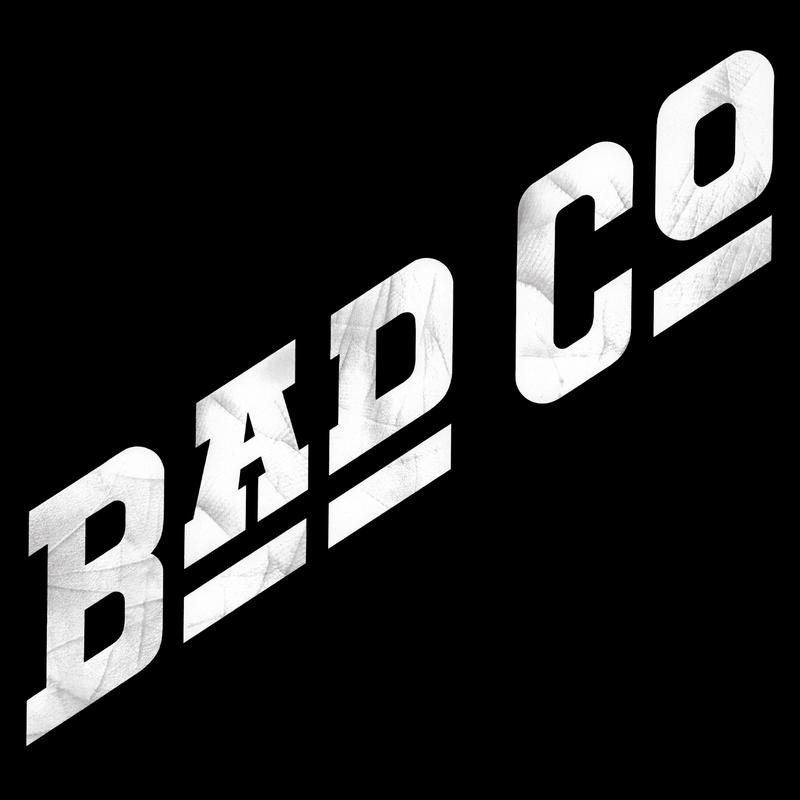
The album, the band and one of its best-known songs share a name. That threefold statement suits a debut which establishes its identity with a small number of strong gestures. Yet describing it simply as rugged guitar rock would miss part of its range. Piano, acoustic guitar, additional singers and saxophone expand the palette. What matters is how naturally those colours belong to their individual songs. They do not distract from the group, but make its expressive possibilities more apparent and give the programme variety without disturbing its focus.
Manager Peter Grant and the connection with Swan Song provided substantial organisational support. The debut appeared on Island in Britain and Swan Song in the United States, where it reached the top of the album chart. Its continuing significance, however, is better explained through the relationships within the music than through commercial success alone. Rodgers’ singing and Ralphs’ guitar can challenge one another without competing for the same space. Kirke and Burrell supply the foundation that allows those exchanges to remain direct and unforced.

Headley Grange and the art of leaving space
The recordings were made in November 1973 at Headley Grange in Hampshire, using Ronnie Lane’s Mobile Studio. Ron Nevison handled recording and mixing, with the band itself credited as producer. The sleeve names Olympic Studios in London and The Temple Goring as mixing locations, and Ron Fawcus as tape operator. The apparent simplicity of the finished record therefore rests on a specific collaboration between musicians, recording location and technical support. Its history is more concrete than a general image of four players turning up and making a classic.
Headley Grange offered the rooms of a house rather than an anonymous studio enclosure. Recollections of the sessions give those spaces an important place in the story. Rodgers’ account of singing the title track outdoors is part of his retrospective description of the period. Such memories convey atmosphere without constituting a complete session log. Within the music itself, the balance of presence and open space remains particularly interesting. The arrangements demonstrate how much a group can communicate through a limited number of deliberately placed instrumental and vocal parts.
The playing credits are also more varied than a simple quartet description suggests. Rodgers adds second guitar to Can’t Get Enough and piano to Don’t Let Me Down and Bad Company. Ralphs also plays keyboards on Ready For Love. Burrell and Kirke form the rhythm section on the first seven selections, while the acoustic closing song, Seagull, features Rodgers handling the instruments himself. That exception matters. Even on a strongly unified band album, the collective name does not mean that all four musicians appear on every track.

Familiar riffs and less obvious strengths
Can’t Get Enough makes a particularly concise opening statement. Mick Ralphs brought the song from his earlier musical circumstances, and it found an appropriate voice in the new group. Its relationship between guitar figure and vocal delivery explains much of Bad Company’s immediate accessibility. Rock Steady continues the momentum with a different balance. On a closer encounter, attention can move beyond the chorus to the small spaces between vocal phrases and the way bass and drums shape them. These details help the performances retain their character after the main hooks have become familiar.
Ready For Love had already appeared on Mott the Hoople’s All the Young Dudes in 1972. The new recording makes it part of Bad Company’s collective vocabulary. This is more than the transfer of an established song: a different singer and ensemble alter its perspective. Don’t Let Me Down subsequently broadens the vocal setting through Sue Glover and Sunny Leslie, the partnership known as Sue & Sunny. Their backing vocals are a specific contribution to the song and deserve to be acknowledged alongside the four principal band members.
The second half brings the imposing title track, The Way I Choose and the mobile Movin’ On, before Seagull reduces the electric intensity. Mel Collins is credited with saxophone on the album, with supplementary track documentation placing him on The Way I Choose. The acoustic ending then shows how much of the music’s identity survives without the full band. For collectors and attentive listeners, that sequence is part of the record’s lasting appeal. It confirms the group’s character by allowing changes of scale and mood, rather than relying on one arrangement repeated throughout.
Ryan K. Smith’s cut and its tape source
This reissue is AAPA 009-45, part of Analogue Productions’ Atlantic 75 series. Ryan K. Smith at Sterling Sound handled the mastering and lacquer cutting. The publisher’s detailed source description identifies a quarter-inch flat tape copy of the original master tape. That analogue copy is the specified cutting source. A general reference to original master tapes should not replace the more precise statement about the material actually used for this edition.
The eight-song programme is distributed across two 180-gram stereo LPs running at 45 RPM, with two selections on each side. The presentation includes a film-laminated tip-on gatefold manufactured by Stoughton Printing. QRP is the named pressing facility, although the edition documentation also records RTI variants among unnumbered copies. The new Sterling cut should be distinguished from historical mastering information reproduced on elements of the original sleeve. This gives the edition a clear identity without confusing the first release with the manufacture of the reissue. At its centre are still eight songs whose confidence grows from the players’ interaction: a commanding voice, memorable guitar writing and musicians who understand when another note will help and when the available space already says enough.
You order from Michael 45 in Germany. We arrange the US import and dispatch from Hilden.
Also on SACD: Bad Company
More by Bad Company: Burnin’ Sky · Desolation Angels
Customer questions: Atlantic 75: which titles are worth buying? · Buying Analogue Productions records in Europe
Series: Atlantic 75 Series – all 75 albums, time journey and the people behind Atlantic
Musicians
Participants and documented credit status. Track references correspond to the tracklist.
- Paul Rodgersvocals; second guitar (1); piano (4, 5); all instruments (8)Participation: 1–8
- Mick Ralphslead guitar (1–7); keyboards (3)Participation: 1–7
- Boz BurrellbassParticipation: 1–7
- Simon KirkedrumsParticipation: 1–7
- Sue Gloverbacking vocals (Sue & Sunny)Participation: 4 · Don’t Let Me Down
- Sunny Lesliebacking vocals (Sue & Sunny)Participation: 4 · Don’t Let Me Down
- Mel CollinssaxophoneParticipation: Album credit; assignment to track 6 from supplementary discography


Produced by Bad Company. Recording and mixing: Ron Nevison; tape operator: Ron Fawcus. Recorded in November 1973 at Headley Grange with Ronnie Lane’s Mobile Studio; mixed at Olympic Studios and The Temple Goring. Sleeve design/photography: Hipgnosis. Management: Peter Grant. This edition: Ryan K. Smith, Sterling Sound; QRP/RTI; Stoughton Printing.
How Michael hears this edition
Listening impression · paraphrased from the video
Michael praises the Atlantic 75 edition’s punch, drums, clear vocals, instrument separation and soundstage. His US first pressing also sounds excellent; he does not describe a decisive advantage for the reissue here. Among the three albums discussed in this video, Bad Company is his sonic favourite.

Reviews
There are no reviews yet.