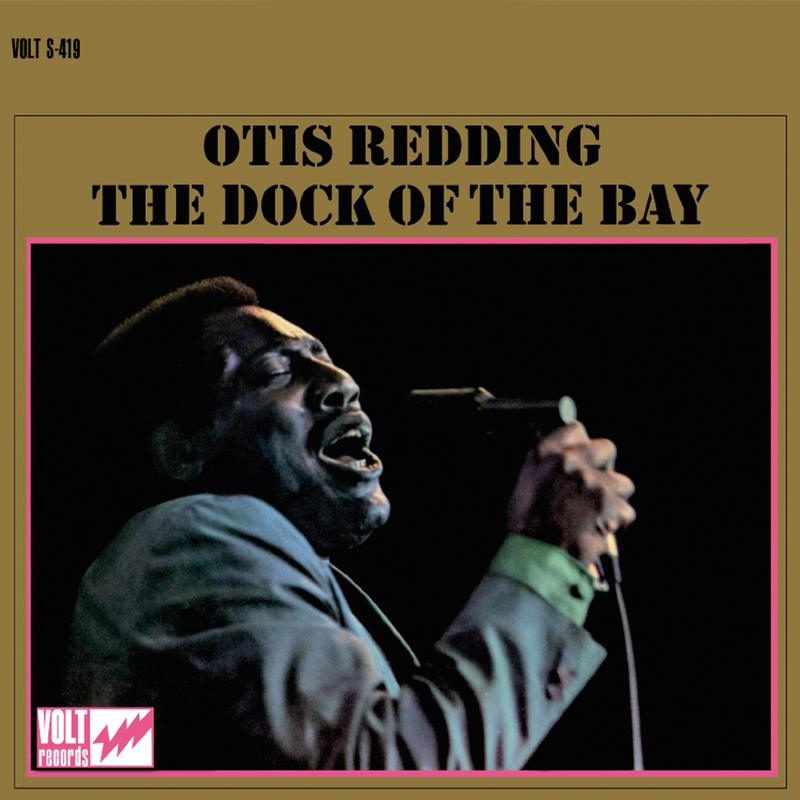






A wide horizon and a voice from Memphis
The Dock Of The Bay suggests a scene of stillness: water, passing ships and a man momentarily stepping outside the movement of his own life. Yet that stillness is not carefree. The title song allows longing and inertia to coexist, while Otis Redding’s voice gives even the simplest words a particular weight. The album released under that name in 1968 also opens a wider view of his work. Its eleven recordings come from several different contexts and reveal a singer whose expression extends from quiet hesitation to immediate, physical energy.
The release was overshadowed by loss. Redding died in a plane crash on 10 December 1967, and the LP followed on Volt in February 1968. Steve Cropper assembled its programme from earlier album tracks, singles, B-sides and previously unreleased material. It should therefore not be mistaken for the result of one final studio session. The recordings span 1965 to 1967. That breadth makes the collection a particularly moving introduction, preserving different aspects of an artist whose musical development was still very much in progress.
The larger setting is Memphis and the musical world of Stax and Volt. There, Redding had found players able to accompany, answer and propel his phrasing. Their songs did not require an overloaded backdrop to make an impression. A movement in the bass, a brief guitar figure or an answering phrase from the horns could be enough to change the meaning of a vocal line. Paying attention to those small relationships reveals a vivid form of ensemble playing behind the album’s internationally familiar title.

Otis Redding and Steve Cropper
The beginnings of the title song lead to the opposite coast of the United States. During the summer of 1967, Redding spent time around San Francisco, developing the first ideas for Dock Of The Bay while staying on a houseboat in Sausalito. He later worked on the song with Steve Cropper in Memphis; its recording belongs to November and December 1967. A personal observation beside the water became a piece capable of sustaining a remarkably open emotional atmosphere. Its images of distance and arrival never quite resolve the restlessness within them.
Cropper’s contribution reaches far beyond that of the guitarist standing beside the singer. As the title song’s co-writer, producer and the architect of the subsequent album, he is one of the central figures in this story. After Redding’s death, he completed the mix and added the sounds of waves and seagulls. The single appeared in January 1968 and became an American number-one hit. Its success could not diminish the loss, but it demonstrated how widely Redding’s music could connect with people and how much life those recordings would continue to have.
The documented album personnel include Booker T. Jones and Isaac Hayes on keyboards, Donald “Duck” Dunn on bass and Al Jackson Jr. on drums. Wayne Jackson and Joe Arnold also appear among the credited horn players. These names describe contributions across the assembled programme, rather than an identical line-up on every one of its eleven tracks. That distinction is part of the release’s character. Different moments from a shared musical community are brought together, with Cropper shaping a coherent sequence without flattening their individual qualities.

Eleven songs and many shades of expression
Following the title track, I Love You More Than Words Can Say introduces another kind of intimacy. The opening sequence immediately establishes that the album will not remain within a single mood. Let Me Come On Home and Open The Door turn more directly towards another person. The voice can plead, press and insist, drawing its power from the relationship between the melodic line, rhythmic emphasis and the accompaniment’s replies. Redding treats a song as a particular act of communication, rather than simply a melody to which words have been attached.
Don’t Mess With Cupid and The Glory Of Love change the attitude and musical background again. The programme moves between original and outside material without reducing Redding’s personality to one narrow stylistic definition. Tramp, his duet with Carla Thomas from their joint album King & Queen, introduces an especially animated exchange. Thomas is not an anonymous supporting voice here. Her response is integral to the construction of the performance, giving Redding a partner against whom his delivery can spark. Their verbal sparring offers a very different form of closeness from the spacious calm of the opening song.
The final side of this edition contains The Huckle-Buck, Nobody Knows You (When You’re Down And Out) and Ole Man Trouble. The latter two recordings reach back to The Soul Album and Otis Blue, respectively, making the programme’s historical span tangible once more. Beyond the familiar highlights, the closing sequence deserves attention for the way it brings together rhythmic mobility, blues experience and direct personal address. The album leaves behind something more varied than a static memorial: a collection of distinct gestures made by an unmistakable voice.
Bernie Grundman’s cut for the Atlantic 75 double LP
The vinyl edition offered here is AAPA 005-45 from Analogue Productions’ Atlantic 75 series. It presents the eleven-track original programme on two 180-gram stereo LPs, cut and played at 45 RPM. Bernie Grundman handled the mastering and lacquer cutting. Analogue Productions identifies the original analogue master tape as the source and describes the edition as mastered entirely in the analogue domain. Those specifications concern this particular vinyl production and should be distinguished from the separately issued SACD edition of the album.
The records are pressed at Quality Record Pressings. Stoughton Printing supplies the double-pocket tip-on gatefold with film lamination. The four-side arrangement preserves the original running order while distributing it across shorter sides: two selections on side A and three each on sides B, C and D. For collectors, the format and mastering credit define precisely which edition is being considered. Musically, its continuing attraction lies in the closeness it offers to Redding’s different expressive possibilities: the reflective openness of the title song, the urgency of the love songs and the lively exchange with the musicians and voices around him.
You order from Michael 45 in Germany. We arrange the US import and dispatch from Hilden.
Also on SACD: The Dock Of The Bay
More by Otis Redding: Otis Blue- Otis Redding Sings Soul
Customer questions: Atlantic 75: which titles are worth buying? · Buying Analogue Productions records in Europe
Series: Atlantic 75 Series – all 75 albums, time journey and the people behind Atlantic
Musicians
Participants and documented credit status. Track references correspond to the tracklist.
- Otis ReddingvocalsParticipation: 1–11
- Steve Cropperguitar; productionParticipation: Album credit; not a blanket assignment to every track
- Booker T. JoneskeyboardsParticipation: Album credit; not a blanket assignment to every track
- Isaac HayeskeyboardsParticipation: Album credit; not a blanket assignment to every track
- Donald “Duck” DunnbassParticipation: Album credit; not a blanket assignment to every track
- Al Jackson Jr.drumsParticipation: Album credit; not a blanket assignment to every track
- Wayne JacksontrumpetParticipation: Album credit; not a blanket assignment to every track
- Joe Arnoldtenor saxophoneParticipation: Album credit; not a blanket assignment to every track
- Carla Thomasduet vocalsParticipation: 8 · Tramp


Produced by Steve Cropper. Cover photograph: Jim Marshall; back-cover photograph: Jerry Cunningham; design: Loring Eutemey; original notes: Jon Landau. Original recording engineer not conclusively established. This vinyl edition: Bernie Grundman, mastering and lacquer cutting; QRP; Stoughton Printing. Additional series notes: Chad Kassem, Craig Kallman and Julie Greenwald. Further horn assignments found only in fan discographies remain unconfirmed.

Pedro Gonzalez –
Glorius sound, beautiful music. What a pressing. Go for it, it’s surreal.