
A late chapter with the doors open
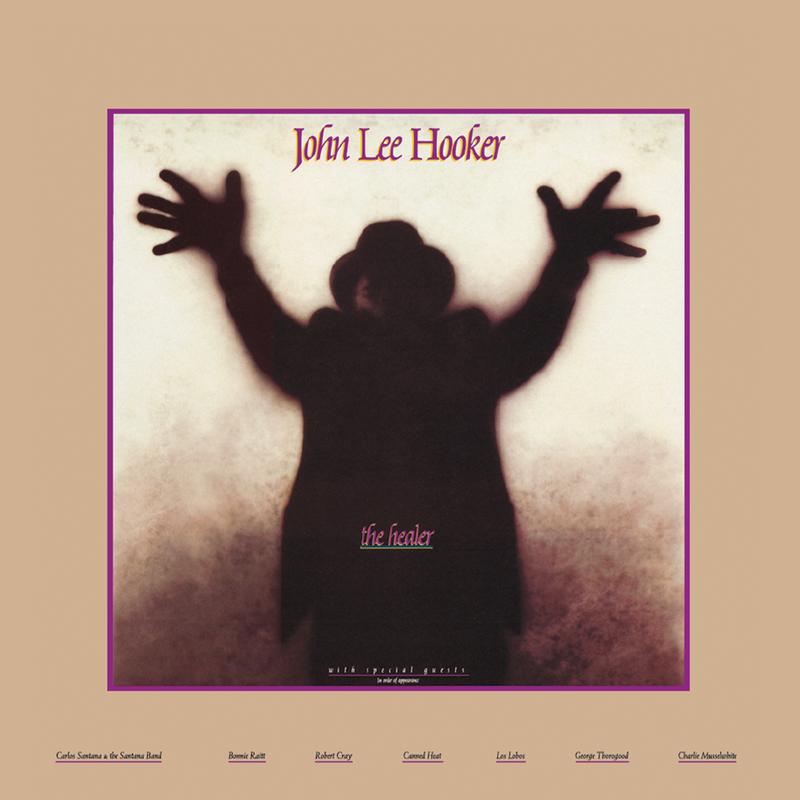
A famous guest can bring attention to an album. The Healer goes further: its guests tell us something about the artist they have come to join. Released by Chameleon in 1989, John Lee Hooker’s album brings together Carlos Santana, Bonnie Raitt, Robert Cray, Canned Heat, Los Lobos, George Thorogood and Charlie Musselwhite. The list is impressive, but its purpose is not a competition for the most conspicuous contribution. It shows how far Hooker’s influence had travelled. Different generations and musical communities find a common point of reference in a blues musician whose language never fitted entirely inside somebody else’s framework.
Roy Rogers produced the album. Hooker’s manager and executive producer Mike Kappus played an important role in developing the guest concept. The result became a decisive success in Hooker’s later career: the record reached number 62 on the American album chart, and I’m in the Mood, his duet with Bonnie Raitt, earned him his first Grammy. Further prominent projects followed, including Mr. Lucky, Chill Out and Don’t Look Back. The Healer stands at the beginning of this especially visible chapter. It introduced a musician with a long history of influence to an even wider audience.
What the album retains is equally important: Hooker’s own presence. Between the larger encounters are pieces with much smaller settings, including two solo performances. The record does not rely exclusively on its guest list to establish its significance. It can open its doors widely and then close them again until only voice and guitar remain. That movement gives the programme interest for listeners who want more from an all-star project than the pleasure of recognising names. The visitors broaden the perspective, while the centre remains constant. Hooker is the reason the different encounters belong on the same record.

Santana and Raitt: two distinct partnerships
The title track opens the album with a clearly defined line-up. Alongside Hooker are Carlos Santana on guitar, Chester Thompson on keyboards, Armando Peraza on congas, José “Chepito” Areas on timbales and Leon “Ndugu” Chancler on drums. Santana and Jim Gaines also coproduced this track, and Gaines is credited for its recording. The instrumentation alone explains why these players should not be listed indiscriminately as the backing band for the entire album. Congas, timbales and drum kit belong to one specific encounter, with rhythmic possibilities different from those of the pieces that follow.
Santana also shares the title composition’s writing credit with Hooker, Thompson and Rogers. His contribution is consequently more than a guitar solo added to an existing performance. The piece itself bears several creative signatures. One useful listening approach is to distinguish the jobs of the guitars from those of the percussion, while following how they relate to Hooker’s voice. The meeting between blues and Santana’s musical world is made through specific participants rather than a vague stylistic label. Their names and instruments make the connection tangible and give the opening track a clear place within the wider programme.
I’m in the Mood then moves into another configuration. Bonnie Raitt sings with Hooker and plays slide guitar; Roy Rogers contributes guitar and Scott Mathews drums. Credited to Hooker and Bernard Besman, the song comes from Hooker’s earlier repertoire. This new partnership also connects different periods of his career. The Grammy for Best Traditional Blues Recording recognised this performance. Raitt’s involvement has two documented dimensions, voice and slide guitar. She is a musical partner rather than merely a celebrated singer appearing beside the principal artist, and both aspects of her contribution deserve to remain visible in the album’s story.

Each track has its own company
Robert Cray plays guitar on Baby Lee, with Richard Cousins on bass and Scott Mathews on drums. Cuttin’ Out brings in Canned Heat musicians Henry Vestine, Larry Taylor and Fito de la Parra, joined by Charlie Musselwhite on harmonica and Roy Rogers on slide guitar. These distinctions are more than an extended footnote. They show the album bringing several musical communities together without turning them into one permanent studio band. Considering each musician alongside the relevant song makes the changes across the programme easier to follow and preserves the individuality of the encounters.
Los Lobos join Think Twice Before You Go: David Hidalgo plays guitar and accordion, Cesar Rosas guitar, Conrad Lozano bass, Louie Pérez drums and Steve Berlin saxophone. George Thorogood is the guest guitarist on Sally Mae. That’s Alright brings together Musselwhite, Rogers, bassist Steve Ehrmann and Mathews. On My Dream, Taylor and de la Parra return alongside Hooker. The record consequently contains recurring relationships as well as changes of company. It is neither a succession of wholly unrelated appearances nor an album played by a single unchanging ensemble. That balance helps give the ten pieces their shape.
The two solo tracks deserve particular attention. The publisher identifies Hooker’s National resonator guitar on Rockin’ Chair, and a twelve-string acoustic guitar on No Substitute. These are different instruments with different constructions, not interchangeable decorative blues props. On these performances, the larger guest setting falls away. Comparing them with the ensemble tracks becomes an invitation to follow Hooker’s independence through changing surroundings. The album tells us about his connections with other artists, but also about how much of his music can stand without additional players. The solo pieces are integral to that perspective, rather than incidental pauses between famous visitors.
The 45 RPM edition: four substantial sides
This Analogue Productions edition carries catalogue number AAPB 148-45. It spreads the stereo album across two 180-gram LPs playing at 45 RPM. Bernie Grundman cut the lacquers, with plating and pressing handled by Quality Record Pressings. This specific configuration differs from the older Classic Records edition comprising four single-sided 45 RPM discs. Both belong to the reissue history, but they are not the same product. The edition presented here is the AP double LP with four playable sides, rather than the earlier four-record set. That distinction matters when comparing editions or filling a gap in a collection.
The side divisions give the encounters manageable chapters. Side A contains The Healer and I’m in the Mood. Side B follows with Baby Lee, Cuttin’ Out and Think Twice Before You Go. Sally Mae, That’s Alright and Rockin’ Chair form side C, before My Dream and No Substitute conclude side D. At the same radius, the higher rotational speed increases the speed of the groove beneath the stylus, although that alone does not guarantee a particular sonic result. The practical trade-off is more frequent turning. Here it divides a programme already built around individual meetings into clearly defined sections.
Sam Lehmer receives much of the recording and mixing credit, while Jim Gaines is separately identified for the title track. These separate production responsibilities suit an album whose encounters are individually shaped. Roy Rogers holds the overall framework together, while Hooker’s personality remains the point of reference across changing settings. Released in 1989, the programme shows how personal relationships and different musical experiences can find a place within one shared project. For a blues collection, The Healer is an appealing connection between generations that also preserves the significance of its quieter, unaccompanied moments. You order from Michael 45 in Germany. We arrange the US import and dispatch from Hilden.
More by John Lee Hooker: It Serve You Right To Suffer · Burning Hell
Customer question: Buying Analogue Productions records in Europe
Musicians
Participants and documented credit status. Track references correspond to the tracklist.
- John Lee HookerPortrait earlier referencevocals, guitar, resonator guitar (C3), 12-string guitar (D2)Participation: All tracks
- Carlos SantanaPortrait 1974guitarParticipation: A1
- Chester Thompsonkeyboards, synthesizerParticipation: A1
- Armando PerazacongaParticipation: A1
- José „Chepito” AreastimbalesParticipation: A1
- Leon „Ndugu” ChanclerdrumsParticipation: A1
- Bonnie RaittPortrait 1989vocals, slide guitarParticipation: A2
- Roy Rogersguitar, slide guitar, productionParticipation: Guitar A2/C2; slide B2; production throughout
- Scott MathewsdrumsParticipation: A2, B1, C2
- Robert CrayPortrait 2007guitarParticipation: B1
- Richard CousinsbassParticipation: B1
- Henry VestineguitarParticipation: B2
- Larry TaylorbassParticipation: B2, D1
- Fito de la ParradrumsParticipation: B2, D1
- Charlie MusselwhitePortrait 1971harmonicaParticipation: B2, C2
- David Hidalgoguitar, accordionParticipation: B3
- Cesar RosasguitarParticipation: B3
- Conrad LozanobassParticipation: B3
- Louie PérezdrumsParticipation: B3
- Steve BerlinsaxophoneParticipation: B3
- George ThorogoodPortrait 2008guitarParticipation: C1
- Steve EhrmannbassParticipation: C2


Released 1989. Roy Rogers: producer; Mike Kappus: executive producer. A1: coproduced by Carlos Santana/Jim Gaines, engineered by Jim Gaines. Most other recording/mixing credits name Sam Lehmer; conflicting Think Twice engineering credits remain unresolved. C3: Hooker solo with National resonator; D2: Hooker solo with twelve-string acoustic guitar. Guests appear only on the listed tracks; recording locations/days unconfirmed.

Reviews
There are no reviews yet.