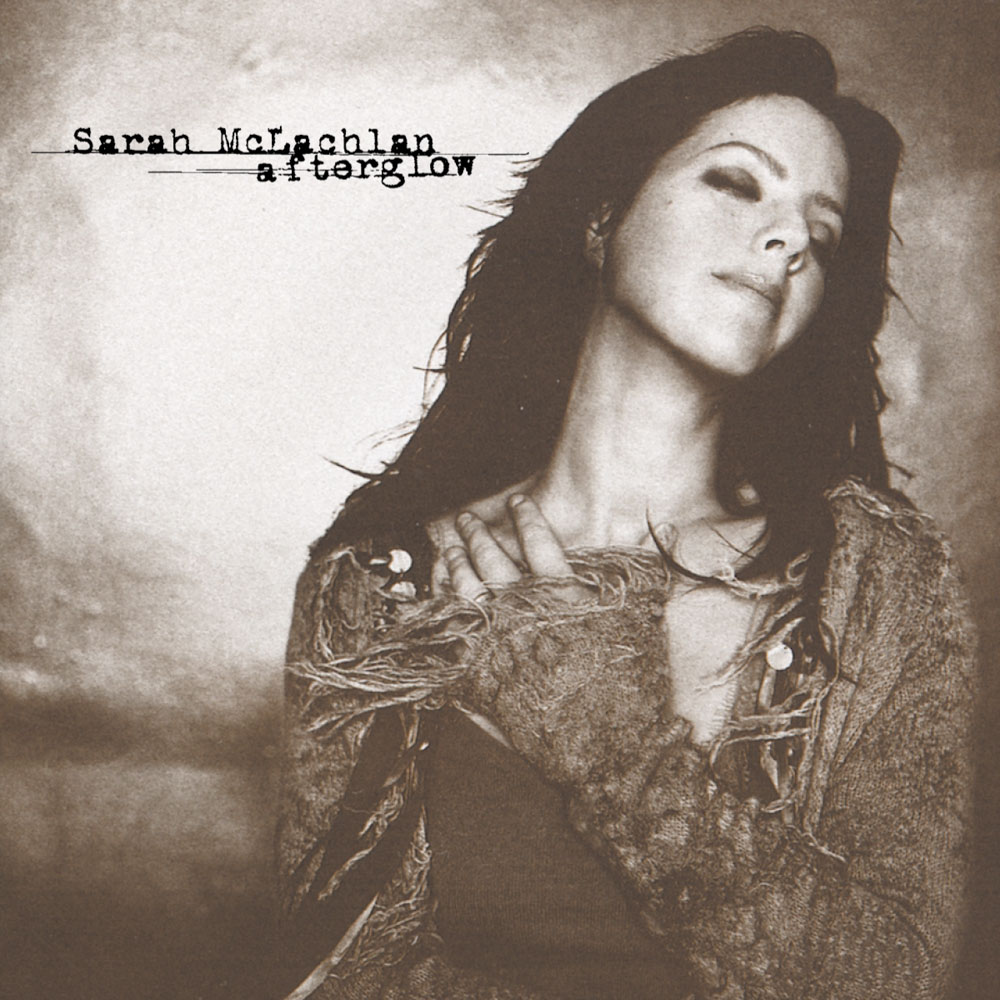
Afterglow: ten songs after six years
Six years separated Surfacing in 1997 from Afterglow. When Sarah McLachlan’s new studio album appeared on November 4, 2003, it did more than introduce ten additional tracks. It placed an already familiar voice within a new album setting. Fallen, World On Fire, Answer and Dirty Little Secret belong to a programme whose titles can suggest uncertainty, intimacy and the relationship between personal experience and a wider world. The record does not require a rigid biographical reading. Its songs can be entered as individual spaces without assigning every line to one particular episode in somebody’s life.
Recording took place between August 2002 and 2003. Pierre Marchand produced, engineered and mixed the album while also participating as a musician. That combination matters: the person responsible for the production’s overall relationships contributes directly at the instruments too. McLachlan herself is credited not only as a singer. Electric guitar, piano, Rhodes piano and keyboards also belong to her documented roles. The album’s centre is therefore an artist whose vocal and instrumental work both contribute to the production, even though the available credits do not securely assign each participation to an individual track in the programme.
The word Afterglow describes a lingering light. As an album title, it leaves room for several associations rather than prescribing one interpretation. A compelling question is how a programme following a lengthy interval can connect with something familiar while standing as a new sequence. Listeners who already know McLachlan bring memories of earlier recordings; newcomers do not need that history as an entry requirement. The ten songs form their own arc. Their order, the many participating instrumental voices and Marchand’s multiple responsibilities provide concrete starting points for spending more time with the record and its musical construction.

From Fallen to Dirty Little Secret: four sides of an album
This 45-rpm edition begins on side A with Fallen and World On Fire. The first side change comes after just two songs. Side B contains Stupid, Drifting and Train Wreck. The album does not acquire a different running order, but its physical divisions differ from uninterrupted digital playback. Two or three songs form each section. Listeners who deliberately sit down with a record may use these shorter units to let what they have heard settle. The additional interruptions are also a practical part of living with a double LP played at 45 revolutions per minute.
Side C presents Push, Answer and Time. Side D closes with Perfect Girl and Dirty Little Secret. This arrangement preserves all ten tracks. Titles such as Answer and Time place open-ended ideas together, while Perfect Girl and Dirty Little Secret suggest different emphases near the end. They invite attentive listening but cannot, on their own, provide a complete account of the songs’ contents. What matters is the relationship between words, melody and accompaniment within the actual recordings. The tracklist helps keep that progression in view even as listening is divided by the changes of side.
One useful approach is to follow each song as a whole on a first hearing and only later separate particular layers. When does the voice draw your attention, and when does an instrument or a change in accompaniment become more prominent? How does a transition between songs feel when a short pause falls between them? These questions can be answered on your own system. With so many different instrumental colours available, a second encounter can open another route through the programme while retaining the songs as its centre. The documented sequence provides a framework within which each listener can discover their own points of interest.

A singer and fifteen further musical participants
The complete album personnel comprise sixteen people. Alongside Sarah McLachlan and Pierre Marchand, Ashwin Sood is credited with drums, percussion, loops and keyboard bass. Guitar contributors include Sean Ashby, Michel Pepin, Michael Chaves, Bill Dillon, Yves Desrosiers, Ethan Johns and Mark Jowett; Dillon also appears with guitorgan and church organ. These names describe a circle of participants across the album, not a band that necessarily plays together in its entirety on every song. The personnel section gathers the album credits and keeps each musician’s different instrumental roles together, making the scale of the collaboration easier to follow.
Jim Creeggan is credited with double bass, Daryl Johnson and Tony Levin with electric bass. David Kershaw plays Hammond organ, Jerry Marotta percussion, and Jorane contributes cello, backing vocals and vocal processing. Marchand’s instrumental roles encompass guitar, electric bass, piano, keyboards and synthesizer bass. This variety shows the production had several kinds of attack, sustained tone and rhythmic construction available to it. An album-level list cannot establish which of these is present at every particular moment. Keeping a documented instrument separate from an unconfirmed track assignment makes the personnel overview more reliable rather than less informative.
Technical credits are listed separately. They include Marchand’s production, recording and mixing, along with further engineering contributions. Bob Ludwig mastered the original album; Bernie Grundman handled this vinyl edition. Those credits are not contradictory, since they describe different production stages. The name Chris Potter in the engineering credits must not be turned into an imagined saxophone contribution: it refers to the engineer. McLachlan’s small portrait is based on a verified image from the 2005 Afterglow tour, with that date made clear. It does not pretend to reconstruct a studio scene from the album’s recording period in 2002 or 2003.
Analogue Productions: the 180-gram double LP at 45 rpm
This Analogue Productions edition contains two 180-gram records playing at 45 rpm, housed in a gatefold jacket. The shop SKU is AAPP 054-45, and the edition number APP 054-45. Bernie Grundman mastered the vinyl version, with plating and pressing by Quality Record Pressings. The pressing distinction matters: an earlier issue was offered on 200-gram vinyl, whereas the version documented here is 180 grams. A shared catalogue number does not make every manufacturing detail identical across different pressings. This reissue is dated 2022, which must remain separate from the dates of the original album and its recording.
At 45 rpm, the programme is spread across four shorter sides. That can give the cutting engineer different practical options, but it is not automatic proof that every 45-rpm edition surpasses every alternative version. In everyday use, the format means more side changes and selecting the correct speed on the turntable. Each side here contains two or three songs. An entirely analogue recording or mastering chain is not inferred merely from the label’s name. The specifically documented information about Grundman, QRP and the format is sufficient to identify this edition without filling gaps with assumptions about its production.
If you want to buy Sarah McLachlan’s Afterglow on vinyl, this is the 180-gram, 45-rpm double LP, with its complete running order and a detailed account of the participating musicians. It invites listeners to give the album time and explore its production beyond the most familiar songs. You order from Michael 45 in Germany. We arrange the US import and dispatch from Hilden. Current availability and delivery information are shown beside the purchase controls. Describing the edition and its history is not a stock promise; a documented manufacturer listing does not establish that a copy is available in the shop.
Customer question: Buying Analogue Productions records in Europe
Musicians
Participants and documented credit status. Track references correspond to the tracklist.
- Sarah McLachlanAfterglow tour 2005vocals, electric guitar, piano, Rhodes piano, keyboardsParticipation: Album credits · track allocation unconfirmed
- Pierre Marchandguitar, electric bass, piano, keyboards, synthesizer bassParticipation: Album credits · track allocation unconfirmed
- Ashwin Sooddrums, percussion, loops, keyboard bassParticipation: Album credits · track allocation unconfirmed
- Sean AshbyguitarParticipation: Album credits · track allocation unconfirmed
- Michel PepinguitarParticipation: Album credits · track allocation unconfirmed
- Michael ChavesguitarParticipation: Album credits · track allocation unconfirmed
- Bill Dillonguitar, guitorgan, church organParticipation: Album credits · track allocation unconfirmed
- Yves DesrosiersguitarParticipation: Album credits · track allocation unconfirmed
- Ethan JohnsguitarParticipation: Album credits · track allocation unconfirmed
- Mark JowettguitarParticipation: Album credits · track allocation unconfirmed
- Jim Creeggandouble bassParticipation: Album credits · track allocation unconfirmed
- Daryl Johnsonelectric bassParticipation: Album credits · track allocation unconfirmed
- Tony Levinelectric bassParticipation: Album credits · track allocation unconfirmed
- David KershawHammond organParticipation: Album credits · track allocation unconfirmed
- Joranecello, backing vocals, vocal processingParticipation: Album credits · track allocation unconfirmed
- Jerry MarottapercussionParticipation: Album credits · track allocation unconfirmed

Production, mixing and engineering: Pierre Marchand. Additional engineering: Pete Caigan, Yanick Daunais, Brian Hogue, Roman Klun, John Oliviera, Chris Potter and Linda Strawberry. Chris Potter is the engineer, not the saxophonist. Original album mastering: Bob Ludwig; this vinyl edition: Bernie Grundman. Photography: Kharen Hill; design: John Rummen. Instrumental credits are album-level; individual track allocations are unconfirmed.

Reviews
There are no reviews yet.