A symphony with an exceptional sense of scale
An organ changes the idea of what an orchestra can do. It adds more than another instrumental line: it can open a space beneath and behind the ensemble. In Symphony No. 3 in C minor, Op. 78, Camille Saint-Saëns makes that possibility part of a patient musical design. Charles Munch and the Boston Symphony Orchestra have a task extending far beyond the famous final pages. Restlessness, repose and release must feel like stages of one developing argument.
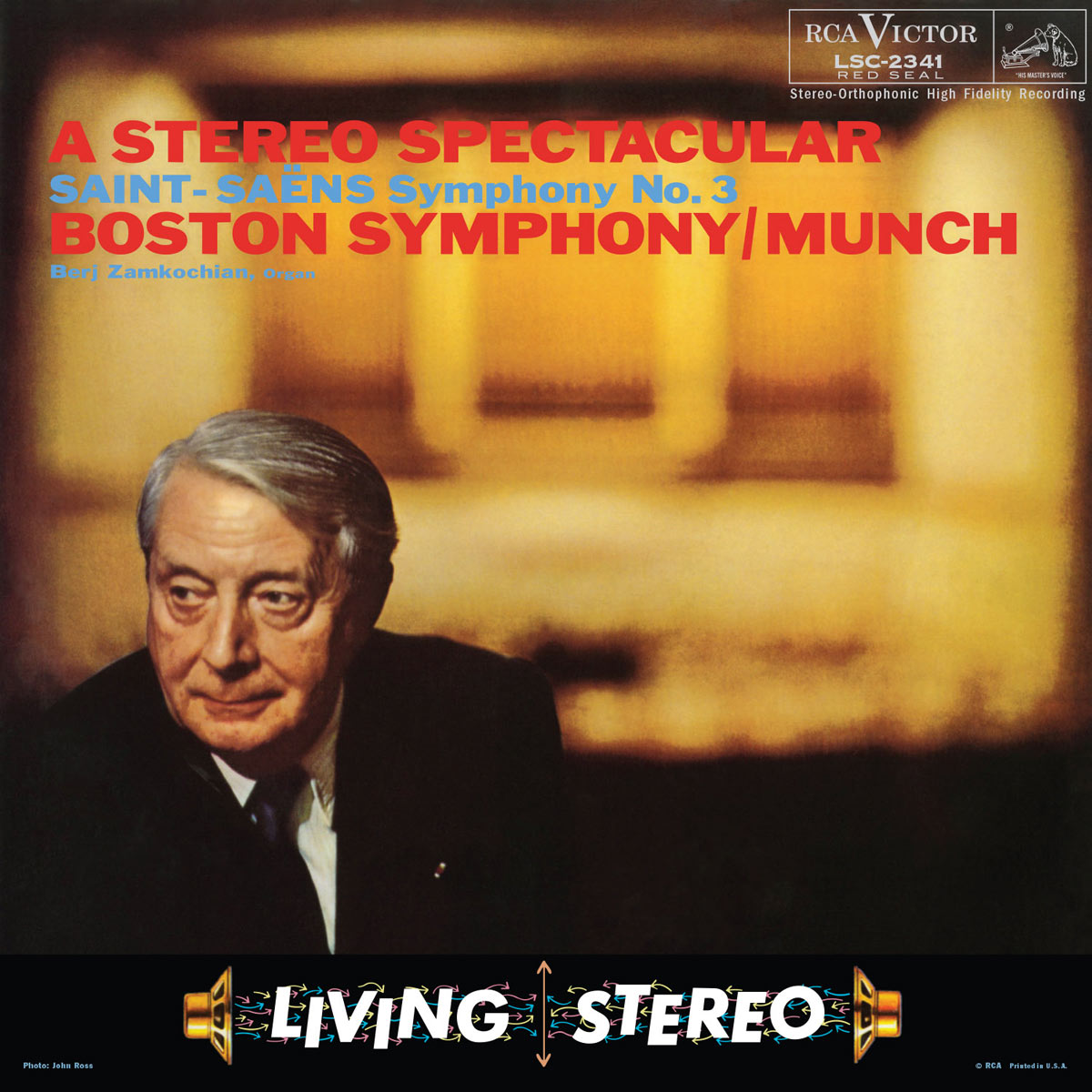
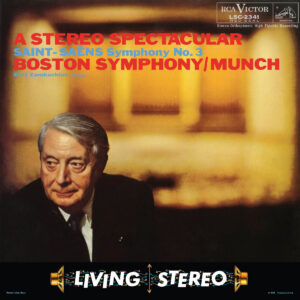
The recording appeared on RCA Victor Red Seal in 1959 as LSC-2341. Its A Stereo Spectacular title belongs to an era when stereo was changing the spatial expectations associated with records. Yet this score offers much more than an opportunity to demonstrate two loudspeakers. Its combination of strings, winds, organ and piano raises questions of perspective throughout: which line leads, which supports, and when does a new colour change the character of the whole? The instrumentation gives those questions unusual substance.
The familiar nickname Organ Symphony can be misleading if it suggests a concerto with orchestral accompaniment. The organ belongs within a symphonic structure, and that structure continues to gather energy while the instrument is silent. Its entrances matter partly because they are not continuous. Listeners drawn by the monumental moments therefore have just as much reason to attend to the quieter transitions and the long preparation behind a return.
Munch, Boston and RCA Living Stereo form a distinctive historical combination on this record. The music calls for abundance of sound and a clear sense of direction at the same time. That makes an attractive proposition for a record collection: a major French orchestral work, an American orchestral tradition and a recording whose musical construction gives purpose to its technical appeal. The spectacular element has an argument behind it.

Organ, orchestra and two pianists
Charles Munch conducts, with Berj Zamkochian at the organ. Two further musicians deserve explicit recognition: Bernard Zighera and Leo Litwin play the piano parts. Four-hand piano writing is one of the score’s particular colours. The piano’s sharply defined attack offers a very different kind of brightness from a sustained organ tone. Within one orchestral work, Saint-Saëns places contrasting forms of keyboard sound alongside one another and gives each a distinct function.
That personnel helps explain why listening need not revolve around the lowest notes alone. Strings can maintain movement while winds suggest another direction. Piano figures add brief points of light; the organ can alter the harmonic foundation without constantly standing in front as a soloist. Scale here means more than volume. It also concerns how several layers remain intelligible, and how naturally a new instrumental colour grows from what has already happened.
The Boston Symphony Orchestra supplies the essential continuity between these additional instruments. Naming the organist and pianists does not turn the performance into a succession of unrelated solos. Instead, it shows how deliberately the symphony expands its resources. Munch’s responsibilities include pulse and long lines alike. A transition can become as significant as the climax following it, because it determines whether that arrival feels sudden or inevitable.
The recording was made in Boston Symphony Hall, with Richard Mohr producing and Lewis Layton engineering. These credits place the album within RCA’s recording work of the period. They also point to the two perspectives involved in a large orchestral recording: the musical balance created in the hall, and the decisions through which that balance reaches the record. With this particular combination of instruments, the relationship between those perspectives is especially compelling.

The journey towards the final pages
Saint-Saëns shapes the symphony into two large parts containing markedly different kinds of movement. A slow opening, more active passages, lyrical repose, scherzo-like energy and the imposing finale all belong to a connected plan. Familiar expectations of symphonic form remain useful, but every change need not be treated as a separate, self-contained piece. Transformations and recognitions help bind the larger design together, giving the listener a memory of earlier events as the work proceeds.
One rewarding approach is to follow the relationship between short impulses and extended lines. Where the music presses forward, a sustained sound can suddenly suggest a broader span of time. Once repose has been established, a new rhythmic figure can change the outlook again. The organ intensifies such contrasts through its ability to sustain a note without the natural decay of a piano attack. Those two keyboard instruments are not interchangeable; their different behaviour contributes to the musical argument.
The celebrated finale also gains from remaining attached to everything preceding it. Its weight depends on accumulated tension and on themes already held in the listener’s memory. Brilliance becomes a destination. A passage can make an immediate impression on first acquaintance and later fascinate as the result of carefully prepared relationships. That capacity is what allows a large orchestral work to remain interesting long after its most demonstrative moments have become familiar.
At home, the LP provides a focused setting for that process. Following the complete development across both sides offers a different experience from selecting a spectacular excerpt. Attention can move from the orchestral pulse to the organ, then to a wind entrance or the more fleeting piano colours. The recording is particularly attractive when music on this scale is expected to reveal further connections on repeated listening as well as make an immediate impact.
The Analogue Productions 33⅓ RPM edition
This is AAPC 2341, the single stereo LP from Analogue Productions running at 33⅓ RPM. The label specifies 200-gram vinyl, the original master tape as the source, and Ryan K. Smith at Sterling Sound for the mastering. Gary Salstrom is credited with plating, and Quality Record Pressings with manufacture. Those details establish a clear production route for this edition, connecting the historical recording with the new physical record.
The format is straightforward: one LP, two sides and the complete symphony. Other editions are separate products, with their own specifications. In particular, the hybrid SACD should not simply be treated as an equivalent package, since its programme includes additional works. For someone looking for this RCA performance of the Organ Symphony on a single vinyl record, the present edition has a precise and useful identity.
The historical numbering of the first subscription copies is a separate matter again. It describes a subset of the release, not a promise that a copy supplied today will carry a number. The relevant choices here are the work, performers, speed and documented recut. Record weight alone cannot replace those details or the musical decision to hear Munch and the Boston orchestra in this repertoire.
This edition combines the extended span of a conventional LP side with a recording in which large sonorities and subtler orchestral functions belong together. It is a considered choice for listeners collecting Living Stereo for its performances while also taking an interest in how the records are produced. You order from Michael 45 in Germany. We arrange the US import and dispatch from Hilden.
Customer question: Buying Analogue Productions records in Europe
Musicians
Participants and documented credit status. Track references correspond to the tracklist.
- Charles MunchPortrait reference: 1959conductorParticipation: Complete work
- Boston Symphony OrchestraorchestraParticipation: Complete work
- Berj ZamkochianPortrait reference: 1959organParticipation: Organ part in the symphony
- Bernard ZigherapianoParticipation: Piano part, including four-hand playing
- Leo LitwinpianoParticipation: Piano part, including four-hand playing


Richard Mohr: producer; Lewis Layton: engineer; R. D. Darrell: notes. Boston Symphony Hall; exact recording date not established here. Berj Zamkochian: organ; Bernard Zighera and Leo Litwin: piano parts including four-hand playing. Ryan K. Smith / Sterling Sound: cutting from the original master tape; Gary Salstrom: plating; QRP: pressing. The historical 250 numbered subscription copies were a subset.
Also on SACD: Saint-Saens: Symphony No. 3 – A Stereo Spectacular

Reviews
There are no reviews yet.